🇱🇦
Laotian Cuisine
Land of a Million Elephants
Asia
›
Southeast Asia
6
Dishes
5
Categories
Explore
Laotian cuisine is the hidden gem of Southeast Asia, centered on sticky rice, fresh herbs, and bold flavors of lime, chilies, and fermented fish that make it irresistibly addictive.
A Culinary Portrait
The heritage, flavors, and traditions of Laotian cuisine
Laotian cuisine is the quiet masterpiece of mainland Southeast Asia, shaped by the Mekong River that forms the country's western border and by the mountainous, densely forested interior that isolated Laotian communities and preserved ancient foodways. The Lao people migrated southward from Yunnan, China, beginning around the eighth century, bringing sticky rice cultivation that became the absolute center of Lao food identity. Laos consumes more sticky (glutinous) rice per capita than any other nation on Earth, and the small bamboo basket (tip khao) used to serve it is an icon of Lao culture.
Indian cultural influence, arriving via Khmer and Mon intermediaries, contributed curry concepts and spice use, though Lao cooking uses these elements with far greater restraint than Thai or Cambodian cuisines. Vietnamese influence from the east brought spring rolls, noodle soups, and baguettes.
French colonial rule from 1893 to 1953 left a lasting mark: baguettes, pate, and strong coffee became staples that Laotians made their own. Thai culinary influence is pervasive due to linguistic and cultural proximity, though Lao cooks insist their food is more herbaceous, less sweet, and more reliant on fermented flavors than its Thai counterpart. Padaek (Lao fermented fish sauce, chunkier and more pungent than its Thai or Vietnamese equivalents), sticky rice (the foundation of every meal), galangal (a ginger relative used in soups and pastes), lemongrass (essential to marinades, soups, and salads), and dried chili (used in dipping sauces and relishes called jaew).
Indian cultural influence, arriving via Khmer and Mon intermediaries, contributed curry concepts and spice use, though Lao cooking uses these elements with far greater restraint than Thai or Cambodian cuisines. Vietnamese influence from the east brought spring rolls, noodle soups, and baguettes.
French colonial rule from 1893 to 1953 left a lasting mark: baguettes, pate, and strong coffee became staples that Laotians made their own. Thai culinary influence is pervasive due to linguistic and cultural proximity, though Lao cooks insist their food is more herbaceous, less sweet, and more reliant on fermented flavors than its Thai counterpart. Padaek (Lao fermented fish sauce, chunkier and more pungent than its Thai or Vietnamese equivalents), sticky rice (the foundation of every meal), galangal (a ginger relative used in soups and pastes), lemongrass (essential to marinades, soups, and salads), and dried chili (used in dipping sauces and relishes called jaew).
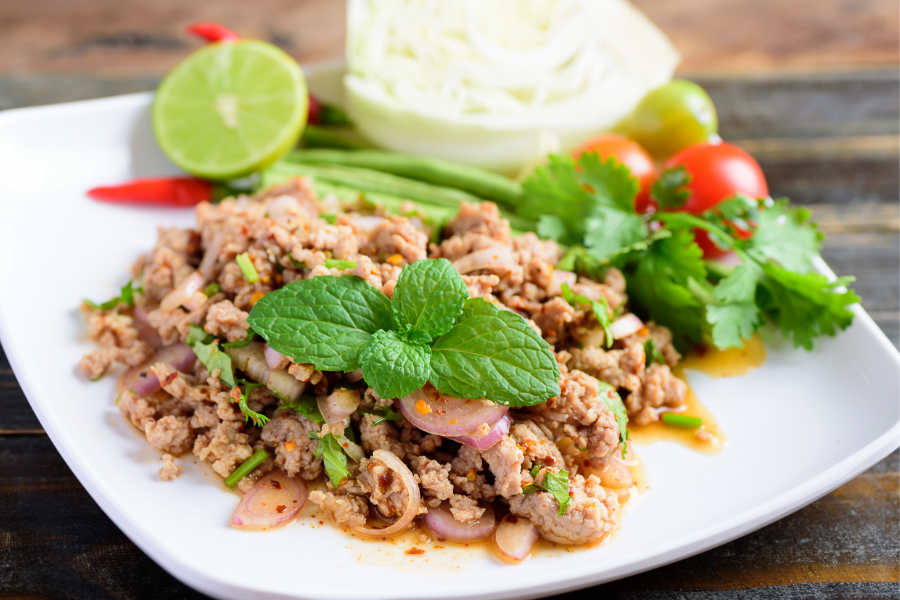 Laab
Laab
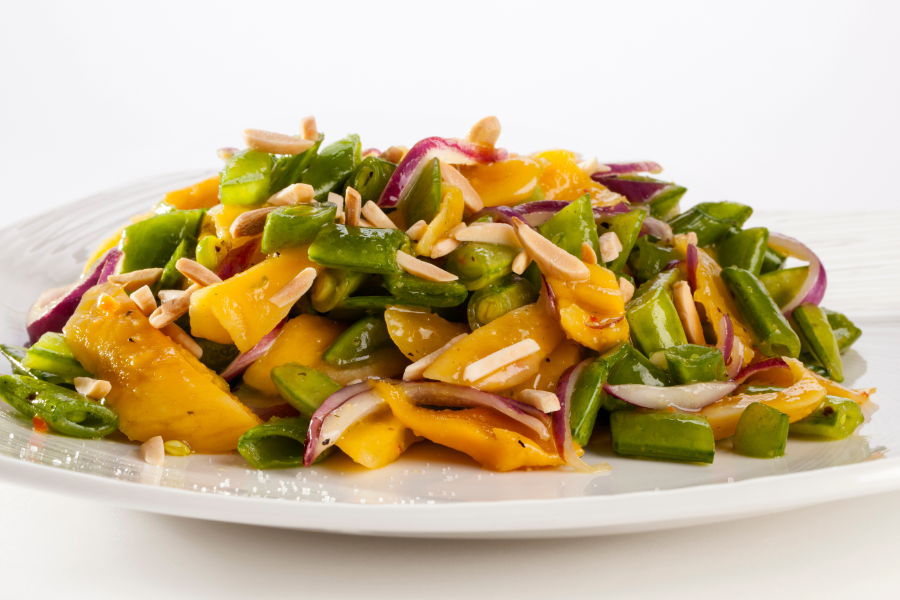 Naem Khao
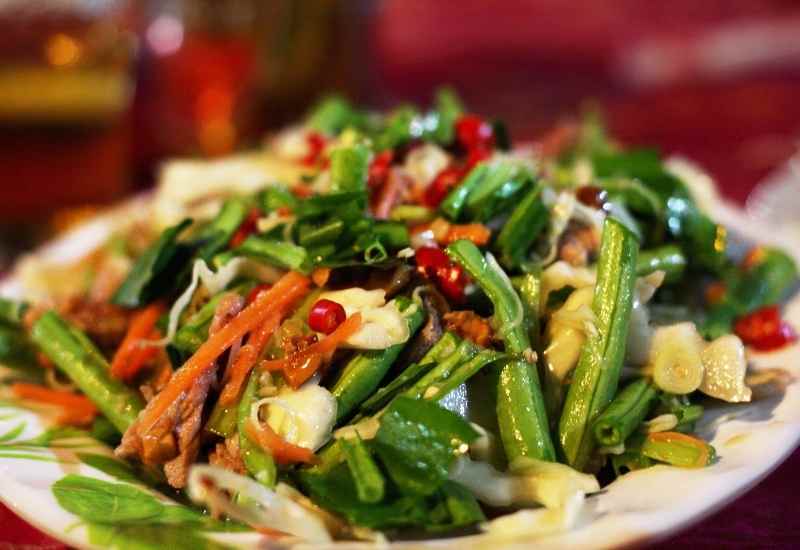 Oua Khao Poon
Key Flavors
national-dish
spicy
salad
crispy
grilled
lemongrass
sausage
grilled
spicy
fresh
salad
glass noodles
Masters of the Kitchen
The chefs who shaped Laotian cuisine
Seng Luangrath
Laotian-American chef and owner of Thip Khao and Padaek restaurants in Washingt…
Click to read moreEssential Reading
The cookbooks that define Laotian cuisine
The Food of Laos
The Food of Laos
The definitive English-language Laotian cookbook featuring recipes for larb, tam mak hoong, and other authentic dishes.
Explore All Dishes
6 authentic recipes from Laotian cuisine
Difficulty:
Time:
Sort:
Showing 6 of 6 dishes
Easy
📜 Story
Laab
Minced Meat Salad
Lunch or dinner
Medium
📜 Story
Naem Khao
Crispy Rice Salad
Appetizer or snack
Medium
📜 Story
Oua Khao Poon
Stuffed Lemongrass Skewers
Appetizer or snack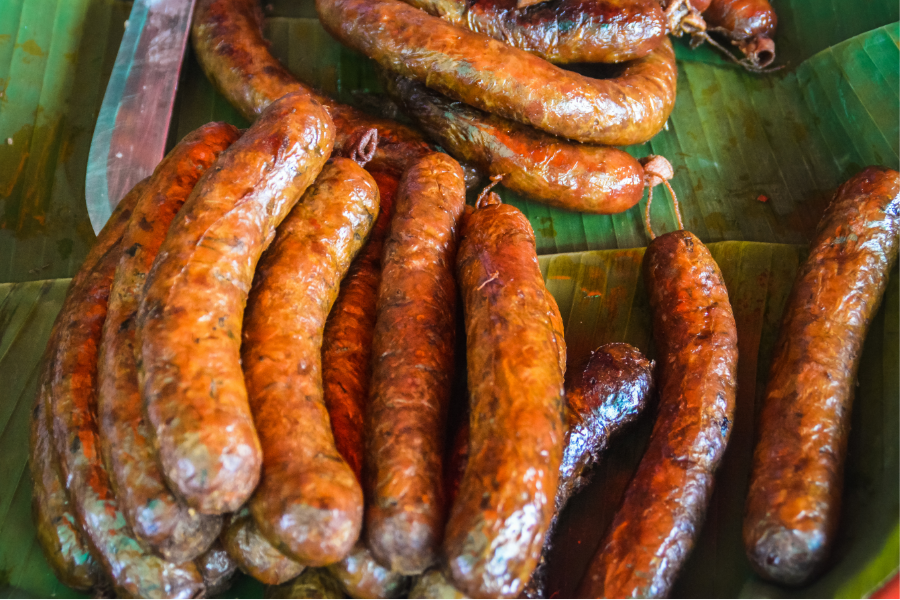 Hard
📜 Story
Hard
📜 Story
Sai Oua
Laotian Herb Sausage
Afternoon snack or appetizer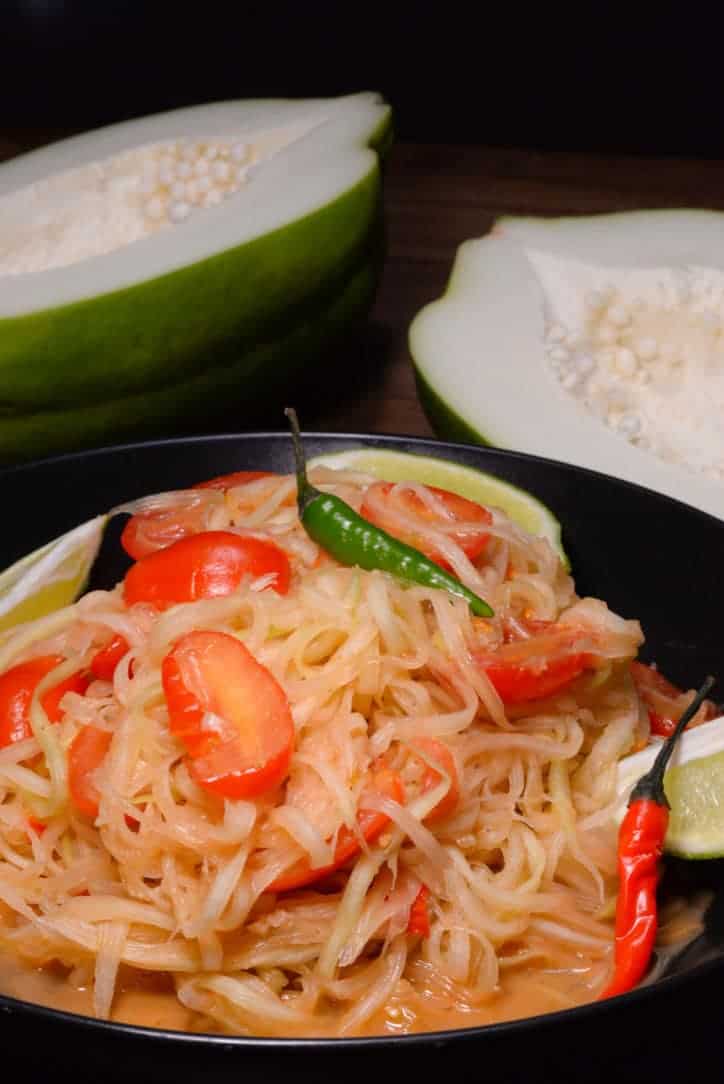 Easy
📜 Story
Easy
📜 Story
Tam Mak Hoong
Lao Papaya Salad
Any meal, snack Easy
📜 Story
Easy
📜 Story
Yum Woon Sen
Glass Noodle Salad
Lunch