
🇰🇬
Kyrgyz Cuisine
Land of Celestial Mountains
Asia
›
Central Asia
2
Dishes
6
Categories
Explore
Kyrgyz cuisine is hearty mountain fare shaped by nomadic horse culture. Lamb, fermented dairy, and hand-made noodles sustain life in the high valleys of the Tien Shan.
A Culinary Portrait
The heritage, flavors, and traditions of Kyrgyz cuisine
Kyrgyz cuisine is the food of the high Central Asian steppe and mountains, shaped by nomadic Turkic horse-riding culture that has defined life in the Tian Shan and Pamir-Alay ranges for millennia. The Kyrgyz people were pastoral nomads who followed their herds of horses, sheep, cattle, and yaks through seasonal mountain pastures (jailoo), and their cuisine reflects this mobile lifestyle: portable, calorie-dense, meat-and-dairy-centered foods that could be prepared in a yurt with minimal equipment. Horse meat and fermented mare's milk (kumis) hold special cultural significance, connecting modern Kyrgyz cuisine directly to its ancient nomadic roots.
The Silk Road passed through Kyrgyz territory, bringing Chinese, Persian, and Arab culinary influences that enriched the nomadic diet with rice, spices, noodles, and bread-baking techniques. Russian colonization and Soviet rule introduced potatoes, cabbage, borscht, and industrial food production that supplemented but did not replace traditional dishes.
Uzbek and Dungan (Chinese Muslim) communities within Kyrgyzstan contribute pilaf, laghman noodles, and dumpling traditions. The post-Soviet period has seen a revival of traditional Kyrgyz food culture, with yurt restaurants, heritage cooking festivals, and a growing appreciation for ancestral recipes. Lamb and mutton (the primary meats), kurt (dried fermented cheese balls for travel and storage), kumis (fermented mare's milk), onions (used in enormous quantities), and cumin (the spice most associated with Kyrgyz cooking).
The Silk Road passed through Kyrgyz territory, bringing Chinese, Persian, and Arab culinary influences that enriched the nomadic diet with rice, spices, noodles, and bread-baking techniques. Russian colonization and Soviet rule introduced potatoes, cabbage, borscht, and industrial food production that supplemented but did not replace traditional dishes.
Uzbek and Dungan (Chinese Muslim) communities within Kyrgyzstan contribute pilaf, laghman noodles, and dumpling traditions. The post-Soviet period has seen a revival of traditional Kyrgyz food culture, with yurt restaurants, heritage cooking festivals, and a growing appreciation for ancestral recipes. Lamb and mutton (the primary meats), kurt (dried fermented cheese balls for travel and storage), kumis (fermented mare's milk), onions (used in enormous quantities), and cumin (the spice most associated with Kyrgyz cooking).
 Chuchuk
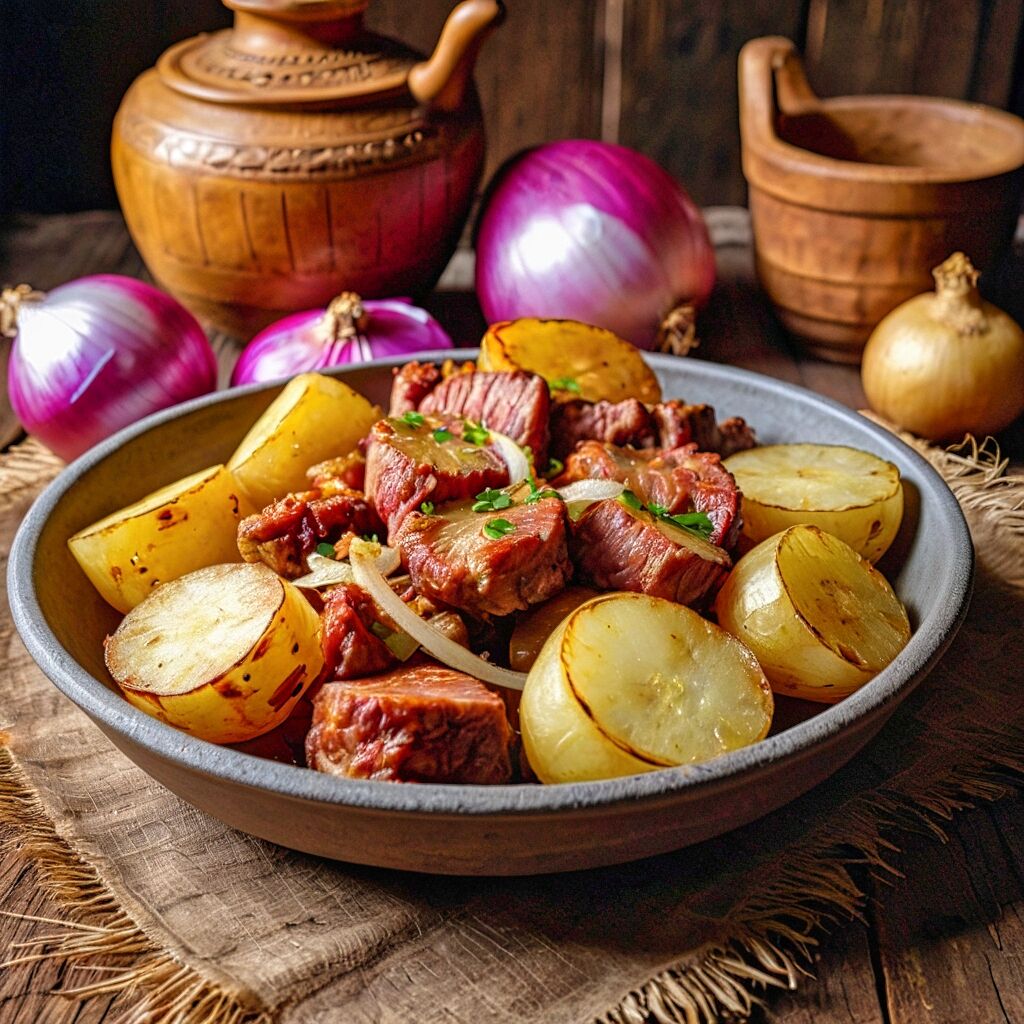 Kuyruk-Boor
Key Flavors
horse-meat
cured
offal
cold-appetizer
Masters of the Kitchen
The chefs who shaped Kyrgyz cuisine
Altynai Asilbekova
Kyrgyz chef and culinary educator who promotes traditional Kyrgyz cuisine, feat…
Click to read moreEssential Reading
The cookbooks that define Kyrgyz cuisine
The Silk Road Gourmet
The Silk Road Gourmet
An exploration of Central Asian cuisines including Kyrgyz culinary traditions along the ancient Silk Road.
Explore All Dishes
2 authentic recipes from Kyrgyz cuisine
Difficulty:
Time:
Sort:
Showing 2 of 2 dishes