🇩🇯
Djiboutian Cuisine
Where Africa Meets Arabia
Africa
›
East Africa
3
Dishes
6
Categories
Explore
Djiboutian cuisine sits at the crossroads of Somali, Ethiopian, Yemeni, and French traditions. Grilled meats, fragrant rice, and spiced stews reflect this strategic port city's diversity.
A Culinary Portrait
The heritage, flavors, and traditions of Djiboutian cuisine
Djiboutian cuisine is born at the crossroads of Africa, Arabia, and the Indian Ocean, shaped by the nomadic Afar and Issa Somali peoples who have inhabited this arid Horn of Africa territory for millennia. The harsh desert and coastal landscape, where temperatures routinely exceed forty degrees Celsius, produced a food culture built on survival: dried meats, camel milk, ghee, flatbreads, and portable provisions suited to pastoral life. The strategic position at the mouth of the Red Sea, where the Gulf of Aden meets the Indian Ocean, made Djibouti a natural trading post where African, Arab, Indian, and eventually French culinary influences converged. Arab traders brought rice, spices, and the tradition of spiced rice dishes that became central to Djiboutian feasting.
Indian Ocean commerce introduced curry spices, lentil preparations, and tea culture. French colonial rule from 1896 to 1977 left baguettes, cafe culture, and a taste for French pastries that coexist comfortably alongside traditional fare. Ethiopian and Yemeni neighbors contribute their own flavors, with injera, foul medames, and saltah finding their way onto Djiboutian tables.
Despite its small size, Djibouti's cuisine is a remarkably layered fusion of influences united by the Islamic dietary traditions shared by its overwhelmingly Muslim population. Berbere (a complex Ethiopian-influenced spice blend), cumin (used generously in soups and rice dishes), ghee (clarified butter essential to cooking and preservation), dried limes (an Arab souring agent), and cardamom (defining the ever-present spiced tea).
Indian Ocean commerce introduced curry spices, lentil preparations, and tea culture. French colonial rule from 1896 to 1977 left baguettes, cafe culture, and a taste for French pastries that coexist comfortably alongside traditional fare. Ethiopian and Yemeni neighbors contribute their own flavors, with injera, foul medames, and saltah finding their way onto Djiboutian tables.
Despite its small size, Djibouti's cuisine is a remarkably layered fusion of influences united by the Islamic dietary traditions shared by its overwhelmingly Muslim population. Berbere (a complex Ethiopian-influenced spice blend), cumin (used generously in soups and rice dishes), ghee (clarified butter essential to cooking and preservation), dried limes (an Arab souring agent), and cardamom (defining the ever-present spiced tea).
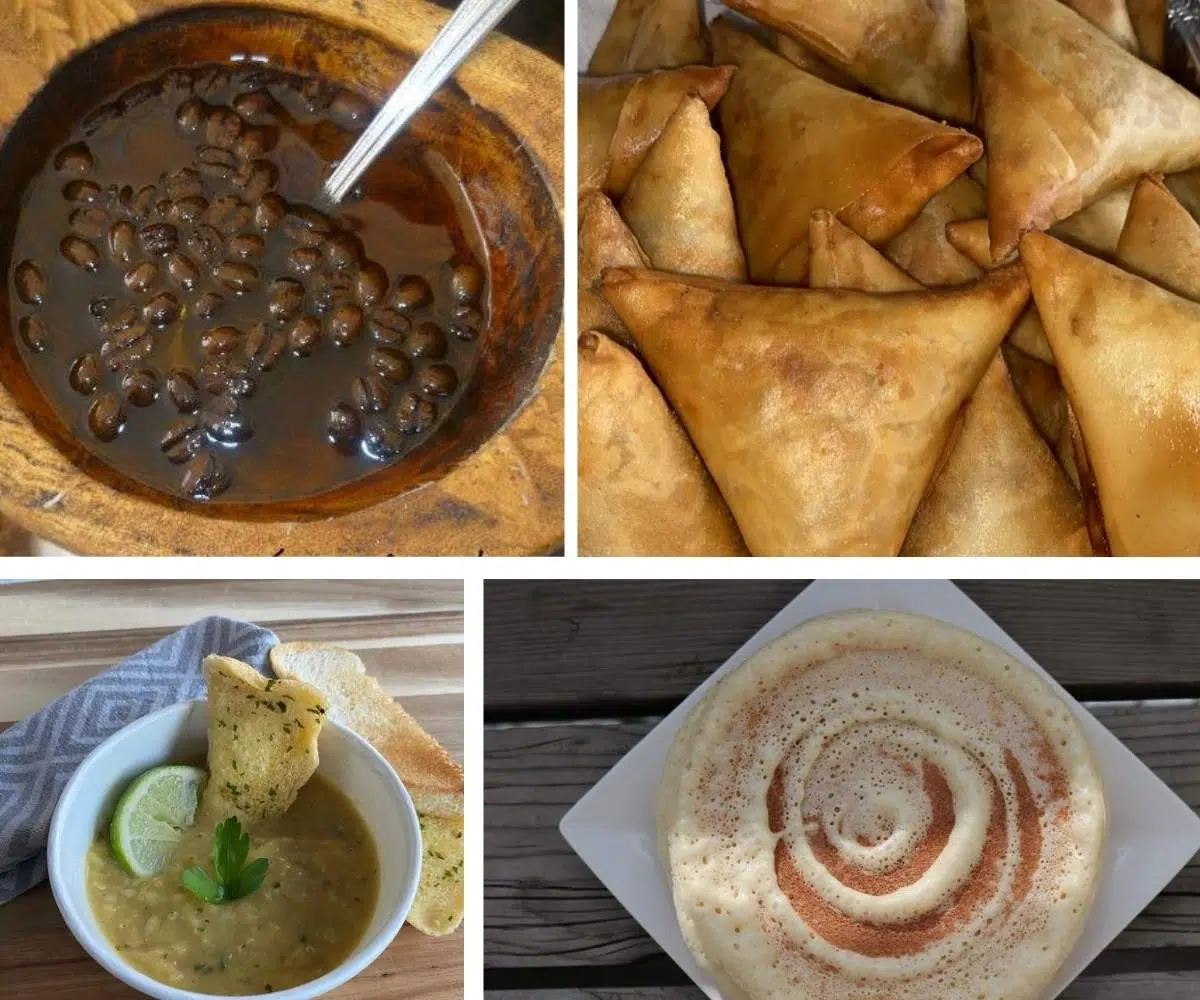 Caano Geel
 Shaah Cadeys
 Shaah Haleeb
Key Flavors
drink
fermented
tea
ginger
tea
spiced
Masters of the Kitchen
The chefs who shaped Djiboutian cuisine
Houssein Houmed
Djiboutian culinary advocate who has promoted traditional Djiboutian cuisine, w…
Click to read moreEssential Reading
The cookbooks that define Djiboutian cuisine
The Africa Cookbook: Tastes of a Contin…
The Africa Cookbook: Tastes of a Continent
A landmark cookbook covering cuisines across Africa including East African and Horn of Africa culinary traditions.
Explore All Dishes
3 authentic recipes from Djiboutian cuisine
Difficulty:
Time:
Sort:
Showing 3 of 3 dishes