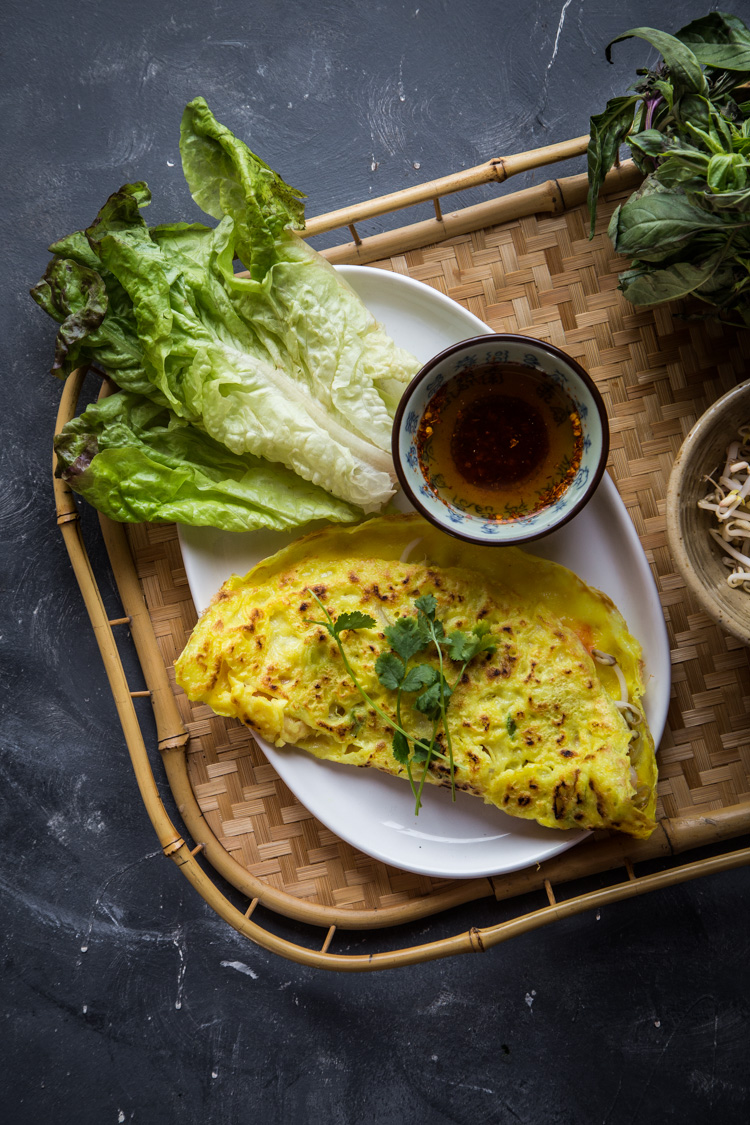
A crispy golden turmeric-tinted rice flour crepe filled with shrimp, chicken, bean sprouts, and herbs, folded in half and meant to be wrapped in lettuce leaves with fresh mint and dipped in nuoc cham sauce.
Nutrition & Info
Allergen Warnings
Equipment Needed
Instructions
-
1
Whisk rice flour, cornstarch, turmeric, coconut milk, and water together until smooth, then let the batter rest for thirty minutes.
-
2
Heat a large non-stick skillet with a generous amount of oil over high heat until the oil shimmers.
-
3
Add a few slices of onion and shrimp to the pan, cook for one minute, then pour a thin layer of batter in a circular motion and immediately scatter bean sprouts on one half.
-
4
Cover and cook for two to three minutes until the bottom is deeply golden and crackling crisp, then fold the crepe in half.
-
5
Transfer to a serving plate and repeat with the remaining batter and fillings.
-
6
Serve with a platter of lettuce leaves, fresh herbs, and individual bowls of nuoc cham for wrapping and dipping.
Did You Know?
The name banh xeo is onomatopoeic, imitating the sizzling sound the batter makes when it hits the hot oiled pan. In the south, banh xeo are large and crispy, while central Vietnamese versions are smaller and chewier.
Chef's Notes
Equipment Tips
- large non-stick skillet or crepe pan
- mixing bowl
The Story Behind Bánh xèo
Banh xeo has roots in ancient Vietnamese cooking, predating French colonial influence. The dish likely evolved from Chinese-influenced pancake traditions but developed its own distinct identity through the use of rice flour, turmeric, and coconut milk. Regional variations span the entire country, with southern Vietnam favoring large, crackling-crisp crepes and central Vietnam producing smaller, thicker versions. The dish became a beloved street food and family meal across all regions.


Comments (0)
Log in to leave a comment.
No comments yet. Be the first to share your thoughts!