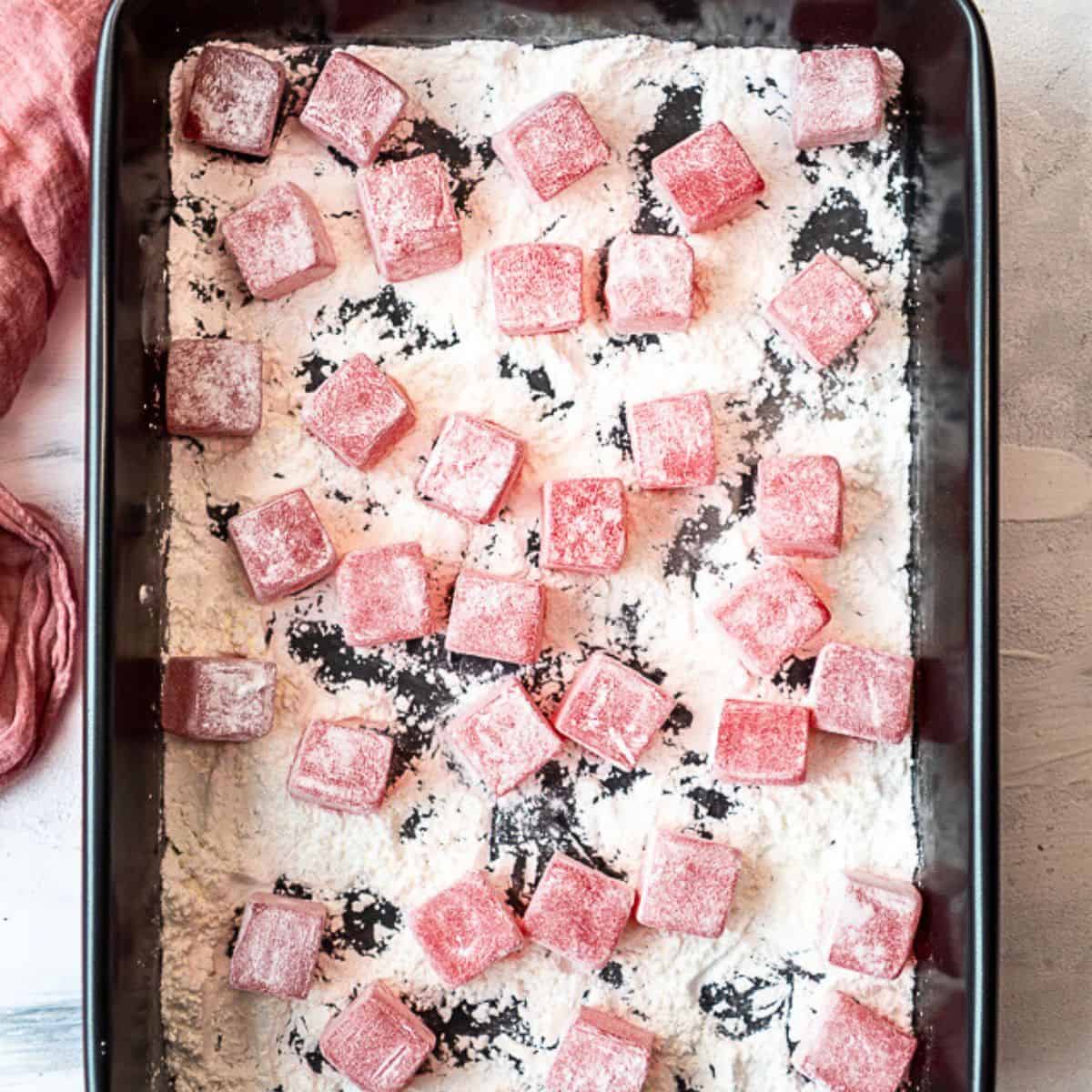
Soft, fragrant cubes of rosewater-scented confection dusted in powdered sugar and studded with pistachios, jewel-toned and impossibly smooth.
Nutrition & Info
Allergen Warnings
Equipment Needed
Presentation Guide
Vessel: ornate box or plate
Garnishes: powdered sugar, crushed pistachios
Accompaniments: Turkish coffee
Instructions
-
1
Line a square baking pan with parchment paper and oil it lightly, then set aside while preparing the sugar and starch mixtures.
-
2
Dissolve sugar in 250ml water with lemon juice, bring to a boil, and cook to 118 degrees Celsius on a candy thermometer.
-
3
In another pot, whisk cornstarch and cream of tartar into remaining 250ml water until smooth, then cook until thick paste forms.
-
4
Slowly pour the hot sugar syrup into the cornstarch paste, stirring constantly, then simmer on low for fifty minutes stirring often.
-
5
Stir in rosewater, food coloring if using, and chopped pistachios, then pour the mixture into the prepared pan to set overnight.
-
6
Cut into cubes with an oiled knife, then toss generously in a mixture of powdered sugar and cornstarch before serving or gifting.
Did You Know?
The phrase Turkish Delight entered English through C.S. Lewis's The Chronicles of Narnia, but lokum had already been famous for centuries.
Chef's Notes
Equipment Tips
- heavy saucepan
- square baking pan
- candy thermometer
- wooden spoon
Garnishing
powdered sugar, crushed pistachios
Accompaniments
Turkish coffee
The Story Behind Lokum
Lokum was invented in the 15th century by confectioner Bekir Efendi in Istanbul. His shop, Ali Muhiddin Haci Bekir, still operates today. The confection became a diplomatic gift between Ottoman sultans and European royalty.




Comments (0)
Log in to leave a comment.
No comments yet. Be the first to share your thoughts!