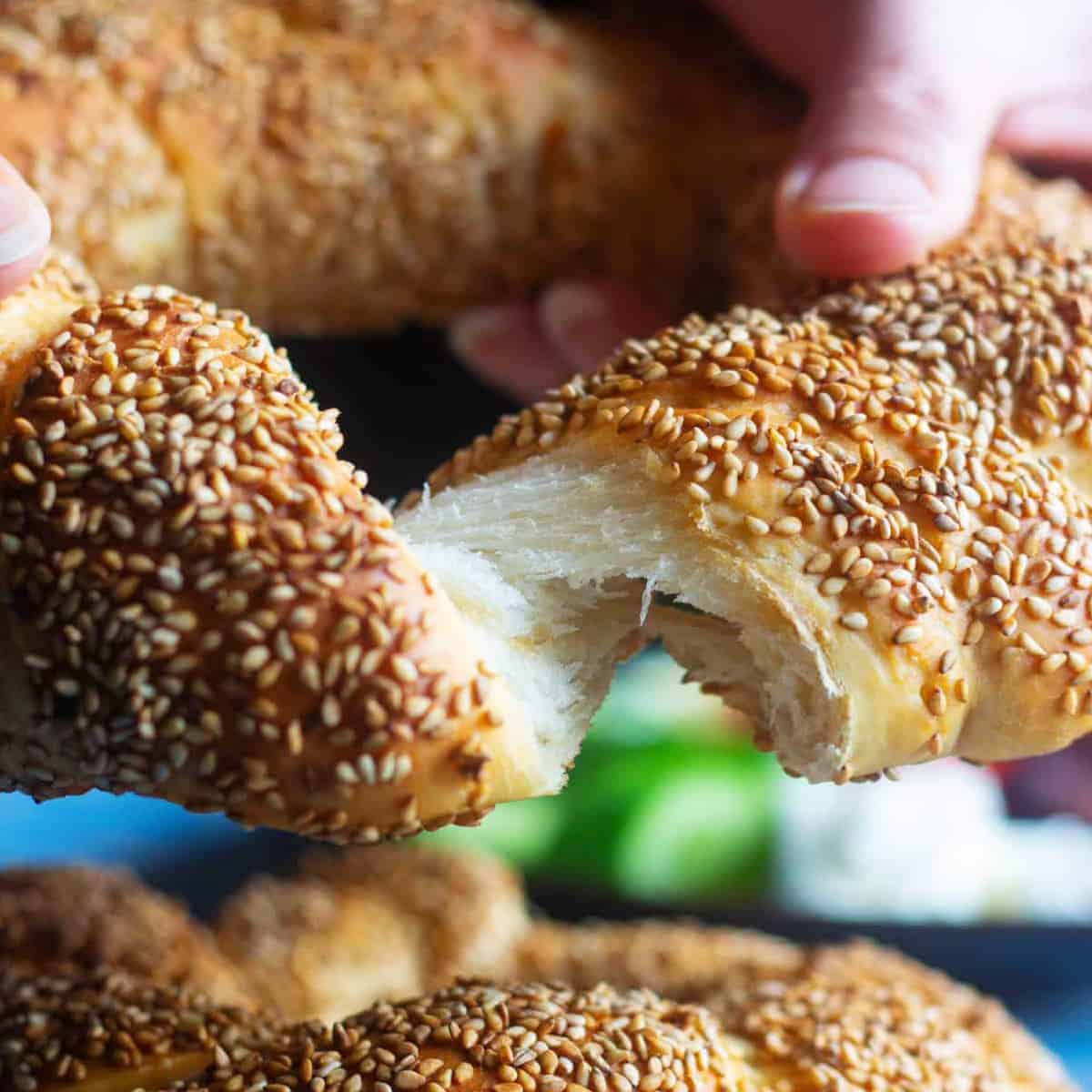
A crusty circular bread ring coated in a thick layer of toasted sesame seeds, golden-brown with a satisfying chew and nutty aroma throughout.
Nutrition & Info
Allergen Warnings
Equipment Needed
Presentation Guide
Vessel: paper napkin or wooden board
Garnishes: sesame seeds
Accompaniments: Turkish tea, white cheese, olives
Instructions
-
1
Mix flour, yeast, salt, and sugar, then add warm water and olive oil, kneading for ten minutes until smooth and elastic.
-
2
Cover dough and let rise in a warm place for one hour until doubled in size, then punch down and divide into six pieces.
-
3
Roll each piece into a long rope about sixty centimeters, then twist two ropes together and form into a ring shape.
-
4
Mix grape molasses with warm water in a shallow dish, then dip each ring fully into the molasses mixture on all sides.
-
5
Roll the coated rings generously in sesame seeds, pressing firmly so seeds adhere thickly and evenly across the entire surface.
-
6
Place on a lined baking sheet, let rest fifteen minutes, then bake at 220 degrees Celsius for eighteen minutes until deep golden.
Did You Know?
Istanbul alone consumes an estimated 2.5 million simits every single day, sold by roaming street vendors carrying traditional glass carts.
Chef's Notes
Equipment Tips
- baking sheet
- mixing bowl
- pastry brush
- wire rack
Garnishing
sesame seeds
Accompaniments
Turkish tea, white cheese, olives
The Story Behind Simit
Simit has been a staple of Istanbul street food since at least the 1500s, documented in Ottoman court records. The iconic glass-sided simit carts are a protected cultural symbol of Turkish cities, and the bread ring has become synonymous with Turkish identity.


Comments (0)
Log in to leave a comment.
No comments yet. Be the first to share your thoughts!