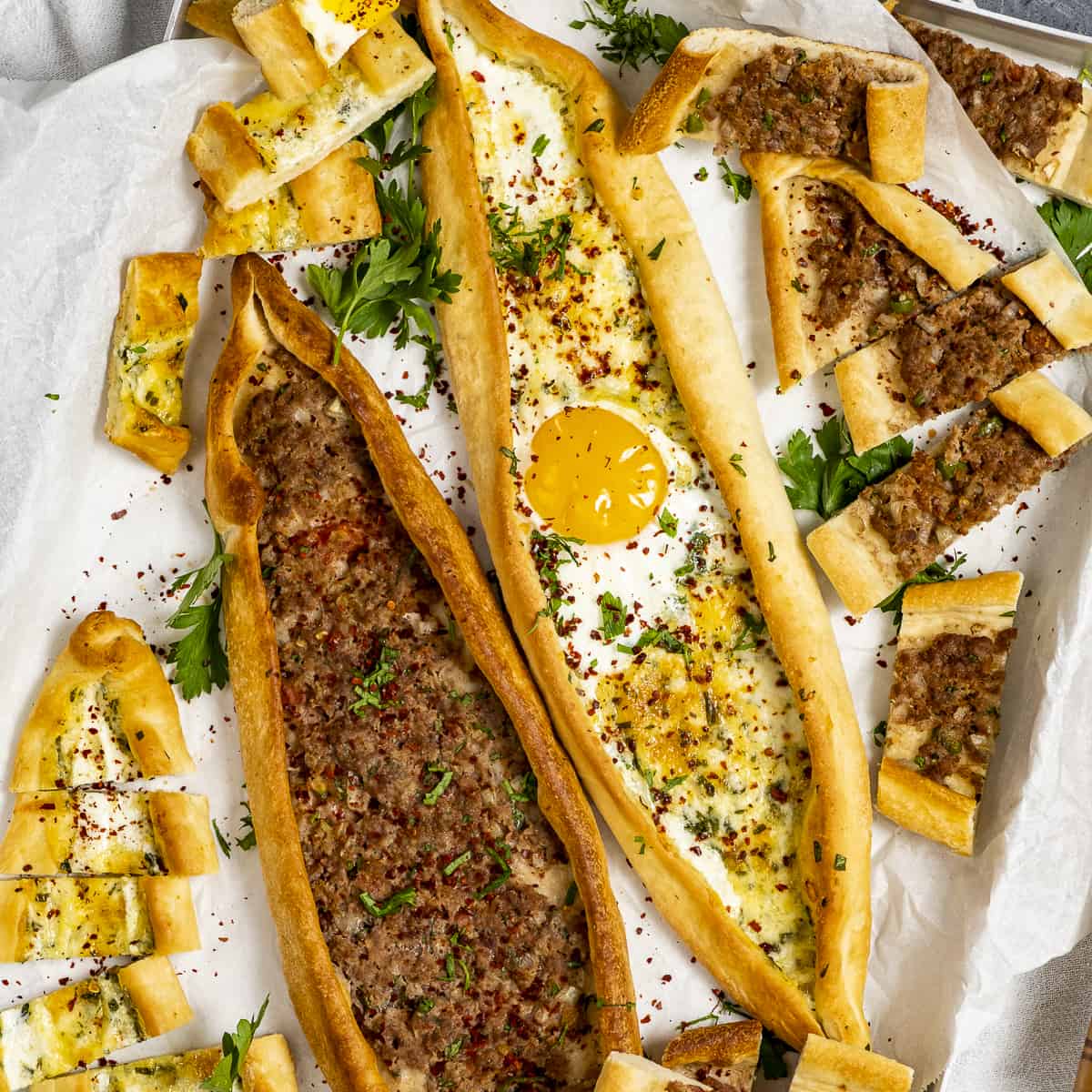
Turkey's answer to pizza: a boat-shaped flatbread with gloriously puffy, golden edges cradling a molten filling of cheese, egg, and aromatic spices. Straight from a wood-fired oven, the crust crackles while the center oozes with rich, savory decadence.
Nutrition & Info
Allergen Warnings
Equipment Needed
Presentation Guide
Vessel: wooden paddle or long plate
Garnishes: egg yolk glaze, nigella seeds
Accompaniments: pickled peppers, fresh salad
Instructions
-
1
Combine flour, yeast, sugar, and salt. Add warm water and olive oil, mixing to form a soft dough. Knead for 10 minutes until smooth and elastic. Cover and let rise for 1 hour until doubled.
-
2
If making a lamb filling, sauté the ground lamb with diced peppers, tomatoes, cumin, salt, and pepper until browned and fragrant. Let cool slightly.
-
3
Preheat oven to its maximum temperature (250-300C / 480-570F) with a baking stone or inverted sheet inside.
-
4
Divide the dough into 4 pieces. Roll each into an oval shape about 30cm long and 15cm wide. Transfer to parchment paper.
-
5
Spread the cheese cubes (and lamb mixture if using) down the center of each oval, leaving a 3cm border. Fold the long edges up and over to create a boat shape, pinching the ends into points.
-
6
Slide onto the hot stone and bake for 10-12 minutes until the crust is golden and puffed. In the last 2 minutes, crack an egg into the center of each pide and return to the oven just until the white sets but the yolk remains runny.
-
7
Remove from oven, brush the edges with melted butter, sprinkle with fresh parsley, and slice crosswise. Serve immediately while the cheese is stretchy and the egg yolk runs like liquid gold.
Did You Know?
Pide is often called 'Turkish pizza' but predates Italian pizza by centuries. The Black Sea region city of Bafra is considered the pide capital of Turkey, where dedicated pide restaurants have been perfecting the craft for generations.
Chef's Notes
Equipment Tips
- baking stone or sheet
- rolling pin
- oven
Garnishing
egg yolk glaze, nigella seeds
Accompaniments
pickled peppers, fresh salad
The Story Behind Pide
## The Story
Pide descends from ancient Anatolian flatbread traditions, its distinctive boat shape formed by baking dough against the walls of brick ovens. The word derives from the Greek pita, reflecting millennia of cross-cultural baking in Anatolia. A 1502 decree by Sultan Bayezid II established that pide dough must be purer than bread dough, sifted through a fine sieve and properly topped with poppy seeds, demonstrating its regulated importance in Ottoman society.
## On the Calendar
Pide is especially associated with Ramadan, when special Ramazan pidesi (a round, stamped version) is baked fresh daily and distributed at mosques. The boat-shaped filled version is enjoyed year-round as a hearty meal.
## Then & Now
In the Black Sea city of Samsun, pide has been documented since at least 1725, and the region remains its spiritual home. Ottoman-era innovations introduced fillings of minced meat, roasted meat, sausage, pastrami, and cheese. Today, regional pide shops across Turkey each claim their version as the best.
## Legacy
Pide represents the continuity of Anatolian baking traditions from antiquity through the Ottoman Empire to modern Turkey, a living connection to thousands of years of flatbread culture.


Comments (0)
Log in to leave a comment.
No comments yet. Be the first to share your thoughts!