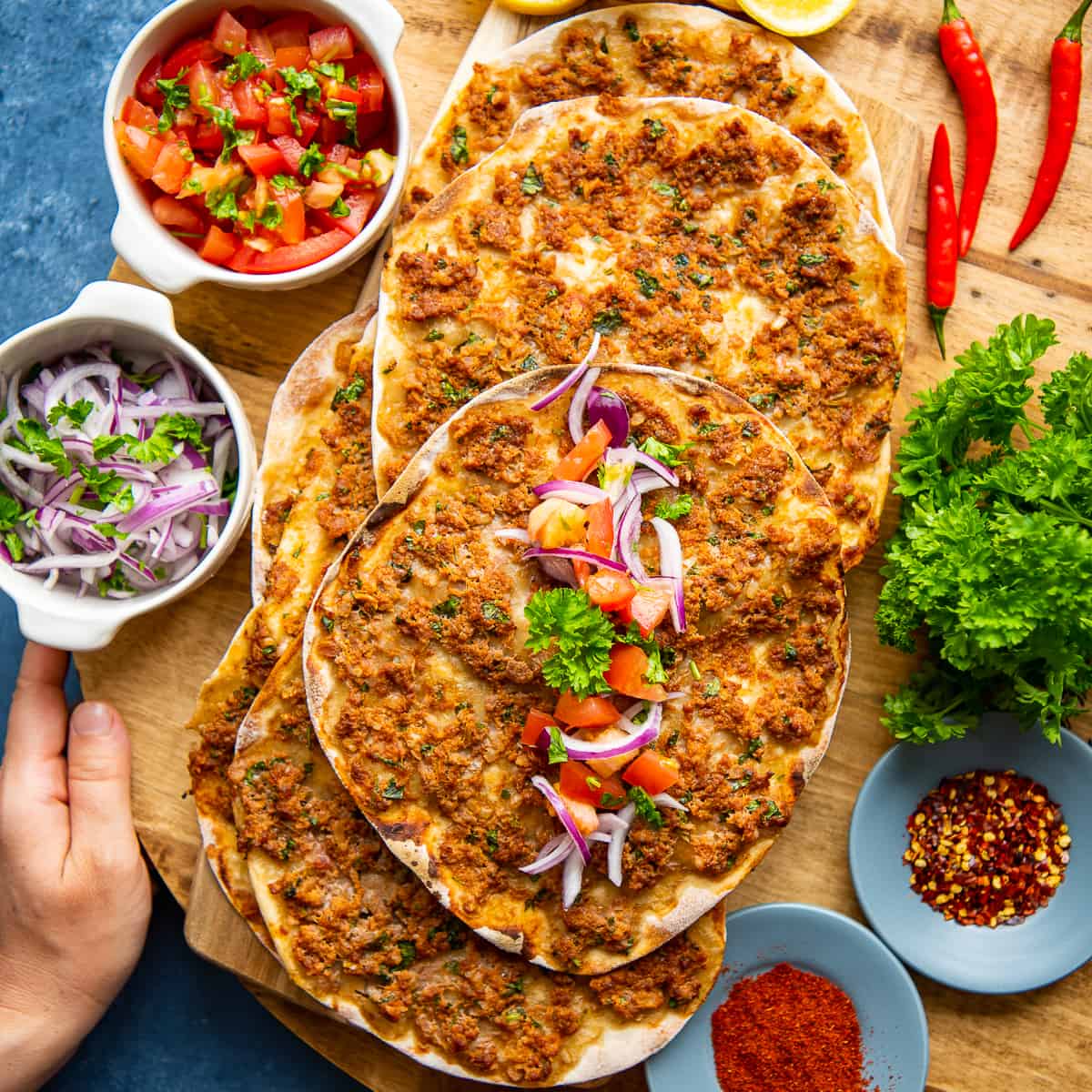
A paper-thin, cracker-crisp flatbread spread with a vibrant layer of spiced lamb, tomatoes, and peppers, baked at blistering heat until the edges curl and char. Rolled with fresh parsley, lemon juice, and crunchy vegetables, each bite is a thrilling contrast of textures.
Nutrition & Info
Allergen Warnings
Equipment Needed
Presentation Guide
Vessel: flat serving plate
Garnishes: fresh parsley, lemon wedges, sumac onions
Accompaniments: ayran (yogurt drink)
Instructions
-
1
Make the dough: combine flour, salt, sugar, and yeast. Add warm water and olive oil, knead for 8 minutes until smooth. Cover and rest for 30 minutes.
-
2
Prepare the topping: combine the ground lamb with diced tomatoes, pepper, onion, garlic, tomato paste, Aleppo pepper, cumin, salt, and pepper. Mix thoroughly until it becomes a smooth, spreadable paste.
-
3
Preheat oven to maximum temperature (270-300C / 520-570F) with a baking stone or inverted baking sheet inside.
-
4
Divide the dough into 8 balls. Roll each ball out on a floured surface as thinly as possible, aiming for translucent thinness, about 25cm in diameter.
-
5
Spread a very thin, even layer of the lamb mixture over each round, going all the way to the edges. The layer should be thin enough to see the dough through it.
-
6
Slide onto the blazing hot stone and bake for 3-5 minutes until the edges are crispy and lightly charred and the meat is cooked. The base should be crisp, not chewy.
-
7
Remove from oven, squeeze fresh lemon juice over the top, pile with flat-leaf parsley and thinly sliced onions. Roll up like a wrap and eat immediately with your hands.
Did You Know?
Lahmacun literally means 'dough with meat' in Arabic. Despite fierce debate, both Turkey and Armenia claim it as their own. In southeastern Turkey, lahmacun restaurants often employ dedicated dough rollers who can stretch a ball paper-thin in seconds.
Chef's Notes
Equipment Tips
- baking stone or sheet
- rolling pin
- mixing bowl
Garnishing
fresh parsley, lemon wedges, sumac onions
Accompaniments
ayran (yogurt drink)
The Story Behind Lahmacun
## The Story
Lahmacun takes its name from the Arabic lahm bi-ajin, meaning 'meat with dough.' A 13th-century Syrian cookbook compiled in Aleppo, Kitab al-Wusla ila al-Habib, describes minced meat spread on thin dough and baked in a brick oven, an early ancestor of the dish. Though its roots lie in the Levant and southeastern Anatolia, lahmacun was not widely known in Istanbul until migrant workers from Gaziantep and Urfa brought it north in the mid-20th century.
## On the Calendar
Lahmacun is everyday street food in Turkey, enjoyed at any meal but especially popular as a quick, affordable lunch. It is also a staple of Ramadan iftar tables in southeastern Turkey.
## Then & Now
Before the 1950s, lahmacun was primarily found in Arab countries and Turkey's southern provinces. The internal migration boom brought it to Istanbul and western Turkey, where it became one of the nation's most beloved street foods. Today it is served rolled with fresh parsley, lemon juice, and sumac.
## Legacy
Lahmacun embodies the culinary exchange between Arab, Kurdish, and Turkish food traditions along the ancient trade routes of southeastern Anatolia.


Comments (0)
Log in to leave a comment.
No comments yet. Be the first to share your thoughts!