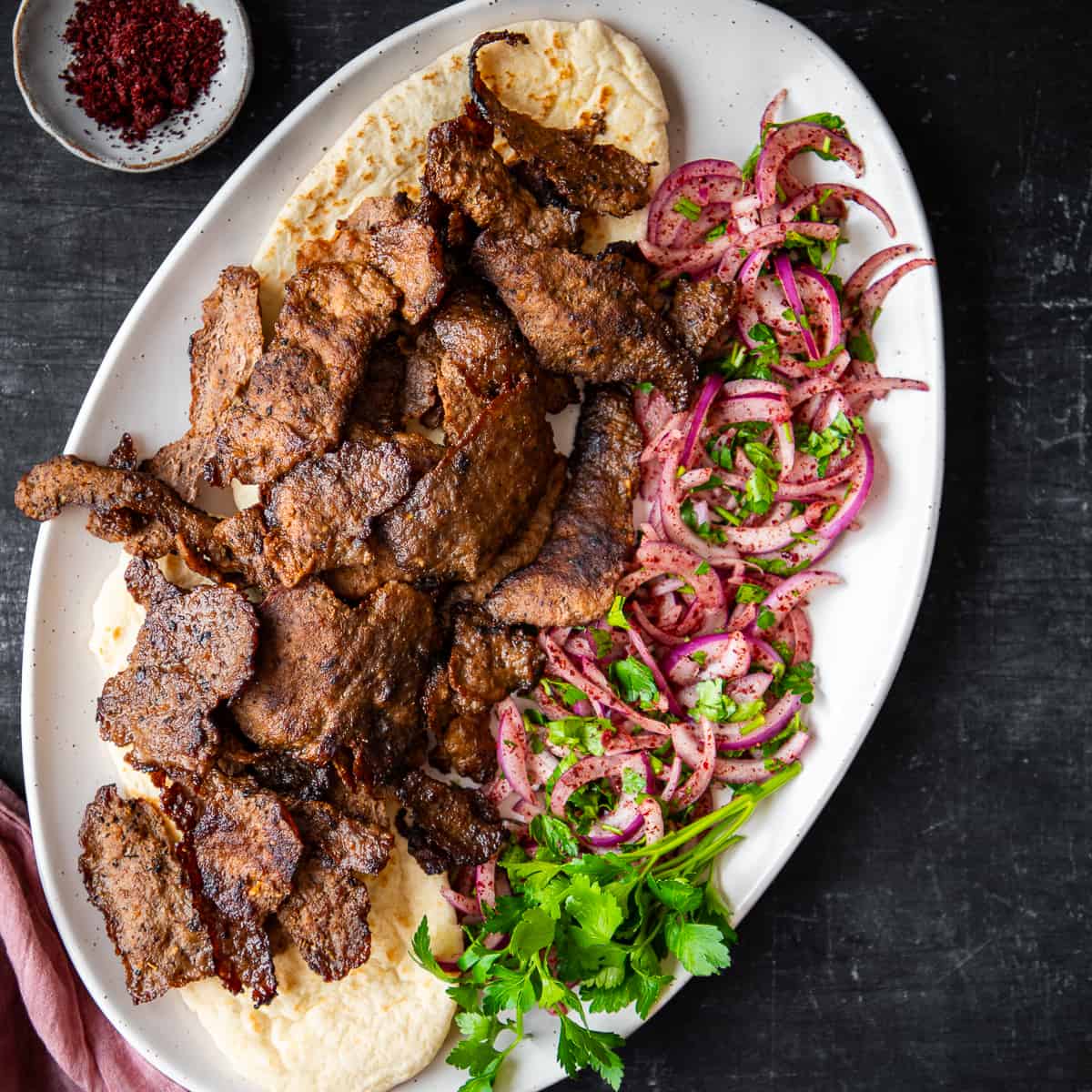
Thin shavings of marinated lamb stacked on a vertical rotisserie, slowly roasted and carved as the outer layer turns crispy, served in bread with fresh garnishes.
Nutrition & Info
Allergen Warnings
Equipment Needed
Presentation Guide
Vessel: lavash wrap or plate
Garnishes: sliced tomato, red onion, parsley
Accompaniments: pickled turnips, ayran
Instructions
-
1
Thinly slice lamb leg against the grain, then marinate with grated onion, garlic, olive oil, and all spices overnight refrigerated.
-
2
Layer marinated meat slices onto a vertical spit or stack tightly in a deep oven tray if cooking at home without special equipment.
-
3
Cook on the vertical rotisserie, or roast stacked meat at 200 degrees Celsius for ninety minutes, basting with drippings frequently.
-
4
Allow the exterior to become deeply caramelized and crispy, then shave thin slices off the outer layer with a sharp long knife.
-
5
Warm the bread on the grill or in the oven, then load with shaved doner meat, sliced tomatoes, onions, and fresh lettuce.
-
6
Drizzle with yogurt sauce or a squeeze of lemon, wrap tightly or serve open-faced with a side of pickled peppers and turnips.
Did You Know?
The original doner was served in Bursa as iskender kebab on a plate — the portable sandwich version was a later Berlin innovation.
Chef's Notes
Equipment Tips
- vertical rotisserie or oven
- sharp carving knife
- mixing bowls
Garnishing
sliced tomato, red onion, parsley
Accompaniments
pickled turnips, ayran
The Story Behind Döner Kebab
Döner kebab was pioneered in 19th century Bursa by Iskender Efendi, who first mounted seasoned meat on a vertical rotisserie. The concept spread throughout the Ottoman Empire and later the world, becoming one of the most recognized Turkish foods globally.



Comments (0)
Log in to leave a comment.
No comments yet. Be the first to share your thoughts!