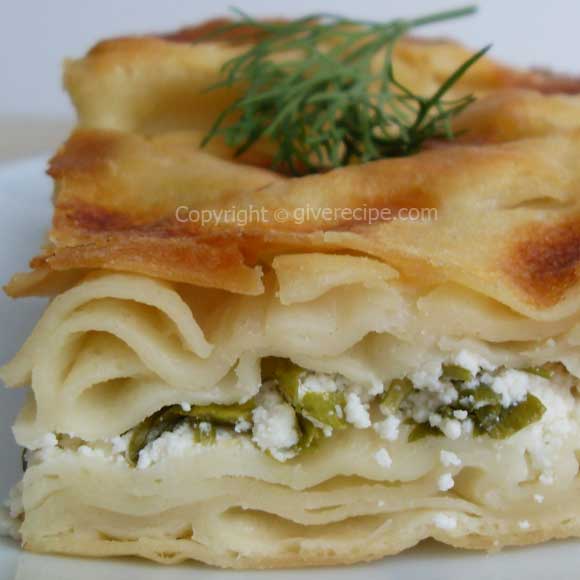
Layers of hand-rolled yufka pastry boiled briefly then layered with creamy white cheese and parsley, baked until golden and crispy on top yet custardy within.
Nutrition & Info
Allergen Warnings
Equipment Needed
Presentation Guide
Vessel: copper baking tray
Garnishes: parsley sprigs, butter drizzle
Accompaniments: Turkish tea, olives
Instructions
-
1
Knead flour, eggs, salt, and water into a smooth elastic dough, divide into eight equal balls, and rest covered thirty minutes.
-
2
Roll each ball paper-thin on a floured surface into large rounds, dusting generously with starch to prevent sticking at all.
-
3
Bring a large pot of salted water to a boil and prepare an ice bath, then boil each pastry sheet for one minute.
-
4
Transfer boiled sheets immediately to the ice bath, then drain and lay flat, brushing each generously with melted butter.
-
5
Layer sheets in a buttered baking tray, spreading crumbled cheese and parsley mixture between every two layers of pastry.
-
6
Brush the top with egg yolk mixed with milk, then bake at 180 degrees Celsius for thirty-five minutes until deeply golden.
Did You Know?
Su böreği gets its name because the pastry sheets are boiled in water before layering, giving it a uniquely silky texture unlike any other börek.
Chef's Notes
Equipment Tips
- large pot
- baking tray
- rolling pin
- large work surface
Garnishing
parsley sprigs, butter drizzle
Accompaniments
Turkish tea, olives
The Story Behind Su Böreği
Börek traces its origins to Central Asian Turkic nomads who layered thin dough with various fillings. Su böreği evolved in Ottoman palace kitchens where cooks perfected the technique of boiling pastry sheets to achieve the characteristic custardy layers.


Comments (0)
Log in to leave a comment.
No comments yet. Be the first to share your thoughts!