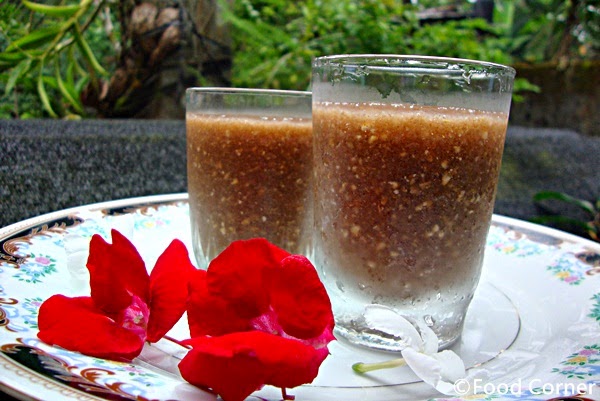
The hard-shelled wood apple cracked open to reveal its tangy, aromatic pulp, mixed with jaggery, water, and a pinch of salt into a refreshing, sweet-sour drink — Sri Lanka's most beloved natural beverage.
Nutrition & Info
Equipment Needed
Presentation Guide
Instructions
-
1
Crack the hard shell of the wood apple using a heavy knife or mallet. Scoop out the brown, sticky pulp into a bowl.
-
2
Add water to the pulp and work it with your fingers or a spoon to separate the pulp from seeds and fibers.
-
3
Strain through a sieve, pressing to extract maximum juice. Discard seeds and fibers.
-
4
Add jaggery or palm treacle and salt. Stir until dissolved. Taste and adjust sweetness.
-
5
Serve over ice. Can be thinned with more water if too thick.
Did You Know?
The wood apple shell is so hard that it must be cracked with a mallet — and the first whiff of the opened fruit is so pungent that first-time tasters often recoil, not realizing the drink it produces is delicious.
Chef's Notes
The Story Behind Wood Apple Juice
The wood apple (Limonia acidissima) is native to Sri Lanka and the Indian subcontinent. It has been used in Ayurvedic medicine for millennia and its juice is considered one of the most traditional beverages on the island. The fruit's tough exterior and complex, funky aroma belie the refreshing drink it produces when mixed with palm treacle. It represents the Sri Lankan tradition of transforming humble wild ingredients into treasured preparations.

Comments (0)
Log in to leave a comment.
No comments yet. Be the first to share your thoughts!