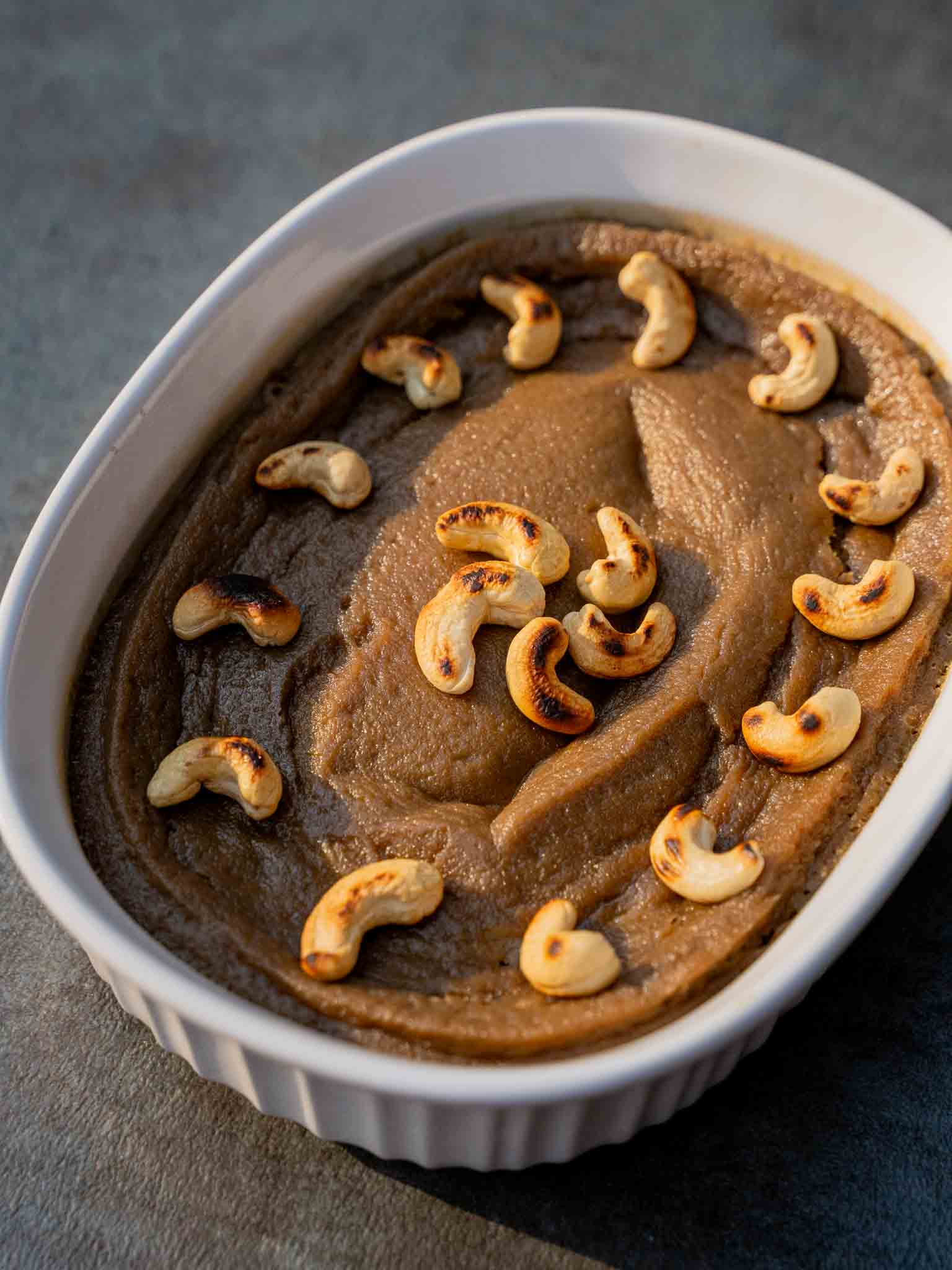
A luxuriously wobbly, spiced coconut custard enriched with jaggery, cardamom, and cashews, steamed until set into a trembling, caramel-dark confection. This Malay-influenced Sri Lankan dessert is like crème caramel's exotic tropical cousin, deeply perfumed and hauntingly delicious.
Nutrition & Info
Allergen Warnings
Equipment Needed
Presentation Guide
Vessel: individual ramekins
Garnishes: cashew nuts, cardamom pods
Instructions
-
1
Gently heat the coconut milk in a saucepan. Add the grated jaggery and stir over low heat until completely dissolved. The mixture should turn a deep amber color. Let cool to lukewarm.
-
2
Beat the eggs in a large bowl until well combined but not frothy. You want a smooth custard, not an airy one.
-
3
Slowly pour the cooled jaggery-coconut mixture into the eggs, stirring constantly with a whisk. Add cardamom, nutmeg, cloves, rosewater, and a pinch of salt.
-
4
Strain the mixture through a fine sieve to remove any lumps or egg threads. This ensures a silky-smooth custard.
-
5
Pour into a lightly greased pudding mold or individual ramekins. Scatter chopped cashew nuts over the top.
-
6
Steam in a covered steamer over medium heat for 40-50 minutes until set. The custard should wobble like jelly when gently shaken but not be liquid. A knife inserted should come out clean.
-
7
Let cool to room temperature, then refrigerate for at least 2 hours until fully chilled and set. Unmold onto a plate or serve in ramekins. The custard should be silky, spiced, and deeply caramelized from the jaggery.
Did You Know?
Watalappam was brought to Sri Lanka by Malay traders and has become a quintessential Sri Lankan Muslim and Tamil celebration dessert, especially during Ramadan. The name comes from the Malay word 'kuih dodol appam,' and every family fiercely guards their own ratio of spices.
Chef's Notes
Equipment Tips
- steamer
- mixing bowl
- ramekins
- whisk
Garnishing
cashew nuts, cardamom pods
The Story Behind Watalappam
The Story: Watalappam is a steamed coconut custard made with jaggery (palm sugar), eggs, coconut milk, cardamom, and sometimes cashews or nutmeg. It was introduced to Sri Lanka by Malay immigrants who arrived during the Dutch and British colonial periods, adapting their custard-making traditions to local ingredients. The name is believed to derive from a Malay word, and the dish remains closely associated with Sri Lanka's Malay Muslim community.
On the Calendar: Watalappam is traditionally served during Ramadan, Eid celebrations, and weddings in Muslim households, though it has become popular across all communities as a festive dessert.
Then & Now: The recipe has remained largely unchanged, with jaggery and coconut milk remaining the essential ingredients. Modern versions sometimes substitute white sugar, but traditionalists insist on the caramel depth that only kithul (palm) jaggery provides.
Legacy: Watalappam is a sweet testament to Sri Lanka's multicultural identity, a Malay-origin dessert that has been adopted by the entire island as its own.

Comments (1)
Log in to leave a comment.
The cultural background adds so much context. Beautiful dish.