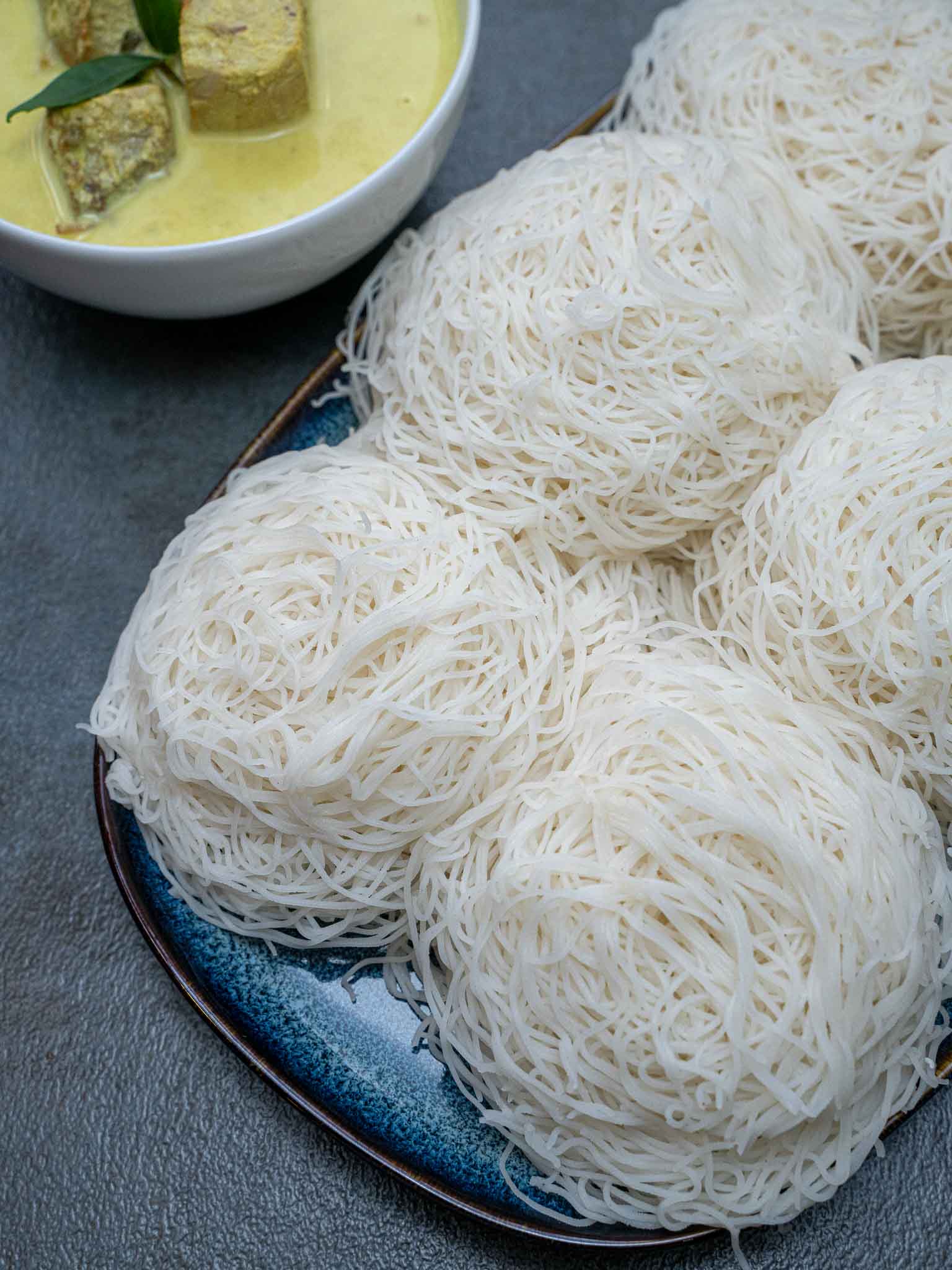
Delicate lacework discs of steamed rice flour noodles, pressed through a mold and stacked in airy nests — eaten by peeling apart layers and soaking them in coconut milk curry.
Nutrition & Info
Allergen Warnings
Equipment Needed
Presentation Guide
Vessel: stacked on plate
Garnishes: none
Accompaniments: kiri hodi (coconut milk gravy), dhal curry, pol sambol, lunu miris
Instructions
-
1
Bring water to a rolling boil with salt. Pour over rice flour and mix quickly with a wooden spoon until a smooth dough forms.
-
2
Knead the dough briefly — it should be soft and pliable, not sticky. Add a touch more water or flour to adjust.
-
3
Fill the string hopper press with dough. Press in circular motions onto small woven mats to create thin noodle discs.
-
4
Stack the mats in a steamer and steam for 5-7 minutes until noodles are cooked through but still separate.
-
5
Carefully peel string hoppers off the mats. Stack 3-4 per serving.
-
6
Serve with coconut milk curry (kiri hodi), dhal curry, and pol sambol.
Did You Know?
The art of pressing string hoppers is a skill Sri Lankan girls traditionally learn from their grandmothers, and the speed of pressing is a source of family pride.
Chef's Notes
Equipment Tips
- string hopper mold (idiyappam press)
- steamer
- round woven mats (tattu)
Garnishing
none
Accompaniments
kiri hodi (coconut milk gravy), dhal curry, pol sambol, lunu miris
The Story Behind String Hoppers
String hoppers, or idiyappam, have origins shared between Sri Lanka and South India, dating back over a thousand years. In Sri Lanka they became a breakfast cornerstone, particularly in Tamil and Muslim communities. The dish represents the island's mastery of rice flour techniques — the same grain transformed into completely different textures across hoppers, string hoppers, and pittu.

Comments (0)
Log in to leave a comment.
No comments yet. Be the first to share your thoughts!