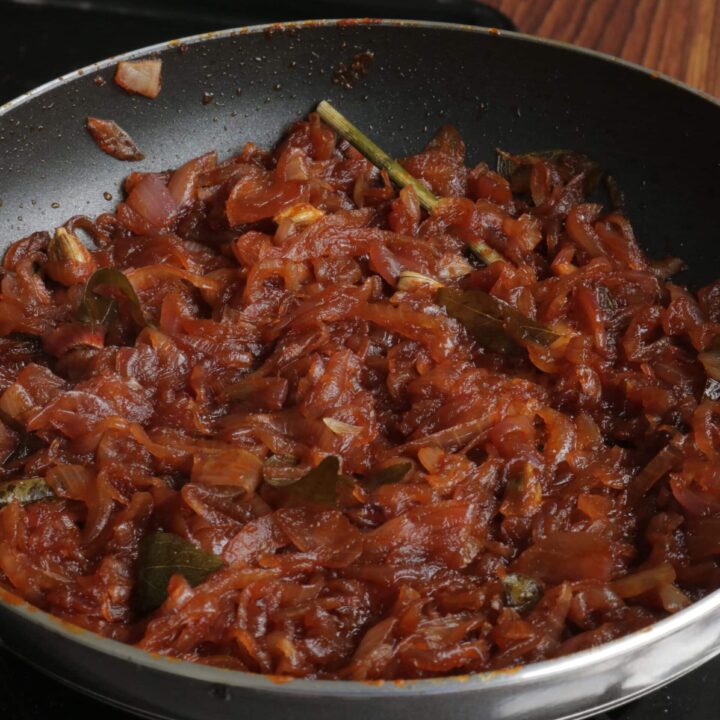
Dark, glossy, slow-cooked onions caramelized with chili, Maldive fish, tamarind, and a touch of sugar until jammy and sweet-spicy — a luxurious relish piled into hoppers or spread on bread.
Nutrition & Info
Allergen Warnings
Equipment Needed
Presentation Guide
Vessel: small glass jar or clay dish
Garnishes: curry leaves
Accompaniments: hoppers, bread, kiribath, string hoppers
Instructions
-
1
Heat coconut oil in a wide pan over medium heat. Add cinnamon stick, cardamom, cloves, and curry leaves. Fry for 30 seconds until fragrant.
-
2
Add sliced onions and pandan leaf. Cook on medium-low heat, stirring occasionally, for 20-25 minutes until onions are deeply caramelized and dark.
-
3
Add Maldive fish flakes, chili flakes, and chili powder. Stir for 2 minutes.
-
4
Add tamarind paste, sugar, and salt. Cook for another 5-10 minutes until the mixture is dark, glossy, and jam-like.
-
5
Remove whole spices and pandan leaf. Allow to cool slightly — seeni sambol thickens as it cools.
-
6
Serve at room temperature. Stores well in the refrigerator for up to a week.
Did You Know?
The name "seeni" comes from the Portuguese word for sugar, reflecting the colonial influence on this dish — the Portuguese introduced sugar and chili to Sri Lanka in the 16th century.
Chef's Notes
Equipment Tips
- wide pan or wok
- wooden spoon
Garnishing
curry leaves
Accompaniments
The Story Behind Seeni Sambol
Seeni sambol represents the layered colonial history embedded in Sri Lankan cuisine. The Portuguese brought chilies and sugar to the island in the 1500s, the Dutch contributed their love of caramelized onions, and the Sri Lankans fused these with indigenous Maldive fish and spices. The result is a condiment that tells the story of 400 years of cultural exchange in a single spoonful.



Comments (0)
Log in to leave a comment.
No comments yet. Be the first to share your thoughts!