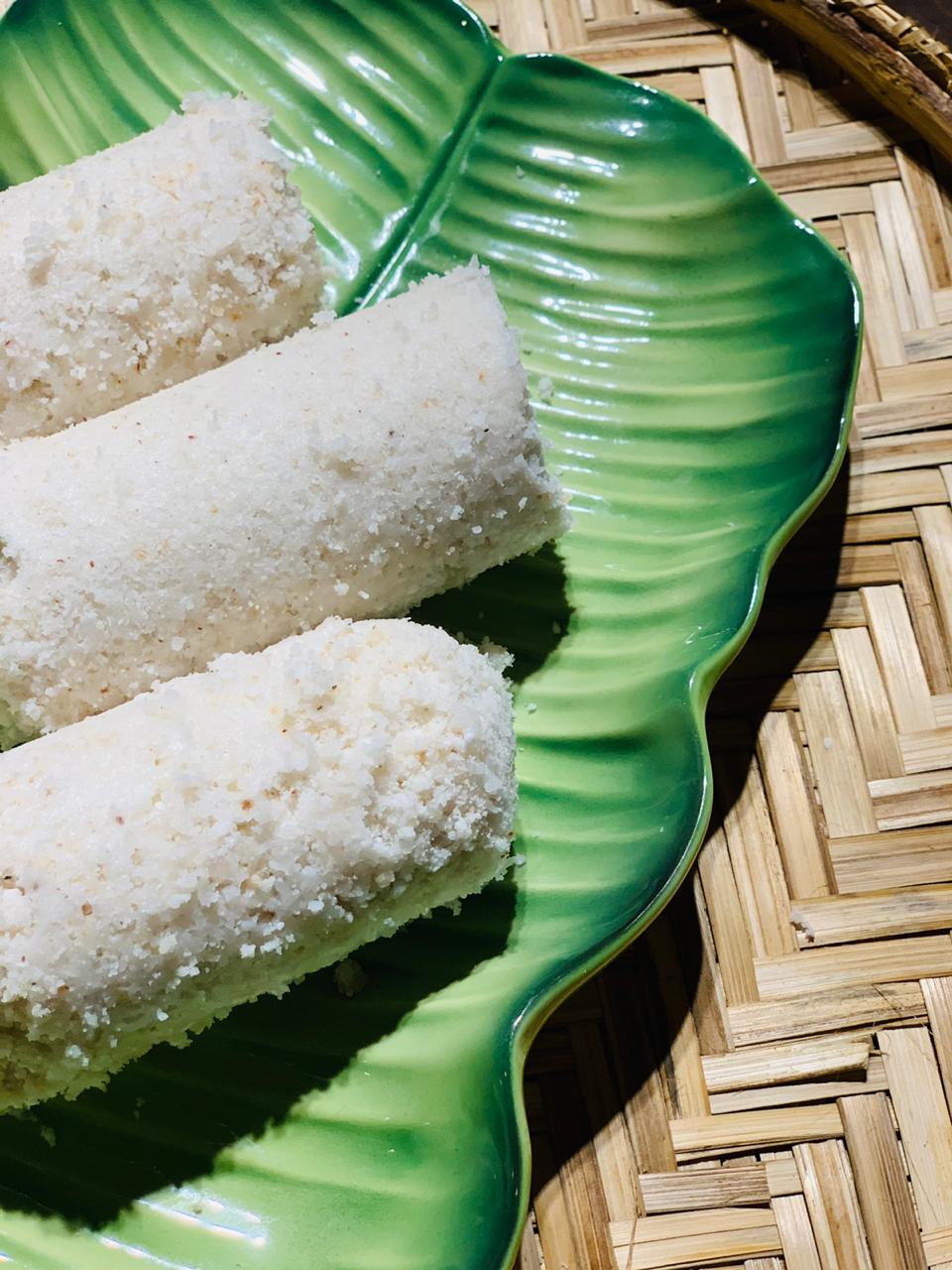
Alternating layers of roasted rice flour and freshly grated coconut steamed inside a bamboo mold, producing a crumbly, fragrant cylinder that soaks up curry like a sponge.
Nutrition & Info
Allergen Warnings
Equipment Needed
Presentation Guide
Vessel: plate
Garnishes: grated coconut on top
Accompaniments: coconut milk curry, dhal, pol sambol, banana
Instructions
-
1
Mix rice flour and salt in a bowl. Sprinkle water gradually, rubbing the flour between your palms until it becomes a loose, crumbly texture (not a dough).
-
2
Sift the moistened flour through your fingers to remove lumps — it should resemble coarse sand.
-
3
Fill the pittu mold in alternating layers: a layer of grated coconut, then a layer of rice flour, repeating until full. Top with coconut.
-
4
Attach the mold to a pot of boiling water (or steamer). Steam for 10-12 minutes until cooked through.
-
5
Push the pittu out of the mold. It should hold its cylindrical shape but crumble easily.
-
6
Serve hot with coconut milk curry, dhal, or pol sambol. Can also be eaten with jaggery and banana for a sweet version.
Did You Know?
The rhythmic tapping sound of pittu being pushed out of the bamboo mold is so iconic that Sri Lankans abroad say it triggers instant homesickness.
Chef's Notes
Equipment Tips
- pittu mold (bamboo cylinder)
- steamer
- mixing bowl
Garnishing
grated coconut on top
Accompaniments
coconut milk curry, dhal, pol sambol, banana
The Story Behind Pittu
Pittu is believed to have originated in the ancient culinary exchange between Sri Lanka and Tamil Nadu. The bamboo mold steaming technique showcases indigenous engineering, using the natural properties of bamboo to create an even steam chamber. Red rice flour pittu, made from unpolished traditional rice varieties, is considered more nutritious and flavorful than the white flour version.


Comments (0)
Log in to leave a comment.
No comments yet. Be the first to share your thoughts!