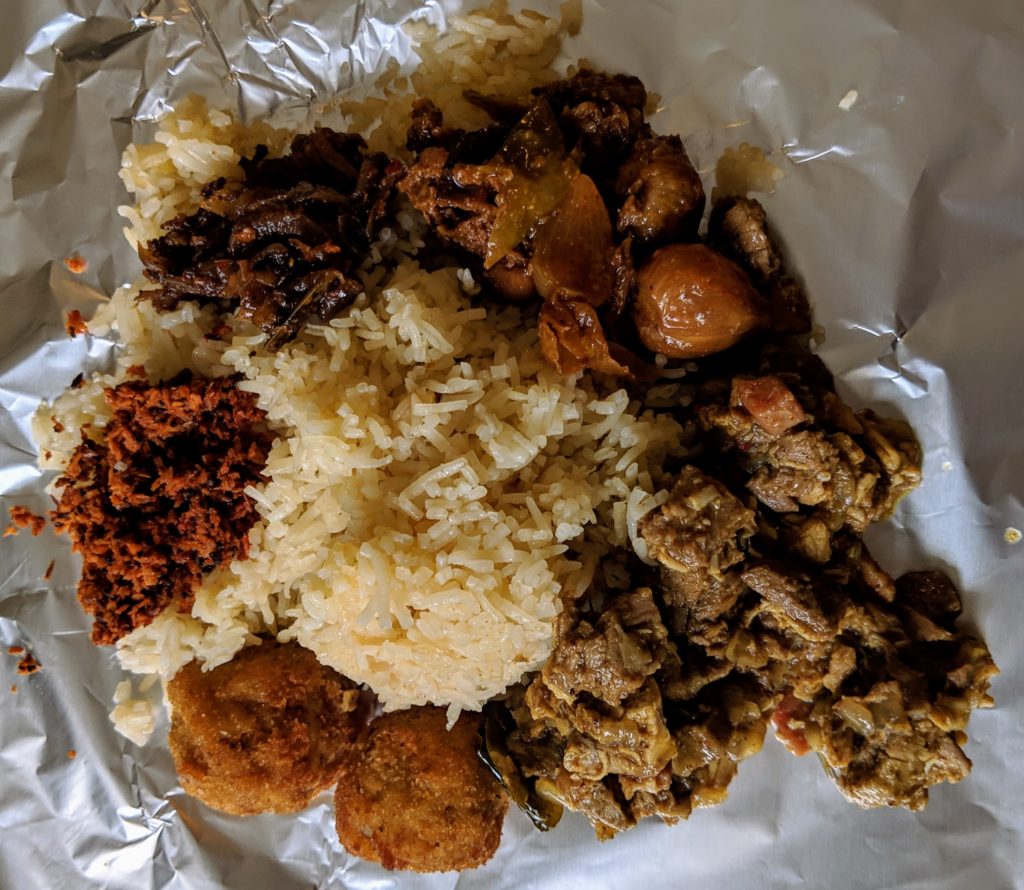
A glorious Burgher-heritage parcel of rice cooked in rich stock, paired with a complex dry meat curry, seeni sambol, ash plantain curry, and a crispy frikkadel, all wrapped in banana leaves and baked until the flavors meld into a fragrant, unified masterpiece. This is Sri Lanka's most elaborate single-serving meal.
Nutrition & Info
Allergen Warnings
Equipment Needed
Presentation Guide
Vessel: banana leaf parcel
Garnishes: frikkadel (meat cutlet), blachan (shrimp paste)
Accompaniments: ash plantain curry, eggplant moju
Instructions
-
1
Cook the rice in rich meat stock with whole spices (cinnamon, cardamom, cloves) instead of water. The rice should be fluffy and deeply flavored. Each grain should glisten with the stock's richness.
-
2
Make the curry: brown the mixed meats in oil, add curry powder, coconut milk, and simmer for 45 minutes until the meat is tender and the gravy is thick and reduced. This should be a fairly dry curry.
-
3
Prepare seeni sambol: slow-cook sliced onions with Maldive fish, dried chilies, cinnamon, and a pinch of sugar for 30 minutes until dark, sweet, and jammy. This caramelized onion relish is essential.
-
4
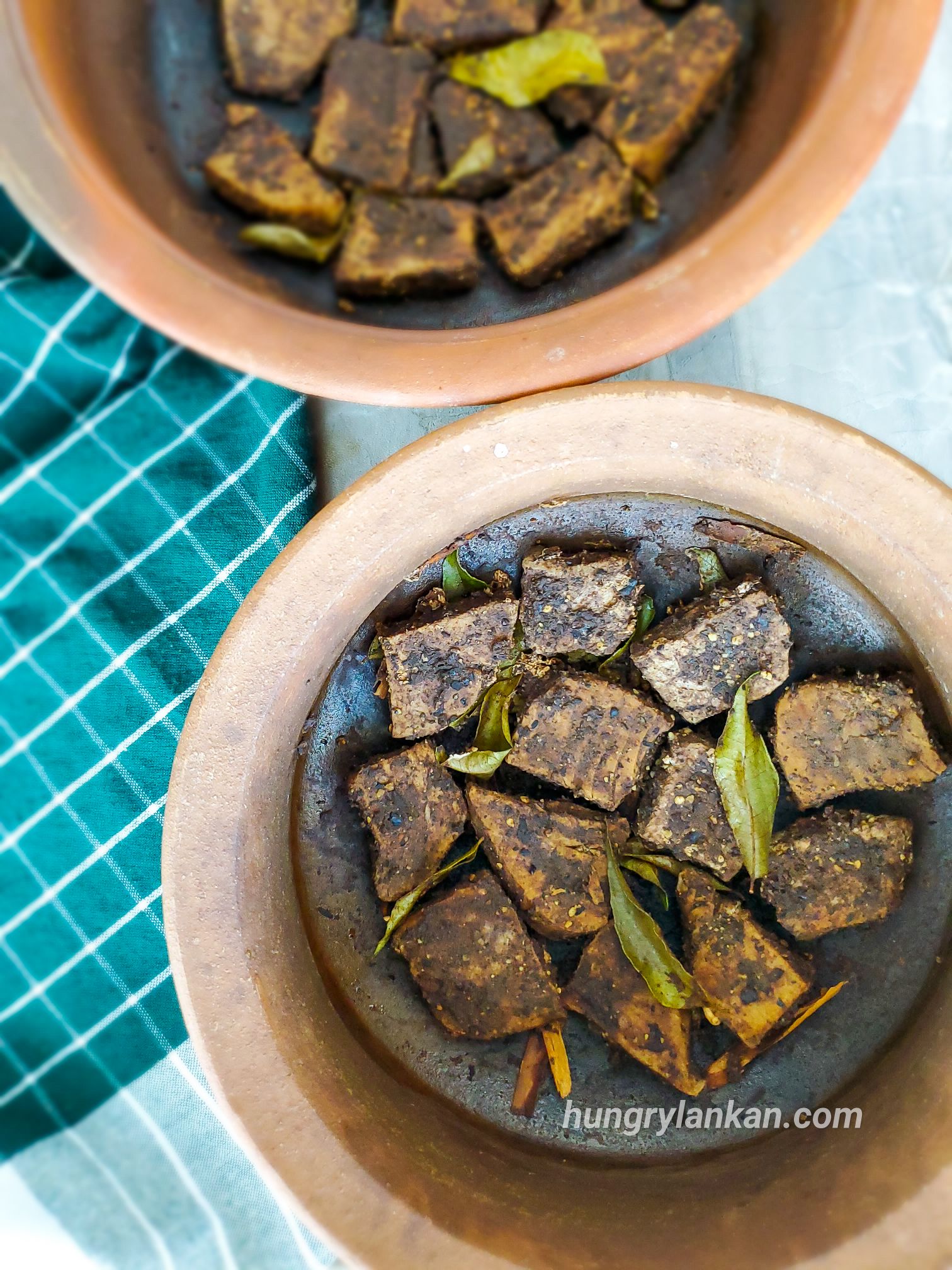
Prepare ash plantain curry by simmering sliced plantain in a coconut milk and curry leaf gravy until tender. Make frikkadels (Dutch-style meatballs) if desired by shaping seasoned minced meat into small balls and frying until golden.
-
5
Soften banana leaves by holding them over an open flame or blanching in hot water until pliable and deep green.
-
6
Assemble each lamprais: place a large banana leaf on the counter, add a generous portion of stock-cooked rice, top with meat curry, seeni sambol, plantain curry, half a boiled egg, and a frikkadel. Fold the banana leaf into a secure parcel.
-
7
Place the parcels on a baking tray and bake at 180C (350F) for 20-25 minutes until the banana leaves char slightly and all the components inside meld together. Serve in the banana leaf, unwrapping at the table to release the incredible aroma.
Did You Know?
Lamprais comes from the Dutch word 'lomprijst' (lump rice) and is a legacy of the Dutch Burgher community in Sri Lanka. It is such an elaborate dish that families traditionally make it only for Christmas, weddings, and special celebrations, assembling hundreds of parcels in a communal effort.
Chef's Notes
Equipment Tips
- banana leaves
- baking tray
- multiple pots
- string
Garnishing
frikkadel (meat cutlet), blachan (shrimp paste)
Accompaniments
ash plantain curry, eggplant moju
The Story Behind Lamprais
The Story: Lamprais is a Dutch Burgher heritage dish whose name derives from the Dutch-Indonesian lomprijst (a package of rice). It was brought to Sri Lanka by Burgher families, descendants of Dutch colonists and local women, who adapted Indonesian cooking traditions to the island's ingredients. The dish consists of rice cooked in stock, accompanied by meat curry, frikkadels (meatballs), eggplant curry, blachan (shrimp paste sambol), and ash plantain, all wrapped in a banana leaf and baked.
On the Calendar: Lamprais is a celebration food, traditionally prepared for Christmas, Easter, and special family gatherings. Its labor-intensive preparation makes it a dish reserved for occasions worth the effort.
Then & Now: Once exclusive to Burgher households, lamprais has been embraced across Sri Lankan communities and is now sold at specialty shops and restaurants. The banana leaf wrapping remains essential, imparting a subtle fragrance during baking.
Legacy: Lamprais is a delicious artifact of colonial history, embodying the cultural layering that defines Sri Lankan cuisine: Dutch, Indonesian, and Sinhalese traditions merged into a single banana-leaf parcel.

Comments (0)
Log in to leave a comment.
No comments yet. Be the first to share your thoughts!