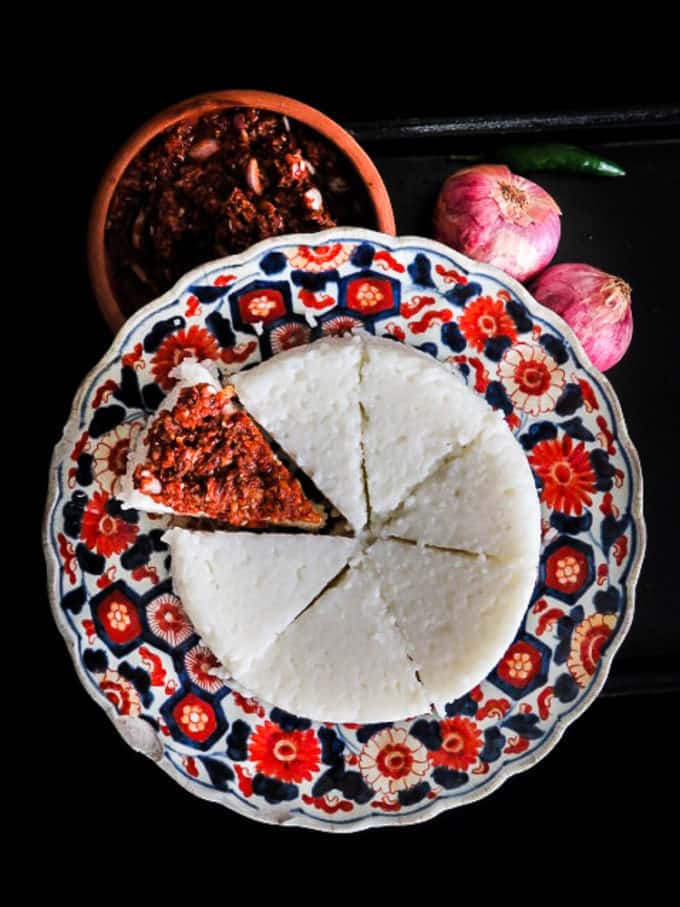
Rich, creamy rice cooked in thick coconut milk until it solidifies into a dense, sliceable cake, cut into diamond shapes and served with fiery lunu miris — Sri Lanka's ceremonial comfort food.
Nutrition & Info
Allergen Warnings
Equipment Needed
Presentation Guide
Vessel: flat plate or banana leaf
Garnishes: none
Accompaniments: lunu miris, kithul treacle (palm jaggery), banana
Instructions
-
1
Wash rice thoroughly and cook in water until almost done, about 15 minutes.
-
2
Pour thick coconut milk over the rice, add salt, and stir gently on low heat.
-
3
Continue cooking and stirring until the coconut milk is fully absorbed and the rice is thick and creamy.
-
4
Transfer the milk rice to a flat tray greased with coconut oil. Press firmly into an even layer about 2 cm thick.
-
5
Allow to cool and set for 10 minutes. Cut into diamond or rectangle shapes.
-
6
Serve with lunu miris (chili-onion-lime relish) or jaggery (kithul treacle).
Did You Know?
Kiribath is the first solid food traditionally fed to a Sri Lankan baby at six months, and it is always the first food cooked in a new home for good luck.
Chef's Notes
Equipment Tips
- heavy-bottomed pot
- flat tray
- sharp knife
Garnishing
none
Accompaniments
lunu miris, kithul treacle (palm jaggery), banana
The Story Behind Kiribath
Kiribath holds deep cultural significance in Sri Lankan life. It is cooked to mark every auspicious occasion — Sinhala and Tamil New Year, the first day of each month, weddings, and coming-of-age ceremonies. The dish predates Buddhism on the island, with roots in ancient agrarian rice-worship rituals. The act of boiling rice in coconut milk symbolizes abundance and prosperity.

Comments (0)
Log in to leave a comment.
No comments yet. Be the first to share your thoughts!