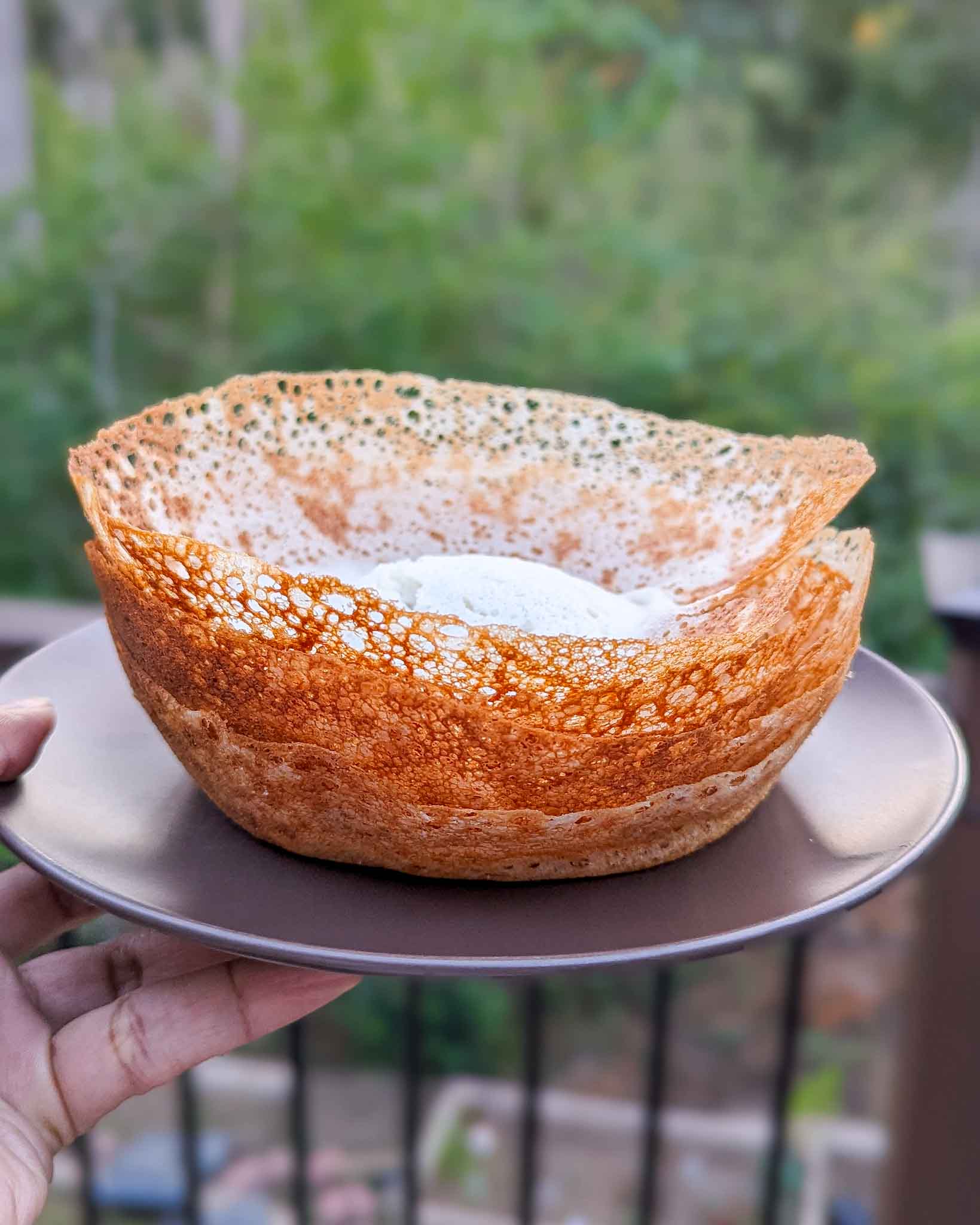
Ethereal bowl-shaped crepes made from fermented rice flour and coconut milk, with lacy, crispy edges that taper to a soft, spongy center cradling a perfectly cooked egg. These Sri Lankan breakfast treasures are the most elegant way to start any morning.
Nutrition & Info
Allergen Warnings
Equipment Needed
Presentation Guide
Vessel: individual bowl-shaped hopper
Garnishes: egg in center (egg hopper)
Accompaniments: lunu miris (chili sambol), coconut milk gravy
Instructions
-
1
The night before, combine rice flour, thin coconut milk, sugar, yeast, and salt in a bowl. Mix to a smooth batter the consistency of heavy cream. Cover and leave at room temperature overnight to ferment. The batter should be bubbly and slightly sour by morning.
-
2
In the morning, stir in the thick coconut milk to enrich the batter. Adjust consistency with water if needed. The batter should flow easily but not be watery.
-
3
Heat a small, deep-sided hopper pan (appachatti) over medium heat. Add a drop of coconut oil and wipe with a cloth.
-
4
Pour a ladleful of batter into the center of the hot pan, then immediately swirl the pan in a circular motion so the batter coats the sides in a thin layer while pooling thicker at the bottom.
-
5
Cover with a lid and cook for 2-3 minutes. The edges should turn golden, lacy, and crispy while the center remains soft and spongy. For egg hoppers, crack an egg into the center after the first minute and cover again.
-
6
The hopper is ready when the edges pull away from the pan and are deeply golden, and the egg white is set but the yolk is still runny. Use a thin spatula to ease it out.
-
7
Serve immediately with lunu miris (a spicy sambol of chili, onion, Maldive fish, and lime), coconut milk gravy, and a selection of curries. Tear off the crispy edges and use them to scoop up the accompaniments.
Did You Know?
The hopper pan (appachatti) is traditionally made from cast iron and is seasoned over years of use. Sri Lankan families pass down their hopper pans through generations, and a well-seasoned pan is considered essential for achieving the perfect crispy edge.
Chef's Notes
Equipment Tips
- hopper pan (appachatti)
- ladle
- lid
Garnishing
egg in center (egg hopper)
Accompaniments
lunu miris (chili sambol), coconut milk gravy
The Story Behind Appa
The Story: Hoppers, or appa in Sinhala, are bowl-shaped pancakes made from a fermented batter of rice flour, coconut milk, and a small amount of palm toddy. The fermentation technique is ancient, likely originating from the island's long tradition of toddy-tapping and rice cultivation. Some food historians trace connections to South Indian appam, though Sri Lankans have developed the dish into a uniquely local art form with countless variations.
On the Calendar: Hoppers are a breakfast staple and popular evening street food. Egg hoppers, with an egg cracked into the center during cooking, are a beloved weekend breakfast tradition. String hoppers (idiyappam), a related dish of steamed rice noodle nests, accompany curries at any meal.
Then & Now: Traditional hopper-making requires a small rounded pan and practiced wrist technique to swirl the batter into its characteristic bowl shape. While once exclusively home-cooked, hopper stalls now dot every Sri Lankan town, and the dish has gained international recognition through Sri Lankan diaspora restaurants.
Legacy: Hoppers represent Sri Lanka's mastery of fermentation and rice-based cooking, a dish that is simple in concept but demands skill and tradition to perfect.
More Sri Lankan Dishes
 Medium
📜 Story
Medium
📜 Story
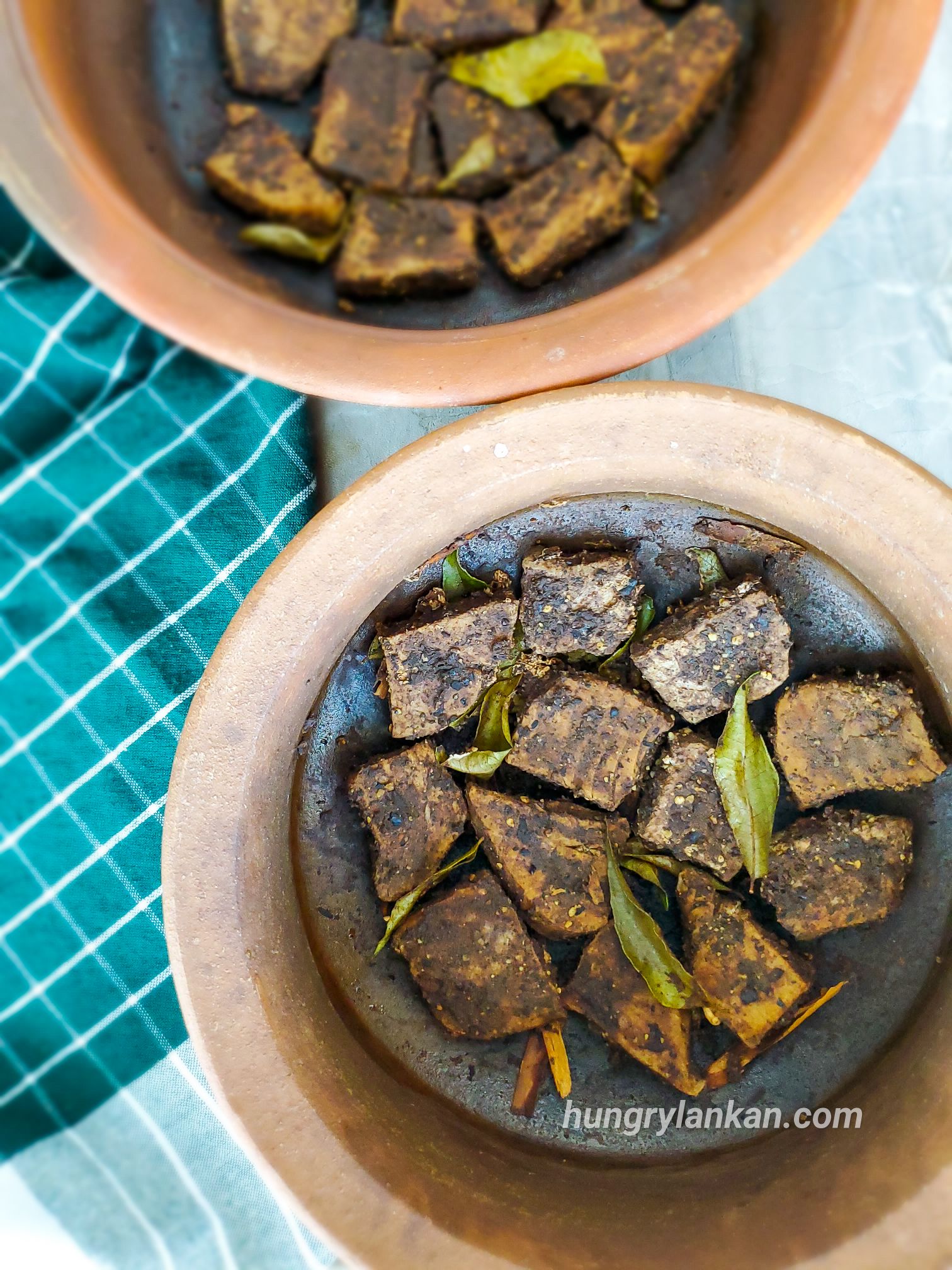
Ambulthiyal
Fish Ambulthiyal
Lunch or dinner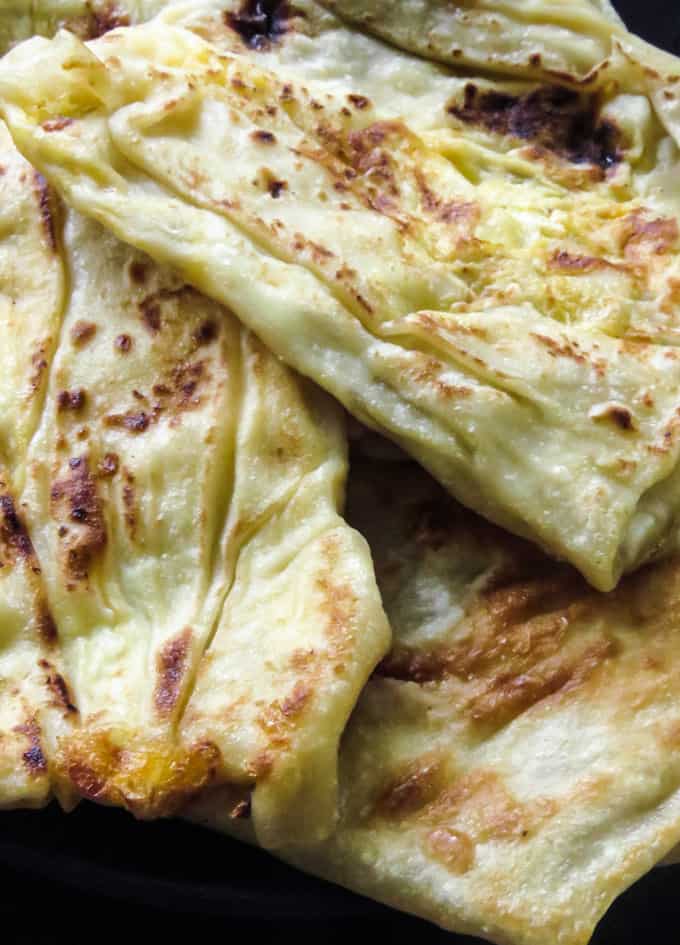 Hard
📜 Story
Hard
📜 Story
Beef Smoore
Sri Lankan Braised Beef in Coconut
Sunday lunch, special occasions Medium
📜 Story
Medium
📜 Story
Cashew Curry
Creamy Cashew Nut Curry
Special occasions, wedding feasts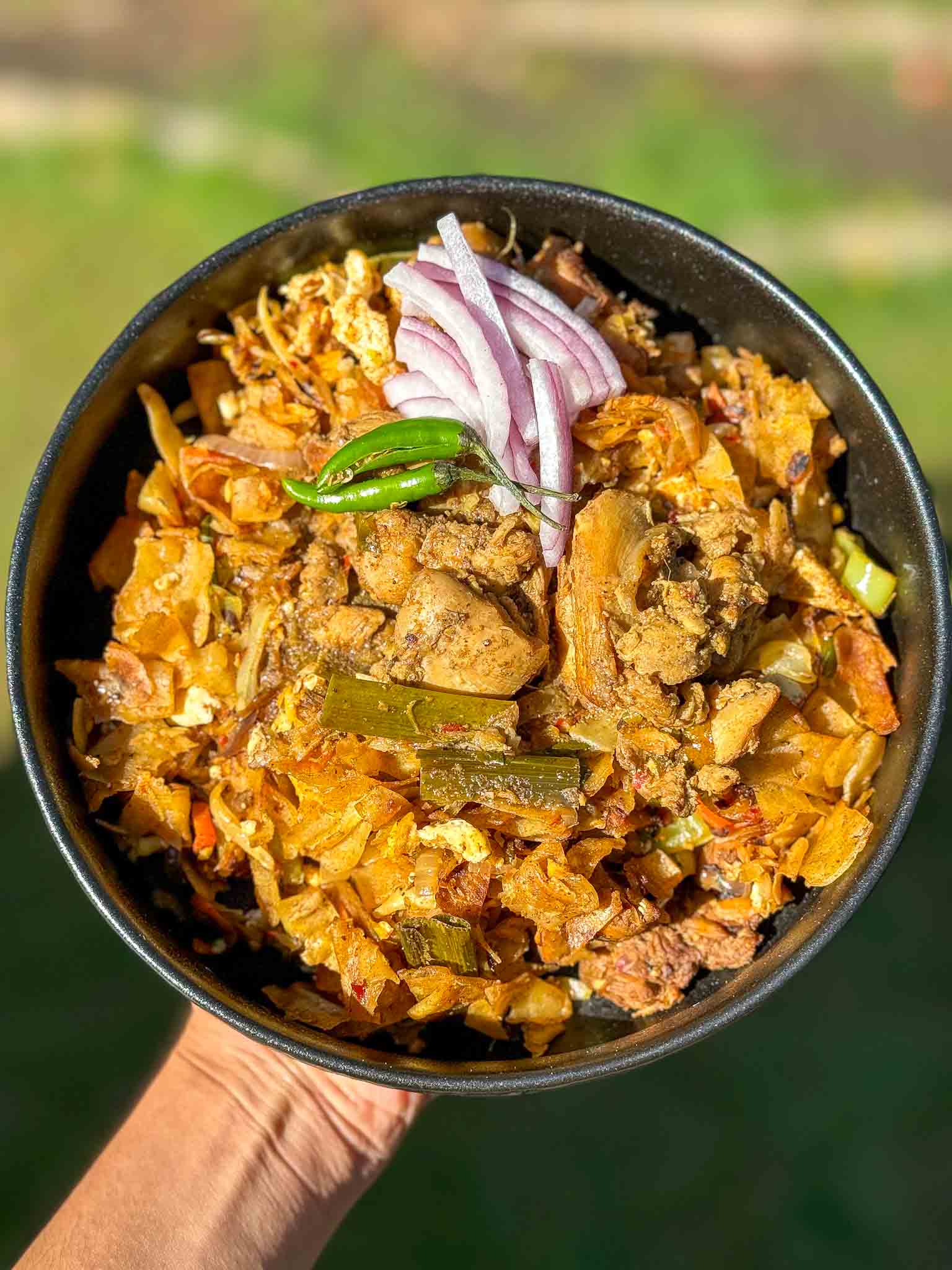 Medium
📜 Story
Medium
📜 Story
Chicken Kottu
Chopped Roti with Chicken
Dinner or late-night street food
Comments (0)
Log in to leave a comment.
No comments yet. Be the first to share your thoughts!