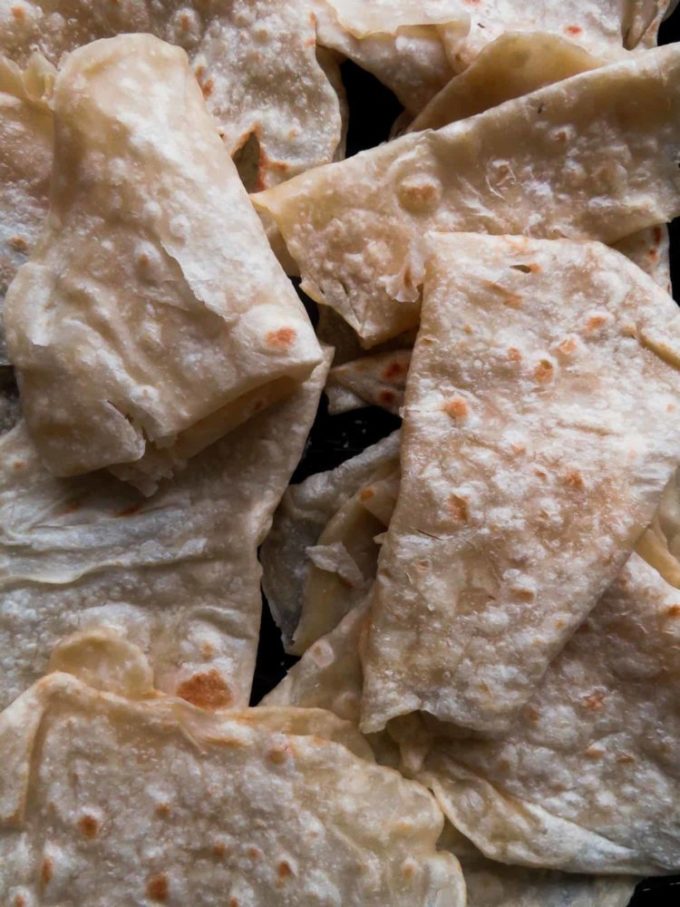
Paper-thin, stretchy dough flung into the air and slapped onto a hot griddle, folded into flaky, layered squares — the essential Sri Lankan flatbread, eaten plain or used for kottu.
Nutrition & Info
Allergen Warnings
Equipment Needed
Presentation Guide
Instructions
-
1
Mix flour, salt, and sugar. Add oil and warm water gradually, kneading until a soft, elastic dough forms.
-
2
Divide into 6 balls. Coat each generously with oil. Rest covered for at least 1 hour.
-
3
On an oiled surface, flatten one ball and stretch it by hand, pulling gently from the edges until paper-thin and almost translucent.
-
4
Fold the stretched dough into a square or triangle, creating layers.
-
5
Cook on a hot, oiled griddle for 2 minutes each side, pressing and flipping until golden and flaky.
-
6
Clap the roti between your palms while hot to separate the layers. Serve immediately.
Did You Know?
Expert roti makers can stretch the dough so thin you can read a newspaper through it — this skill takes years to master and is a source of immense pride among roti vendors.
Chef's Notes
Equipment Tips
- flat griddle or tawa
- flat surface for stretching
Garnishing
none
Accompaniments
The Story Behind Godamba Roti
Godamba roti traces its origins to the Malay community that settled in Sri Lanka during the colonial period. The stretching technique is related to Malaysian roti canai and Indian parotta, but Sri Lankan versions developed their own character. The roti became the essential vehicle for kottu roti, one of Sri Lanka's most famous dishes, and its versatility — eaten plain, stuffed, or chopped — makes it indispensable.

Comments (0)
Log in to leave a comment.
No comments yet. Be the first to share your thoughts!