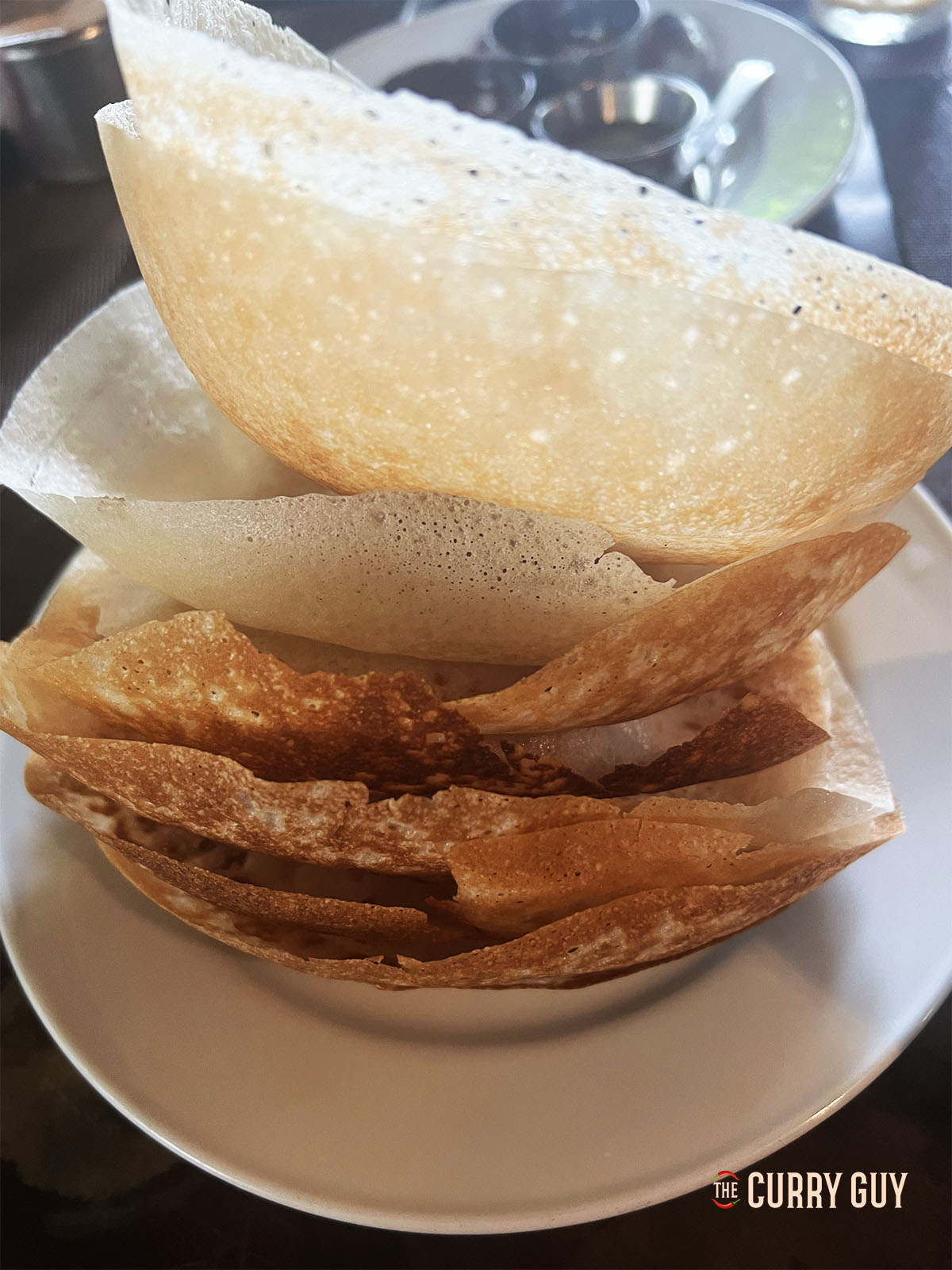
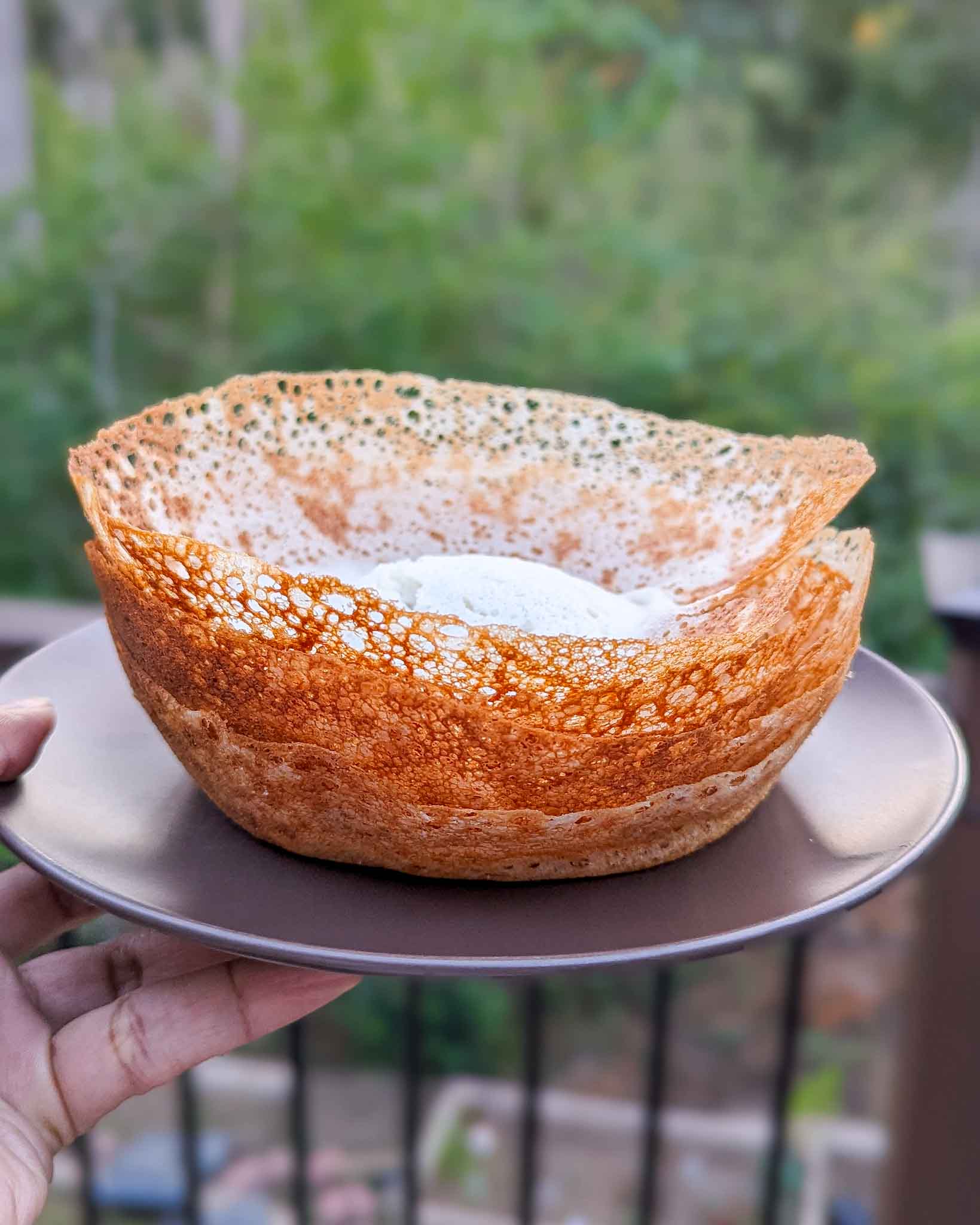
A crispy-edged, bowl-shaped fermented rice flour crepe with a perfectly cooked egg nestled in its soft center — the crown jewel of Sri Lankan breakfast.
Nutrition & Info
Allergen Warnings
Equipment Needed
Presentation Guide
Vessel: served in the hopper itself
Garnishes: none
Accompaniments: lunu miris, pol sambol, seeni sambol
Instructions
-
1
Mix rice flour, coconut milk, water, sugar, salt, and yeast into a smooth batter. Cover and ferment overnight at room temperature.
-
2
Next morning, stir the batter — it should be bubbly and slightly sour. Adjust consistency with water if needed (should coat a spoon).
-
3
Heat a hopper pan over medium heat and grease lightly with coconut oil.
-
4
Pour a ladleful of batter and swirl the pan to coat the sides thinly while leaving a pool of batter at the bottom.
-
5
Crack an egg into the center. Cover with a lid and cook for 3-4 minutes until the edges are golden and crispy and the egg white is set but yolk is still runny.
-
6
Carefully remove with a spatula. Serve immediately with lunu miris and pol sambol.
Did You Know?
The debate over runny vs. fully cooked egg hopper yolks is one of Sri Lanka's most passionate culinary arguments, with families firmly divided on the matter.
Chef's Notes
Equipment Tips
- hopper pan (appachatti)
- ladle
- lid
Garnishing
none
Accompaniments
The Story Behind Egg Hopper
The egg hopper evolved from the plain hopper as a more substantial breakfast option. The addition of an egg to the fermented batter crepe creates a self-contained meal in a single vessel. The technique of cooking the egg inside the hopper requires precise temperature control — too hot and the edges burn before the egg sets, too cool and the batter stays soggy.

Comments (0)
Log in to leave a comment.
No comments yet. Be the first to share your thoughts!