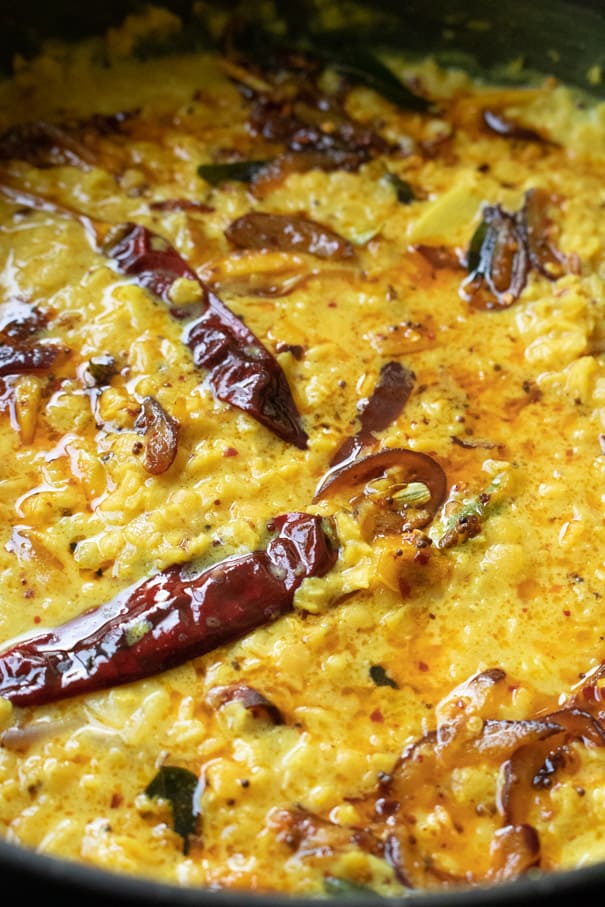
Creamy red lentils simmered in turmeric-golden coconut milk with curry leaves, mustard seeds, and a tempered spice crackle of cumin and dried chilies — Sri Lanka's daily comfort.
Nutrition & Info
Allergen Warnings
Equipment Needed
Presentation Guide
Vessel: shallow clay bowl
Garnishes: tempered spices, curry leaves
Accompaniments: steamed rice, pol sambol, papadum
Instructions
-
1
Rinse red lentils until water runs clear. Place in a saucepan with water, turmeric, onion, garlic, ginger, pandan leaf, and green chili.
-
2
Bring to a boil, then reduce heat and simmer for 20 minutes until lentils are completely soft and broken down.
-
3
Add coconut milk and tomato. Stir and simmer for another 5 minutes. Season with salt.
-
4
Prepare the temper: heat coconut oil in a small pan, add mustard seeds and let them pop. Add cumin seeds, dried chilies, and curry leaves. Fry for 30 seconds.
-
5
Pour the sizzling temper over the lentil curry. Stir gently. Serve hot with rice.
Did You Know?
Sri Lankan parippu is eaten so frequently that it is sometimes called the country's "national fuel" — most families cook it at least five times a week.
Chef's Notes
Equipment Tips
- saucepan
- small frying pan for tempering
Garnishing
tempered spices, curry leaves
Accompaniments
steamed rice, pol sambol, papadum
The Story Behind Dhal Curry
Dhal curry, known locally as parippu, arrived in Sri Lanka through centuries of cultural exchange with South India but evolved its own distinct character through the addition of coconut milk, pandan leaves, and Maldive fish. It became the most democratic dish in Sri Lankan cuisine — affordable, nutritious, and present on every table regardless of wealth or status.


Comments (0)
Log in to leave a comment.
No comments yet. Be the first to share your thoughts!