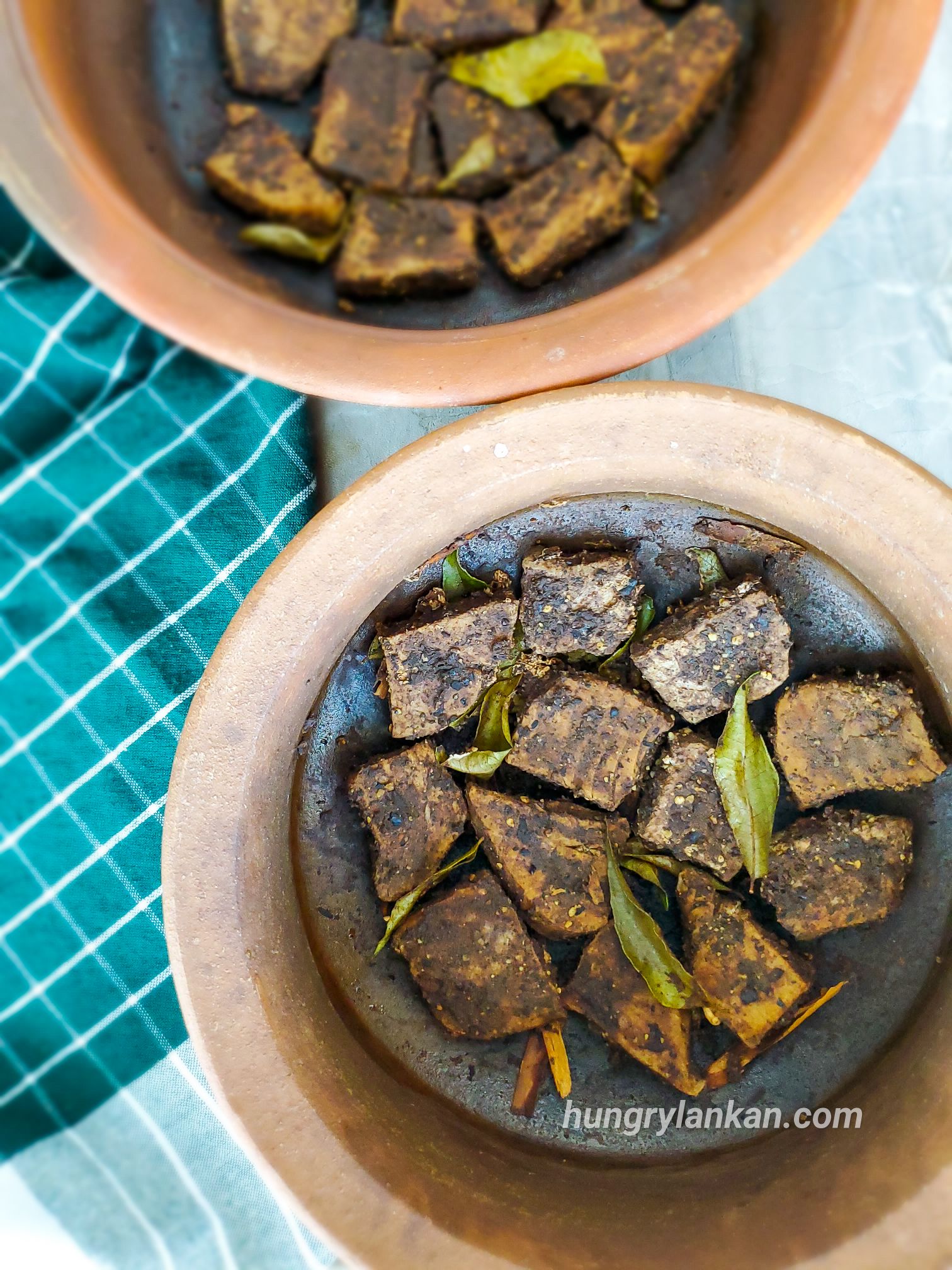
Beef Smoore
බීෆ් ස්මෝර් (beef SMORE)
Sri Lankan Braised Beef in Coconut
Tender beef cubes slow-braised in a rich, dark coconut gravy with roasted spices, tamarind, and vinegar until the sauce reduces to a thick, clinging coat — a Burgher-Sinhalese culinary masterpiece.
Nutrition & Info
Allergen Warnings
Equipment Needed
Presentation Guide
Vessel: deep serving bowl or clay pot
Garnishes: curry leaves, sliced green chili
Accompaniments: steamed rice, pol sambol, papadum
Instructions
-
1
Heat coconut oil in a heavy pot. Add cinnamon, cardamom, cloves, fennel seeds, and curry leaves. Fry until fragrant.
-
2
Add onions and cook until golden brown, about 10 minutes.
-
3
Add garlic, ginger, and green chilies. Cook for 2 minutes.
-
4
Add beef cubes and sear on all sides for 5 minutes. Add chili powder, curry powder, and turmeric.
-
5
Pour in thin coconut milk, tamarind paste, vinegar, and pandan leaf. Bring to a boil.
-
6
Reduce heat to very low, cover, and simmer for 1.5-2 hours until beef is fork-tender.
-
7
Add thick coconut milk. Simmer uncovered for 20 minutes until the sauce is thick and dark. Season with salt.
Did You Know?
The word "smoore" comes from the Dutch "smoor," meaning to braise — a technique the Dutch Burghers brought to Sri Lanka and that local cooks transformed with coconut and roasted spices.
Chef's Notes
Equipment Tips
- heavy Dutch oven or clay pot
- mortar and pestle
Garnishing
curry leaves, sliced green chili
Accompaniments
steamed rice, pol sambol, papadum
The Story Behind Beef Smoore
Beef smoore is a signature dish of the Sri Lankan Burgher community, descendants of Dutch and Portuguese colonists who intermarried with local populations. The Burghers adapted European braising techniques using coconut milk instead of cream and wine, creating a unique Eurasian culinary tradition. The dish represents one of the most successful fusions of European and Asian cooking methods.

Comments (0)
Log in to leave a comment.
No comments yet. Be the first to share your thoughts!