Tortilla Española
Tortilla Española (tor-TEE-yah es-pahn-YOH-lah)
Tortilla Española
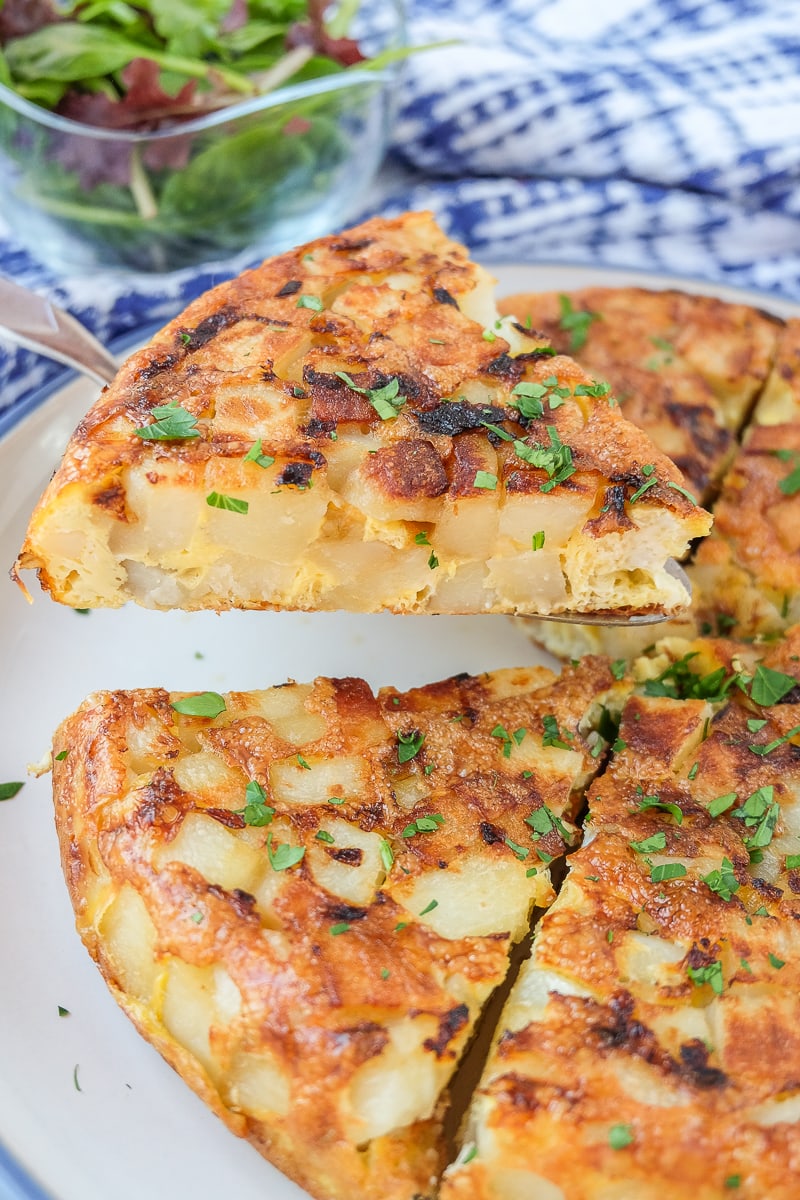
A magnificent, golden Spanish omelette thick with slow-cooked potatoes and onions, its exterior set to a golden crust while the center remains gloriously custardy and trembling. This deceptively simple tapas icon requires true skill to achieve the perfect flip and the coveted runny center.
Nutrition & Info
Allergen Warnings
Equipment Needed
Presentation Guide
Vessel: round serving plate, sliced into wedges
Garnishes: fresh parsley
Accompaniments: crusty bread, aioli
Instructions
-
1
Heat the olive oil in a deep 24cm non-stick skillet over medium-low heat. Add the thinly sliced potatoes and onion, season with salt, and cook gently for 20-25 minutes, stirring occasionally. The potatoes should be very tender but not browned. They are being confited, not fried.
-
2
Meanwhile, beat the eggs vigorously in a large bowl with a generous pinch of salt until slightly foamy.
-
3
Drain the cooked potatoes and onions through a colander set over a bowl, reserving the flavored olive oil. Let them cool for 3 minutes, then fold into the beaten eggs. Press gently so the potatoes begin to absorb the egg. Let this mixture sit for 10 minutes.
-
4
Heat 2 tablespoons of the reserved oil in the skillet over medium-high heat. Pour in the egg and potato mixture, spreading it evenly. Reduce heat to medium-low.
-
5
Cook for 5-6 minutes, gently running a spatula around the edges and shaking the pan occasionally. The bottom should be golden and set while the top is still liquid.
-
6
Place a large flat plate over the skillet and, in one confident motion, flip the tortilla onto the plate. Slide it back into the pan, uncooked side down. Tuck the edges under with a spatula to create a plump, round shape. Cook for another 2-3 minutes for a custardy center, or 4-5 minutes for fully set.
-
7
Slide onto a serving plate and let rest for 5 minutes. Serve warm or at room temperature, cut into wedges. In Spain, the debate between runny center (jugosa) and fully set (cuajada) is practically a political issue.
Did You Know?
The tortilla española debate about whether to include onion is so fierce in Spain that it has its own name: 'con cebolla o sin cebolla.' National surveys consistently show the country split roughly 60-40 in favor of including onion.
Chef's Notes
Equipment Tips
- non-stick skillet
- plate for flipping
- spatula
Garnishing
fresh parsley
Accompaniments
crusty bread, aioli
The Story Behind Tortilla Española
The Story: The Spanish tortilla, or tortilla de patatas, is a thick egg-and-potato omelet that became possible only after potatoes arrived from the Americas. The earliest recorded recipe dates to the early nineteenth century in Navarra, though the dish quickly spread across all of Spain. The debate over whether to include onions (con cebolla vs. sin cebolla) divides the nation with passionate intensity. Made with just eggs, potatoes, olive oil, and salt, it is a masterclass in simplicity.
On the Calendar: Tortilla is eaten at any time of day: sliced for breakfast, served as a tapa at bars, packed for picnics, or presented as a light dinner. It is a fixture at every Spanish gathering and celebration.
Then & Now: The recipe has remained essentially unchanged for two centuries. Every bar, cafe, and home kitchen in Spain produces its own version, and Spanish people judge establishments by the quality of their tortilla.
Legacy: Tortilla española is the quiet heart of Spanish cooking, proof that eggs, potatoes, and olive oil, in the right hands, need nothing more to achieve greatness.


Comments (0)
Log in to leave a comment.
No comments yet. Be the first to share your thoughts!