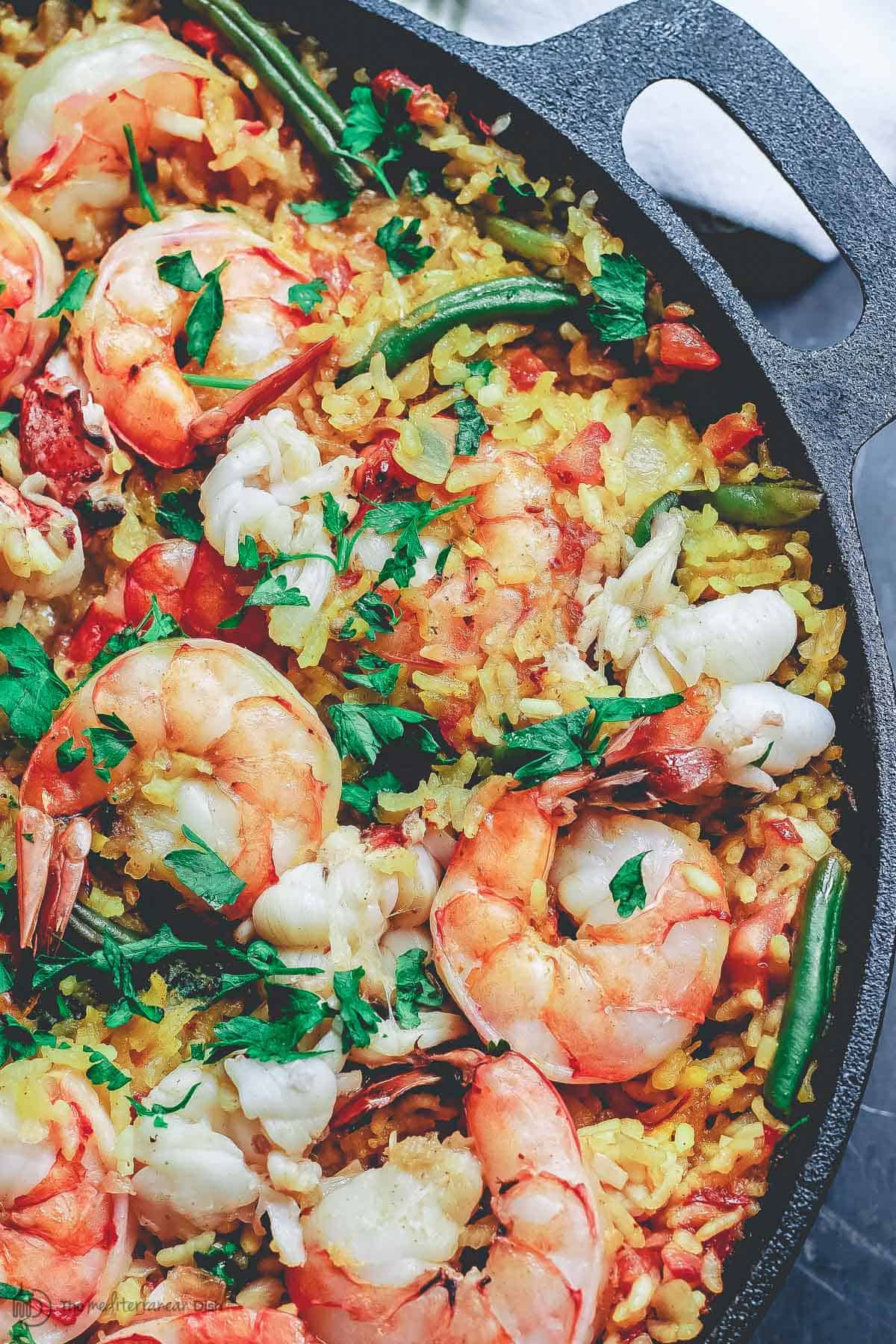
Paella de Mariscos
Paella de Mariscos (pah-EH-yah deh mah-REES-kohs)
Seafood Paella
The crown jewel of Valencian cuisine: saffron-infused rice cooked in a wide, shallow pan until the bottom develops the coveted socarrat crust, crowned with a spectacular array of prawns, mussels, clams, and calamari. Each grain stands separate, bursting with the concentrated essence of the sea.
Nutrition & Info
Allergen Warnings
Equipment Needed
Presentation Guide
Vessel: served directly in the paella pan
Garnishes: lemon wedges, fresh parsley, whole prawns arranged on top
Accompaniments: alioli, crusty bread, green salad
Instructions
-
1
Heat olive oil in a wide paella pan (at least 40cm) over medium-high heat. Sear the prawns for 1 minute each side until pink. Remove and set aside. Sauté the calamari rings for 2 minutes. Remove and set aside.
-
2
In the same pan, sauté the diced onion and pepper for 5 minutes until softened. Add garlic and cook 30 seconds. Add grated tomato and cook for 5 minutes until the mixture darkens and the liquid evaporates (sofrito).
-
3
Stir in the smoked paprika and saffron with its soaking liquid. Add the white wine and let it reduce by half.
-
4
Add the rice, stirring to coat every grain in the sofrito for 2 minutes. Pour in the hot stock, distributing the rice evenly across the pan. Season with salt. From this point forward, do not stir the rice.
-
5
Cook on medium-high heat for 10 minutes, then reduce to medium-low for another 8-10 minutes. Nestle the mussels and clams into the rice hinge-side down about 5 minutes before the rice is done.
-
6
Return the prawns and calamari to the pan for the last 3 minutes. When the liquid is absorbed and you can hear a faint crackling from the bottom, increase heat to high for 60-90 seconds to develop the socarrat (the prized crispy bottom layer).
-
7
Remove from heat, cover with a clean towel, and rest for 5 minutes. Garnish with parsley and lemon wedges. Serve directly from the pan, making sure everyone gets some of the golden socarrat.
Did You Know?
Valencians are fiercely protective of paella. The original paella valenciana contains rabbit, chicken, and snails, never seafood. Seafood paella was a coastal adaptation that became more famous internationally, much to the chagrin of Valencia's purists.
Chef's Notes
Equipment Tips
- paella pan (paellera)
- outdoor burner or large stove
- sharp knife
- wooden spoon
Garnishing
lemon wedges, fresh parsley, whole prawns arranged on top
Accompaniments
alioli, crusty bread, green salad
The Story Behind Paella de Mariscos
The Story: Paella originated in the rice-growing regions around Valencia in eastern Spain, where farmers and laborers cooked rice over open fires with whatever ingredients were at hand. The original paella valenciana used rabbit, chicken, snails, and green beans. Seafood paella developed along the coast, substituting shrimp, mussels, clams, and fish for land-based proteins. The name comes from the Old French paele (pan), itself from the Latin patella. Saffron gives the rice its iconic golden color, and the prized socarrat, the crispy rice crust at the bottom, is considered the best part.
On the Calendar: Paella is traditionally a Sunday lunch and celebration dish, cooked outdoors over wood fire. It is central to the Fallas festival in Valencia (March) and Las Hogueras in Alicante.
Then & Now: From a humble field worker's meal, paella has become Spain's most internationally recognized dish. Valencians passionately defend the authentic recipe against variations they consider inauthentic, making paella one of the most debated dishes in world cuisine.
Legacy: Paella represents the Spanish genius for transforming simple ingredients, rice, olive oil, saffron, and whatever the land or sea provides, into a communal masterpiece.


Comments (0)
Log in to leave a comment.
No comments yet. Be the first to share your thoughts!