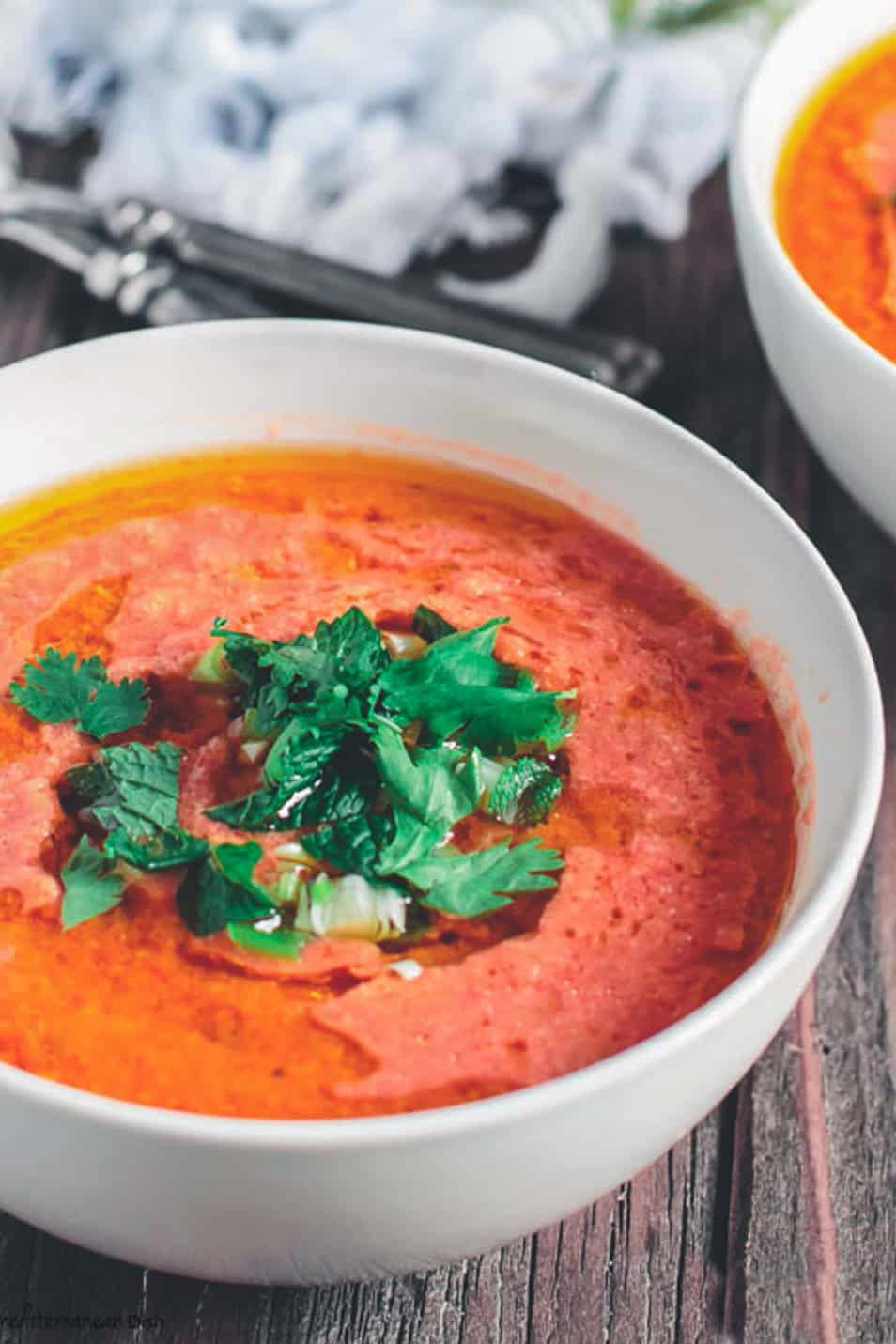
A chilled Andalusian soup of impossibly ripe tomatoes, cucumber, peppers, and garlic, blended to silky perfection with sherry vinegar and olive oil. Served ice-cold on a scorching summer day, this liquid salad is like drinking liquid sunshine with every refreshing, vibrant spoonful.
Nutrition & Info
Allergen Warnings
Equipment Needed
Presentation Guide
Vessel: chilled soup bowl
Garnishes: diced cucumber, croutons, olive oil drizzle
Accompaniments: crusty bread
Instructions
-
1
Soak the day-old bread in water for 5 minutes to soften. Squeeze out excess water.
-
2
Place the chopped tomatoes, cucumber, peppers, garlic, and soaked bread in a blender. Blend until completely smooth.
-
3
With the blender running, slowly drizzle in the olive oil to emulsify. Add sherry vinegar, cold water, and salt. Blend again until silky and uniform.
-
4
Strain through a fine-mesh sieve for the smoothest possible texture, pressing with a spoon to extract all the liquid. Discard the fibrous remains.
-
5
Taste and adjust the balance of vinegar, salt, and olive oil. The gazpacho should be bright, tangy, and well-seasoned. It will mellow as it chills.
-
6
Refrigerate for at least 2 hours, or preferably overnight, to allow the flavors to meld and deepen. Gazpacho must be served very cold.
-
7
Serve in chilled bowls with a generous drizzle of olive oil and a selection of finely diced garnishes: cucumber, pepper, croutons, and chopped hard-boiled egg. Each guest customizes their own bowl.
Did You Know?
The original gazpacho predates the arrival of tomatoes from the Americas and was simply a white soup of bread, garlic, olive oil, and vinegar. The tomato version we know today only became standard in the 19th century.
Chef's Notes
Equipment Tips
- blender
- mixing bowl
- fine sieve
Garnishing
diced cucumber, croutons, olive oil drizzle
Accompaniments
crusty bread
The Story Behind Gazpacho Andaluz
The Story: Gazpacho has ancient roots in Andalusia, where Roman and Moorish laborers ate cold soups of bread, olive oil, garlic, and vinegar to survive brutal summer heat. The dish was fundamentally transformed after the Columbian Exchange brought tomatoes and peppers from the Americas in the sixteenth century, giving gazpacho its now-iconic red color and bright flavor. The pre-tomato white version, ajo blanco, made with almonds and garlic, still survives in Malaga and Granada.
On the Calendar: Gazpacho is a summer staple, consumed daily during the scorching months across southern Spain. It is served at outdoor gatherings, family lunches, and as a refreshing first course.
Then & Now: Once a peasant survival food, gazpacho is now found in fine restaurants worldwide. Modern Spanish chefs have created variations using watermelon, cherry, and strawberry, while the classic tomato version remains the standard.
Legacy: Gazpacho tells the story of Spanish cuisine in a single bowl: Moorish foundations, New World ingredients, and the practical genius of turning heat and hunger into something beautiful.



Comments (1)
Log in to leave a comment.
Made this last weekend and my family loved it. Will definitely make again!