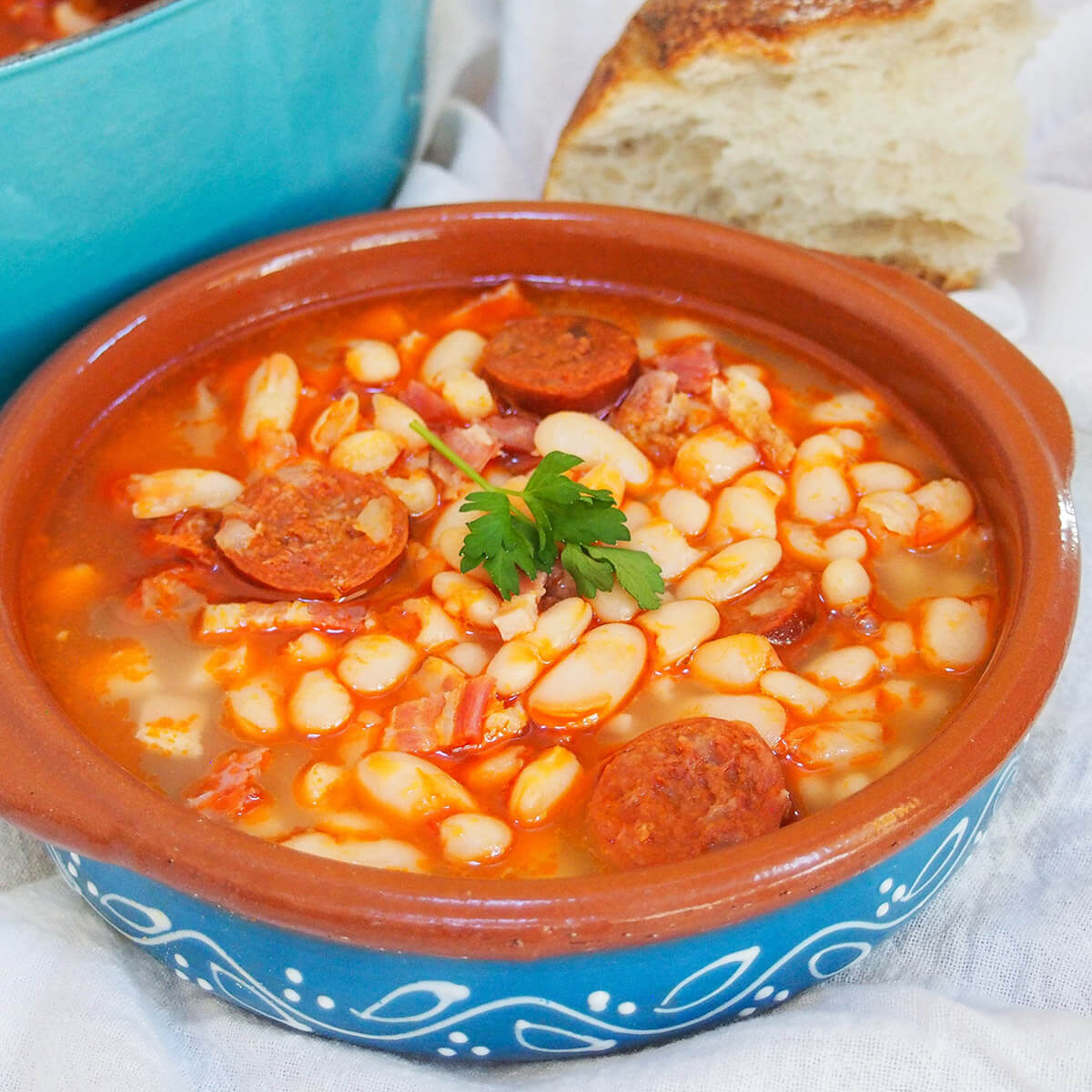
Fabada Asturiana
Fabada Asturiana (fah-BAH-dah as-too-ree-AH-nah)
Asturian Bean Stew (No Pork)
A hearty, warming stew from Asturias featuring large white fabes beans slow-simmered with smoked turkey and beef in a rich saffron-tinted broth until the beans are creamy and the liquid is thick and golden.
Nutrition & Info
Equipment Needed
Presentation Guide
Vessel: deep clay cazuela
Garnishes: parsley
Accompaniments: crusty bread, Asturian cider
Instructions
-
1
Drain soaked beans and place in a large pot. Cover with fresh cold water by 5cm.
-
2
Add smoked turkey leg, beef shank, halved onion, garlic cloves, and bay leaf.
-
3
Bring to a gentle simmer over medium heat. Skim any foam that rises to the surface.
-
4
Add saffron threads and olive oil. Reduce heat to very low and simmer uncovered for 2 hours, adding cold water if needed to keep beans submerged.
-
5
Remove meat, shred into pieces, and return to pot. Discard bay leaf and onion. Season with salt and pepper. The broth should be thick and creamy.
-
6
Rest the stew for 15 minutes off heat before serving — this allows flavors to deepen.
Did You Know?
Asturian cooks add cold water during cooking, called "asustar las fabes" (scaring the beans), which helps them cook evenly without breaking.
Chef's Notes
Equipment Tips
- large heavy pot
- colander
Garnishing
parsley
Accompaniments
crusty bread, Asturian cider
The Story Behind Fabada Asturiana
Fabada is the pride of Asturias, a lush green region in northern Spain. Originally a peasant dish designed to fuel miners and farmers through harsh winters, it has risen to become one of Spain's most iconic stews, traditionally made with local compango (cured meats). This version uses smoked turkey and beef.



Comments (0)
Log in to leave a comment.
No comments yet. Be the first to share your thoughts!