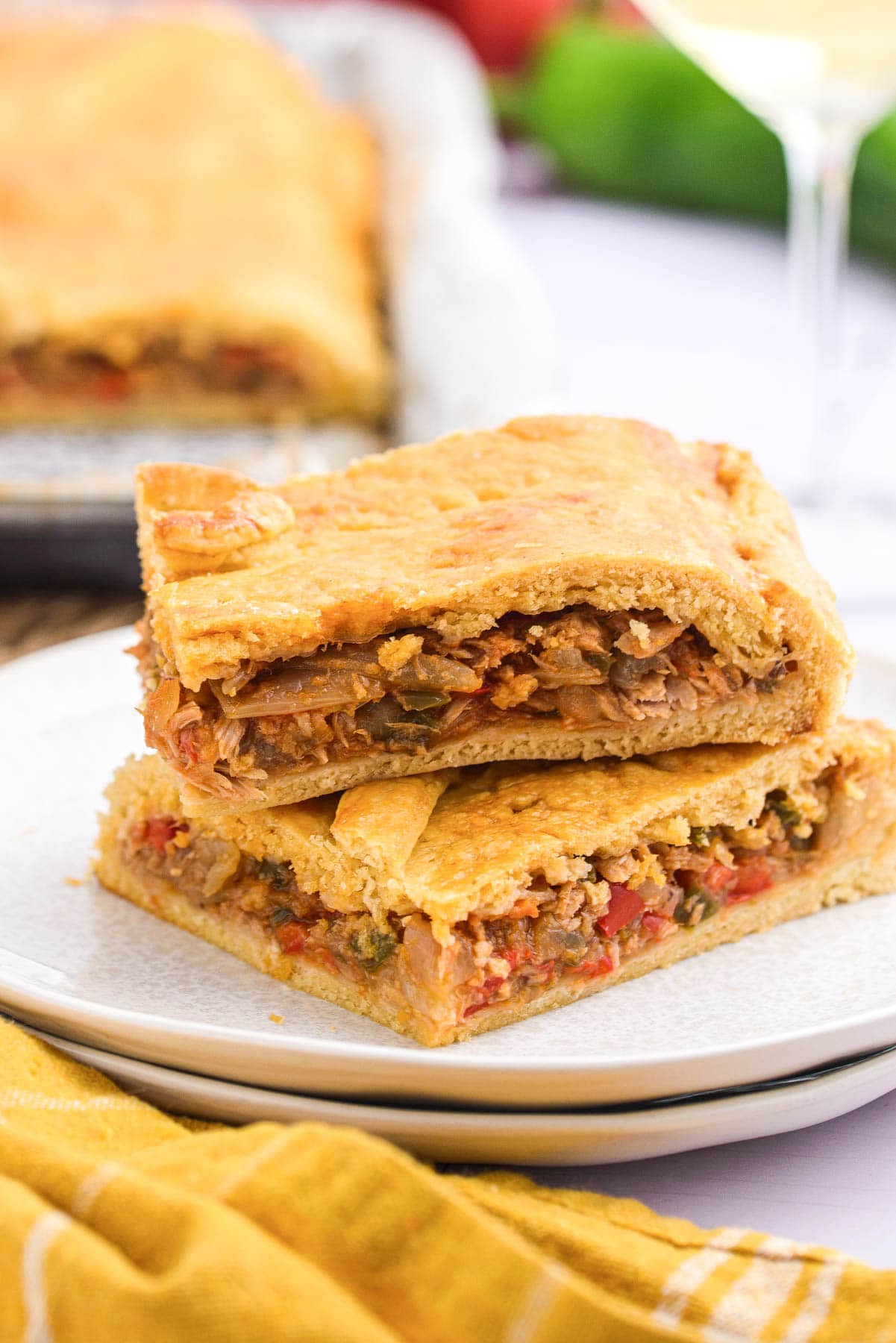
Empanada Gallega de Atún
Empanada Gallega (em-pah-NAH-dah gah-YEH-gah)
Galician Tuna Pie
A large, golden double-crusted pie from Galicia filled with sautéed onions, peppers, tomato, and canned tuna, baked until the thin bread-like dough turns beautifully golden.
Nutrition & Info
Allergen Warnings
Equipment Needed
Presentation Guide
Vessel: wooden cutting board
Garnishes: parsley
Accompaniments: green salad
Instructions
-
1
Mix flour, yeast, salt, 100ml olive oil, and warm water. Knead until smooth and elastic. Cover and rest 1 hour.
-
2
Sauté onions in remaining olive oil for 15 minutes until very soft. Add peppers and cook 5 minutes.
-
3
Add tomato sauce and pimentón, cook 5 minutes. Off heat, fold in drained tuna. Season and cool.
-
4
Divide dough in two. Roll one half thin and lay on an oiled baking tray, letting edges hang over.
-
5
Spread filling evenly. Roll second half and place on top. Fold and crimp edges to seal. Poke a few steam vents. Brush with beaten egg.
-
6
Bake at 200°C for 25-30 minutes until deep golden. Cool slightly before slicing into rectangles.
Did You Know?
Empanada gallega appears in the 12th-century Pórtico de la Gloria at Santiago de Compostela cathedral, proving pilgrims have been eating it for nearly a thousand years.
Chef's Notes
Equipment Tips
- large baking tray
- rolling pin
- large skillet
Garnishing
parsley
Accompaniments
green salad
The Story Behind Empanada Gallega de Atún
The Galician empanada dates to the Middle Ages, when pilgrims traveling to Santiago de Compostela needed portable food. Each region of Galicia fills its empanada differently — with tuna, sardines, or seasonal vegetables — but the thin bread-dough crust remains constant.



Comments (0)
Log in to leave a comment.
No comments yet. Be the first to share your thoughts!