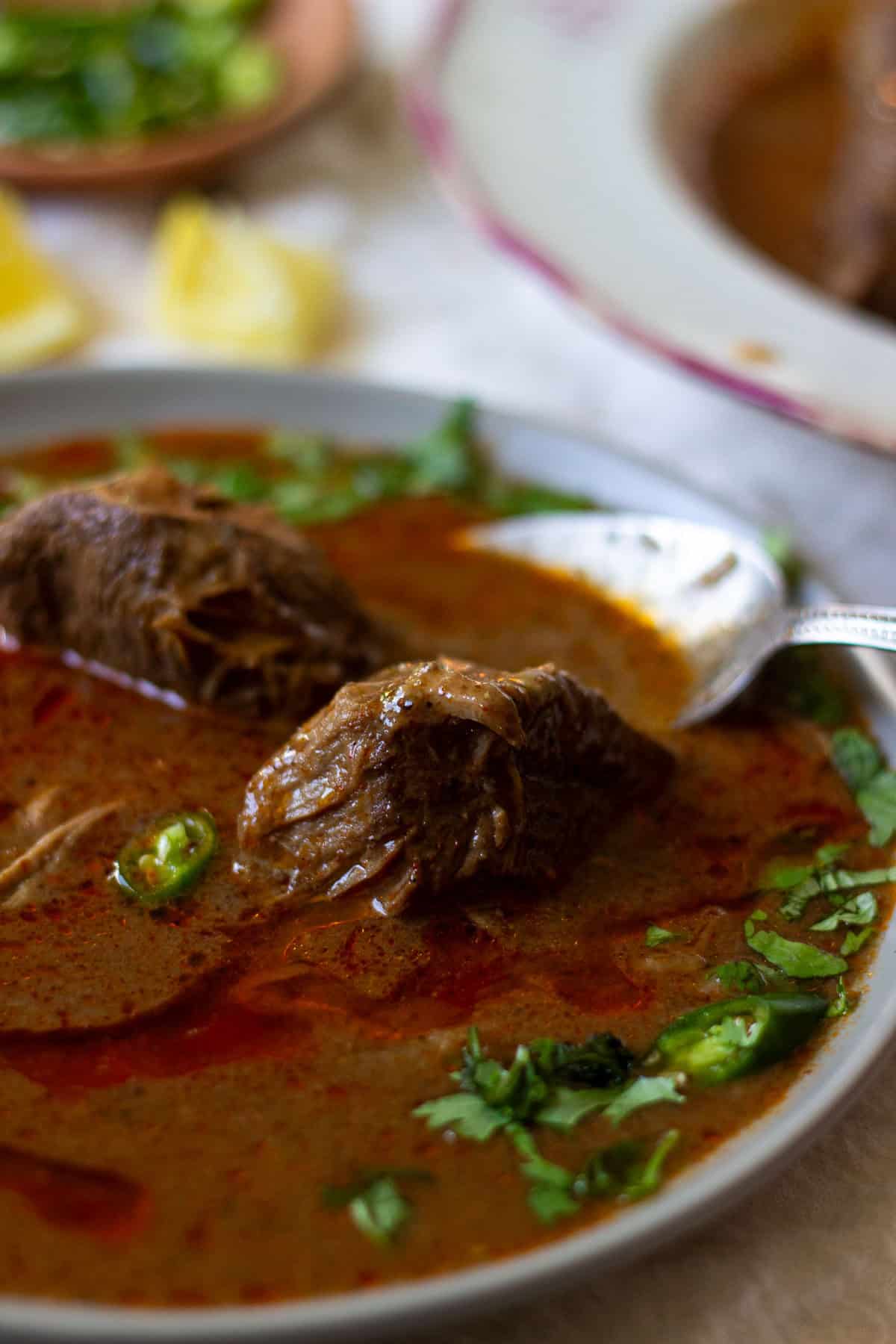
A thick, sumptuous porridge of slow-cooked beef, wheat, lentils, and barley, pounded until silky smooth and topped with fried onions and fresh ginger.
Nutrition & Info
Allergen Warnings
Equipment Needed
Presentation Guide
Vessel: deep bowl
Garnishes: fried onions, julienned ginger, lemon wedges, fresh mint
Accompaniments: naan bread, raita
Instructions
-
1
Place the soaked wheat berries, chana dal, masoor dal, and moong dal in a large pot with the meat chunks, diced onion, turmeric, and enough water to cover by five centimetres. Bring to a boil, skim any foam, then simmer covered for two hours until everything is extremely soft.
-
2
While the meat and grains cook, heat the oil in a skillet and fry the sliced onions over medium heat for fifteen minutes, stirring frequently, until deeply golden brown and crispy. These fried onions are essential both for the base flavour and as a final garnish.
-
3
Once the meat is falling apart, remove it from the pot and shred it finely with two forks. Using an immersion blender or potato masher, blend the remaining grain and lentil mixture in the pot until it becomes a smooth, thick porridge with no visible whole pieces.
-
4
Return the shredded meat to the blended mixture. Add the garlic, grated ginger, haleem masala, half the fried onions, and salt. Stir well and cook over medium-low heat for thirty minutes, stirring frequently to prevent sticking. The haleem should thicken considerably.
-
5
The finished haleem should be very thick, smooth, and flowing like lava, with shreds of meat visible throughout. It should coat the back of a spoon heavily. If too thick, add small amounts of water. If too thin, continue cooking uncovered until reduced.
-
6
Squeeze lime juice over the surface and stir through. Serve in bowls garnished generously with the remaining crispy fried onions, thin strips of fresh ginger, sliced green chilies, and fresh cilantro leaves. Haleem is traditionally served during Ramadan in Pakistan.
Did You Know?
Haleem is so labor-intensive that restaurants start preparing it days in advance during Ramadan, and it sells out within hours of breaking the fast.
Chef's Notes
Equipment Tips
- pressure cooker
- large pot
- hand blender or masher
Garnishing
fried onions, julienned ginger, lemon wedges, fresh mint
Accompaniments
naan bread, raita
The Story Behind Haleem
### The Story
Haleem evolved from harees, an Arabic porridge-like dish documented in the 10th-century Baghdad cookbook Kitab al-Tabikh by Abu Muhammad al-Muzaffar ibn Sayyar. Harees was introduced to the Indian subcontinent by Hadhrami Arab soldiers who served in the Nizam of Hyderabad's army, bringing with them traditional Yemeni dishes. Over the centuries, Mughal court cooks transformed the simple porridge by incorporating South Asian spices -- cumin, coriander, turmeric, and garam masala -- along with ghee for richness and a more finely blended texture. The result was haleem: a slow-cooked amalgamation of wheat, barley, lentils, and meat, pounded and stirred until the ingredients merge into a thick, velvety porridge.
### On the Calendar
Haleem is strongly associated with Ramadan, when it is served at iftar to break the fast. In Pakistan, haleem is available year-round but reaches peak popularity during the holy month, with dedicated haleem shops doing brisk business.
### Then & Now
Karachi haleem, the most prominent Pakistani variation, is known for its smooth consistency and balanced spicing. The dish requires hours of slow cooking and vigorous stirring, often prepared in enormous copper pots. Modern haleem is garnished with crispy fried onions, fresh ginger, lemon, green chilies, and fresh cilantro. Some cooks use pressure cookers to reduce preparation time, but purists insist on the traditional slow method.
### Legacy
Haleem traces an unbroken culinary line from medieval Baghdad to modern Karachi -- a dish that traveled along Arab trade routes, was refined in Mughal courts, and became a pillar of Pakistani Ramadan tradition.

Comments (0)
Log in to leave a comment.
No comments yet. Be the first to share your thoughts!