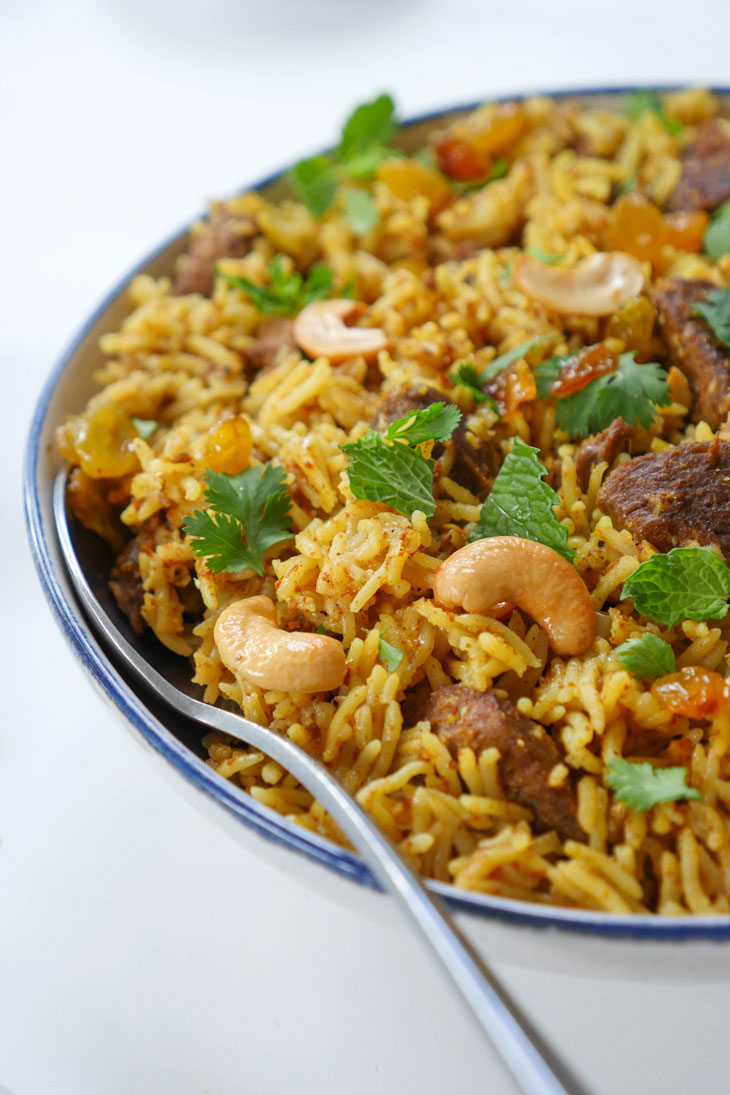
Layers of fragrant basmati rice and spiced meat slow-steamed together, each grain separate and infused with saffron, cardamom, and rose water. Pakistan's ultimate celebration dish.
Nutrition & Info
Allergen Warnings
Equipment Needed
Presentation Guide
Vessel: large copper handi or serving platter
Garnishes: fried onions (birista), fresh mint, saffron milk drizzle, sliced boiled eggs
Accompaniments: raita, mirchi ka salan, kachumber salad
Instructions
-
1
Marinate the meat with yogurt, half the ginger-garlic, one tablespoon of biryani masala, turmeric, salt, and green chilies. Mix well and refrigerate for at least two hours to tenderize the meat and infuse it with the spice mixture deeply.
-
2
Heat oil in a large heavy pot and fry the sliced onions in batches over medium-high heat for ten to twelve minutes until deeply golden brown and crispy. Remove two-thirds of the fried onions for layering and garnish; leave one-third in the pot.
-
3
Add the remaining ginger-garlic and diced tomatoes to the pot with the onions. Cook for five minutes, then add the marinated meat. Cook over high heat for ten minutes, stirring to sear the meat, then cover and simmer for twenty minutes until the meat is nearly tender.
-
4
Meanwhile, bring a large pot of well-salted water to a rolling boil. Add the soaked and drained rice and parboil for exactly five minutes until the grains are seventy percent cooked and still have a firm core. Drain immediately to stop the cooking.
-
5
Layer the parboiled rice over the cooked meat in the pot. Sprinkle with the saffron milk, remaining biryani masala, chopped mint, cilantro, and a portion of the reserved fried onions. Dot the surface with small pieces of butter or ghee.
-
6
Seal the pot tightly with aluminum foil pressed against the rim, then place the lid on top. Cook on the lowest possible heat for twenty-five minutes. This dum cooking steams the rice in the fragrant meat vapours, creating the signature layered biryani.
-
7
Remove from heat and let rest sealed for ten minutes. When you open the pot, gently fold the layers together with a wide spatula to reveal the contrasting white and saffron-gold rice with the spiced meat beneath. Serve with raita, salad, and remaining fried onions.
Did You Know?
In Karachi, biryani is so important that political campaigns have been won and lost based on which candidate serves the best biryani at rallies.
Chef's Notes
Equipment Tips
- heavy-bottomed pot (handi)
- large saucepan
- sharp knife
- mixing bowls
- aluminum foil for sealing (dum)
Garnishing
fried onions (birista), fresh mint, saffron milk drizzle, sliced boiled eggs
Accompaniments
raita, mirchi ka salan, kachumber salad
The Story Behind Biryani
### The Story
Biryani's origins trace to the Mughal Empire, where royal kitchens combined Persian pilaf traditions with Indian spices and yogurt-marinated meat to create a layered rice dish of extraordinary complexity. The dish likely developed from the Persian birinj biryan, evolving in the Mughal court kitchens of the Indian subcontinent. In Pakistan, Sindhi biryani -- originating from the Sindh province -- became the most celebrated variation, distinguished by its intense spiciness, the addition of potatoes and dried plums (aloo bukhara), and its use of sour yogurt and fresh mint. After Pakistan's independence in 1947, biryani culture flourished in Karachi, where Muhajir (migrant) communities brought their own biryani traditions from across the subcontinent.
### On the Calendar
Biryani is served at virtually every Pakistani celebration -- weddings, Eid festivities, family gatherings, and Friday lunches. It is the undisputed dish of celebration in Pakistani culture.
### Then & Now
Pakistan boasts numerous regional biryani styles: Sindhi biryani with its bold spice and potatoes, Karachi biryani with its fiery heat, Lahori biryani with a milder, more aromatic profile, and Bombay-style biryani brought by Muhajir communities. The debate over whose biryani is supreme is a national pastime. Street-side biryani stalls and home-cooked versions coexist, and the dish has become Pakistan's most globally recognized culinary contribution.
### Legacy
Biryani in Pakistan is more than a rice dish -- it is the centerpiece of celebration, the measure of a cook's skill, and a living testament to the Mughal culinary tradition that shaped the nation's palate.


Comments (0)
Log in to leave a comment.
No comments yet. Be the first to share your thoughts!