Lamb Tagine with Apricots
Lamb Tagine with Apricots
Lamb Tagine with Apricots
Submitted by foodlover2
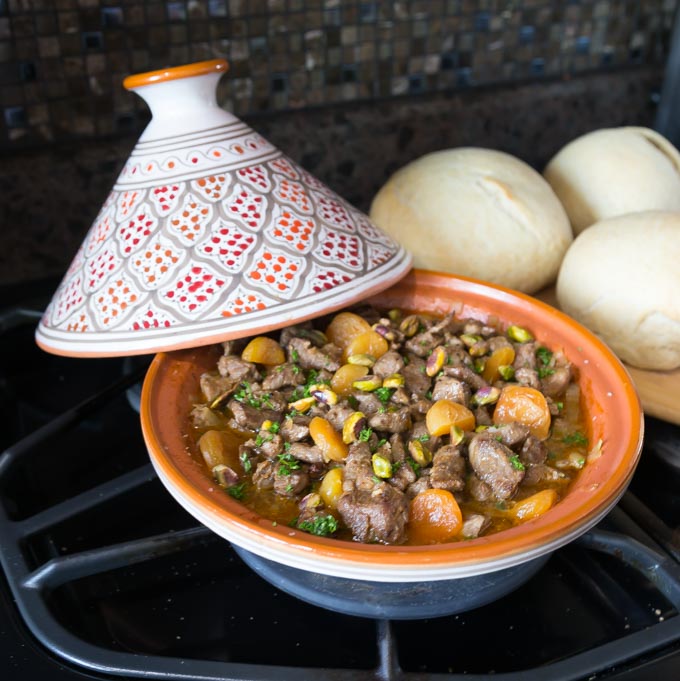
Tender lamb slow-cooked with dried apricots, almonds, and warm North African spices in a conical clay pot.
Nutrition & Info
Allergen Warnings
Instructions
-
1
Season the lamb pieces with salt, pepper, ginger, and turmeric. Heat the olive oil and half the butter in a tagine or heavy pot over medium-high heat and brown the lamb in batches for five minutes until deeply golden on all sides.
-
2
Add the sliced onions to the pot with the saffron water and one teaspoon of cinnamon. Reduce heat to low, cover tightly, and cook for one and a half hours, adding small splashes of water as needed to maintain a saucy consistency.
-
3
While the lamb simmers, soak the dried apricots in warm water for thirty minutes until they plump up and soften. Drain and set aside. These will be added later so they hold their shape and provide distinct bursts of sweet fruit in each bite.
-
4
When the lamb is very tender, add the drained apricots, honey, and remaining cinnamon to the pot. Stir gently to combine without breaking the apricots, then cook uncovered for twenty minutes until the sauce is thick and glazes the meat.
-
5
Toast the almonds in a dry skillet over medium heat, tossing frequently for three minutes until golden and fragrant. Toast the sesame seeds separately for one minute until they pop and turn light brown, then set both aside for the final garnish.
-
6
Check the seasoning of the tagine and adjust with more honey for sweetness or salt for balance. The sauce should be thick, glossy, and deeply aromatic with a perfect harmony of sweet apricots, warm cinnamon, and savoury braised lamb.
-
7
Transfer the tagine to a serving platter or present in the cooking vessel. Scatter the toasted almonds and sesame seeds over the top and serve immediately alongside fluffy couscous or warm flatbread to soak up the sweet, spiced sauce.
Did You Know?
The conical tagine lid creates a cycle of condensation that bastes the meat continuously.
The Story Behind Lamb Tagine with Apricots
The tagine has its roots in Berber nomadic cooking, dating back over a thousand years. The portable clay cooking vessel was ideal for nomadic life, functioning as a portable oven that could be moved easily. One of the earliest references to food prepared in a similar vessel appears in The Thousand and One Nights, portions of which date to the 9th century. Arab migration in the 7th century introduced spices that transformed the basic Berber stew into the complex dish known today. Subsequent influences from Andalusian refugees, Ottoman traders, and French colonizers each left their mark on the tagine tradition.
The tagine is the heart and soul of Moroccan home cooking, representing the country's philosophy of slow, patient cooking that transforms simple ingredients into complex, layered flavors. The clay pot design is ingenious: the conical lid traps steam and returns it to the stew, requiring minimal water, a critical advantage in North Africa's arid climate. Every Moroccan household has its own tagine pot, and a bride traditionally receives one as part of her wedding gifts. The dish embodies the Moroccan talent for balancing sweet and savory, a legacy of Andalusian and Arab influence.



Comments (2)
Log in to leave a comment.
Perfect weekend cooking project. The house smelled incredible!
Perfect weekend cooking project. The house smelled incredible!