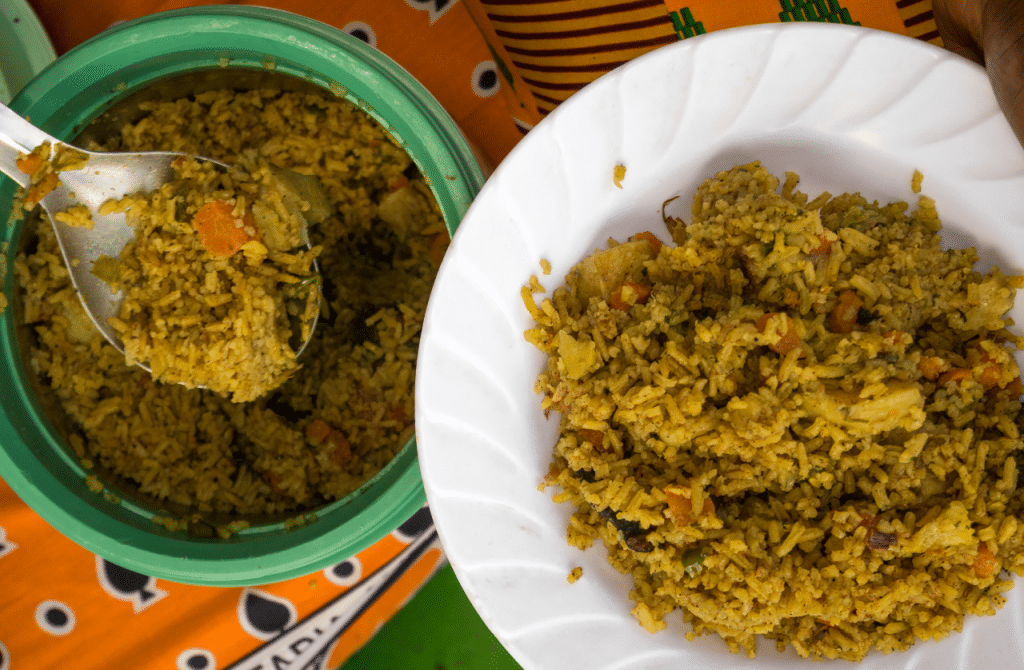
Aromatic, warmly spiced rice cooked with beef, whole spices, and caramelized onions — the Swahili coast's fragrant contribution to Kenyan cuisine.
Nutrition & Info
Equipment Needed
Presentation Guide
Vessel: large serving platter
Garnishes: fresh cilantro, sliced lime
Accompaniments: kachumbari, yogurt
Instructions
-
1
Heat the vegetable oil in a large heavy-bottomed pot over medium-high heat. Add the sliced onions and cook, stirring frequently, for fifteen to twenty minutes until they turn a deep mahogany brown. This caramelisation is the foundation of pilau's distinctive colour and flavour.
-
2
Add the beef cubes to the caramelised onions and brown them on all sides for about five minutes. Stir in the minced garlic and grated ginger, cooking for another minute until fragrant and aromatic.
-
3
Add the pilau masala, cardamom pods, cloves, and cinnamon stick, stirring the spices into the meat and onions for one minute to bloom them in the hot oil and release their essential oils into the dish.
-
4
Pour in enough water or broth to cover the meat by three centimetres. Bring to a boil, then reduce to a gentle simmer, cover, and cook for forty-five minutes to one hour until the beef is completely tender.
-
5
If using potatoes, add the quartered pieces to the pot and cook for ten minutes. Then drain the soaked rice and add it to the pot along with enough additional broth to sit about two centimetres above the rice level.
-
6
Bring the liquid back to a boil, then immediately reduce the heat to the lowest setting. Cover the pot tightly with aluminium foil and then the lid, creating a seal that traps all the steam inside for perfect rice.
-
7
Cook undisturbed for twenty minutes until the rice is fluffy and each grain is separate. The bottom layer should form a crispy golden crust called the haki, which is a prized part of the dish.
-
8
Remove from heat and let the pilau rest, covered, for five minutes. Fluff gently with a fork, being careful not to break the rice grains. Serve on a platter with the crispy bottom crust alongside kachumbari salad.
Did You Know?
Pilau masala (a blend of cumin, cardamom, cinnamon, pepper, and cloves) reflects the ancient spice trade through Mombasa's port.
Chef's Notes
Equipment Tips
- heavy-bottomed pot with lid
- mortar and pestle
- wooden spoon
Garnishing
fresh cilantro, sliced lime
Accompaniments
kachumbari, yogurt
The Story Behind Pilau
The Story: Kenyan pilau is a fragrant spiced rice dish that arrived on the Swahili coast through centuries of trade with Arab, Persian, and Indian merchants. The dish is prepared by toasting whole spices, including cumin, cardamom, cinnamon, and cloves, in oil before adding meat (typically beef or chicken) and rice, allowing everything to cook together until the grains absorb the aromatic broth. Each Swahili family guards its own pilau spice blend, often prepared in bulk and stored as a household staple.
On the Calendar: Pilau is a celebration dish served at weddings, Eid festivities, Christmas gatherings, and any special occasion. Along the coast, it is also an elevated weekday meal, while in Nairobi and the highlands it marks special occasions and Friday meals.
Then & Now: Originally a coastal Swahili specialty, pilau has been adopted across all of Kenya, becoming one of the country's most loved rice preparations. Ready-made pilau masala spice blends are now sold in every Kenyan market, making the dish accessible to cooks throughout the country.
Legacy: Pilau carries the fragrance of the Indian Ocean spice trade into every Kenyan kitchen, a dish that marks the boundary between ordinary meals and occasions worth celebrating.


Comments (1)
Log in to leave a comment.
I substituted coconut milk and it worked great. Highly recommend!