
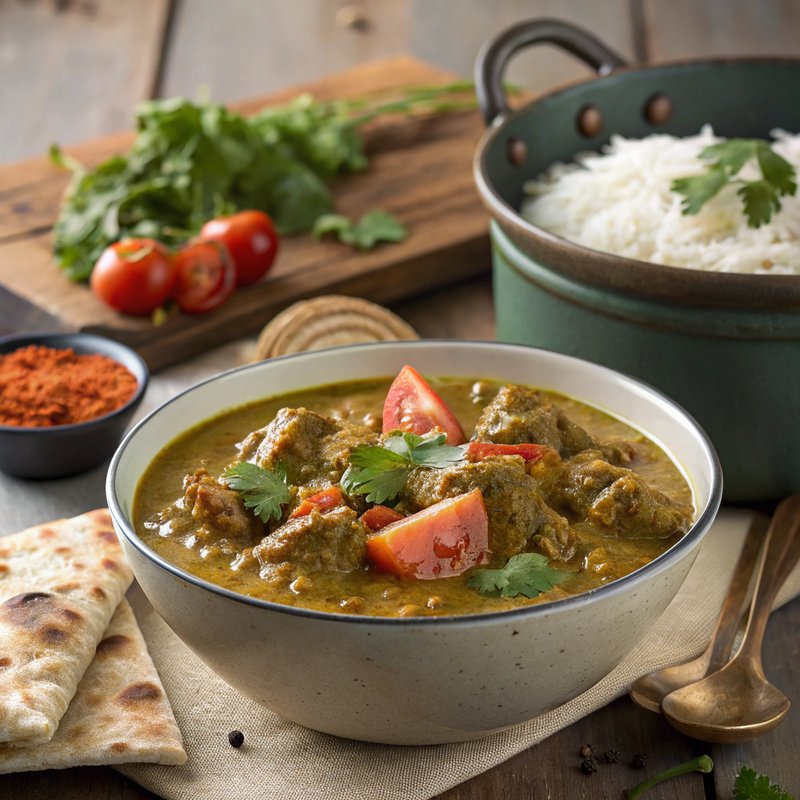
A flaky, layered flatbread cooked on a hot griddle with oil, featuring a uniquely Kenyan twist with its buttery, spiral-folded layers.
Instructions
-
1
Mix flour, salt, and sugar in a large bowl. Add warm water gradually, kneading for ten minutes until smooth and elastic.
-
2
Cover dough with a damp cloth and rest for thirty minutes to relax the gluten and make it pliable.
-
3
Divide into eight balls. Roll each into a thin circle, brush with oil, sprinkle with flour, then roll into a spiral.
-
4
Flatten each spiral back into a disc with a rolling pin, creating the characteristic flaky layers inside.
-
5
Cook on a hot, lightly oiled griddle for two minutes per side, pressing gently with a cloth to puff up the layers.
-
6
Stack cooked chapatis in a cloth-lined basket to keep warm and soft. Serve alongside stews or grilled meat.
Did You Know?
Kenyan chapati developed its distinctive flaky, layered texture through the influence of Indian railway workers who brought the bread to East Africa in the 1890s.
The Story Behind Chapati
Kenyan chapati is a delicious example of culinary fusion born from migration. Indian laborers brought to build the Kenya-Uganda Railway in the 1890s carried their flatbread tradition, which Kenyan cooks adopted and transformed. The Kenyan version became oilier and flakier than its Indian parent, with a signature spiral-fold technique that creates irresistible layers. Today chapati is so thoroughly Kenyan that many are surprised to learn of its origins.



Comments (0)
Log in to leave a comment.
No comments yet. Be the first to share your thoughts!