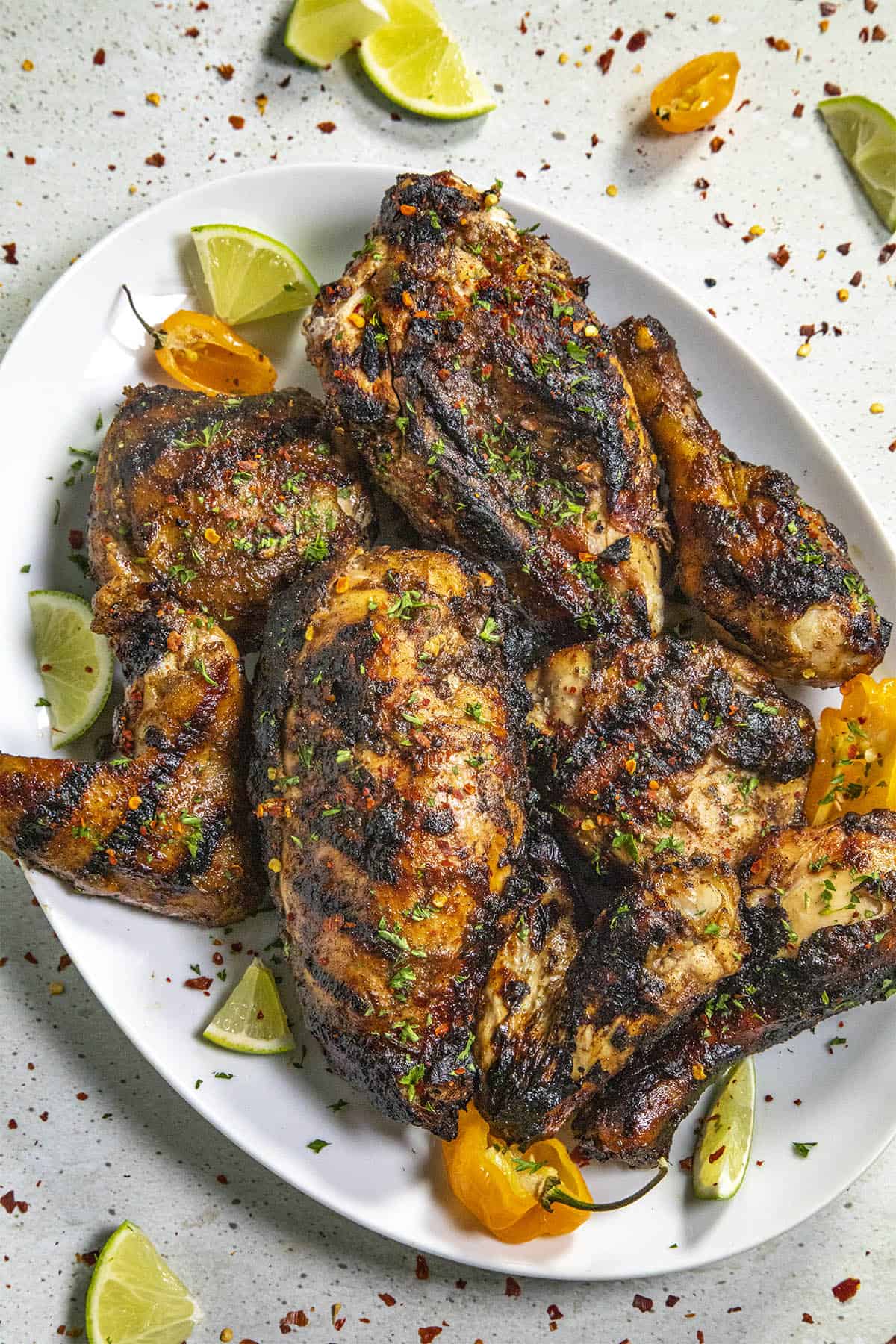
Chicken marinated in an electrifying paste of Scotch bonnet peppers, allspice, thyme, and garlic, then slow-smoked over pimento wood until the skin crackles and blackens while the meat stays impossibly juicy and infused with spicy, smoky, aromatic fire. This is the taste of Jamaica itself.
Nutrition & Info
Allergen Warnings
Equipment Needed
Presentation Guide
Vessel: wooden cutting board
Garnishes: scotch bonnet peppers, lime wedges
Accompaniments: rice and peas, festival, coleslaw
Instructions
-
1
Blend all the marinade ingredients (Scotch bonnets, thyme, scallions, garlic, allspice, pepper, soy sauce, brown sugar, lime juice, oil, cinnamon, nutmeg, vinegar, salt) into a thick, fiery paste. The aroma should be intense and complex.
-
2
Score the chicken pieces deeply to the bone. Wearing gloves, rub the jerk paste into every slash and crevice, ensuring complete coverage. Place in a container, cover, and marinate overnight in the refrigerator. The longer the better.
-
3
Prepare a charcoal grill for indirect cooking, using pimento (allspice) wood chips if available, soaked in water. The traditional smoky flavor comes from this specific wood.
-
4
Remove chicken from fridge 30 minutes before cooking. Place on the cooler side of the grill, skin-side up. Cover and smoke for 30-40 minutes at 160-175C (320-350F).
-
5
Move the chicken to the hot side of the grill and cook for 10-15 minutes, turning frequently, until the skin is deeply charred and caramelized and the internal temperature reaches 75C (165F).
-
6
Alternatively, for oven cooking: roast at 190C (375F) for 35-40 minutes, then finish under a hot broiler for 5 minutes to char the skin.
-
7
Let rest for 5 minutes, then chop through the bone with a heavy knife in the traditional Jamaican style. Serve with rice and peas, festival (fried dumplings), and extra Scotch bonnet sauce on the side.
Did You Know?
Jerk cooking originated with the Maroons, escaped enslaved Africans who used the indigenous Taino smoking technique and African spicing to preserve and flavor meat in Jamaica's Blue Mountains. The word 'jerk' likely comes from the Spanish 'charqui,' meaning dried meat.
Chef's Notes
Equipment Tips
- grill or charcoal drum
- blender
- basting brush
Garnishing
scotch bonnet peppers, lime wedges
Accompaniments
The Story Behind Jerk Chicken
The Story: Jerk cooking originated with the Maroons, communities of escaped enslaved Africans who took refuge in Jamaica's Blue Mountains beginning in the seventeenth century. They adapted Taino smoking techniques, combining them with African spice traditions to create a method of seasoning meat with allspice, scotch bonnet pepper, and thyme, then slow-smoking it over green pimento wood. The word jerk may derive from the Spanish charqui (dried meat) or from the Quechua ch'arki.
On the Calendar: Jerk is available year-round at roadside jerk pits across Jamaica, but it is especially prominent at community celebrations, Independence Day, and during the Portland Jerk Festival held annually in the parish where the tradition is strongest.
Then & Now: From its Maroon origins in the mountains of Portland parish, jerk has become one of the most recognized Caribbean flavors worldwide. Boston Bay in Portland remains the spiritual home of jerk, where pit masters still cook over traditional pimento wood fires.
Legacy: Jerk cooking is the most iconic gift of Maroon culture to world cuisine, a technique born of freedom and resistance that now represents Jamaica on the global stage.
More Jamaican Dishes
 Medium
📜 Story
Medium
📜 Story
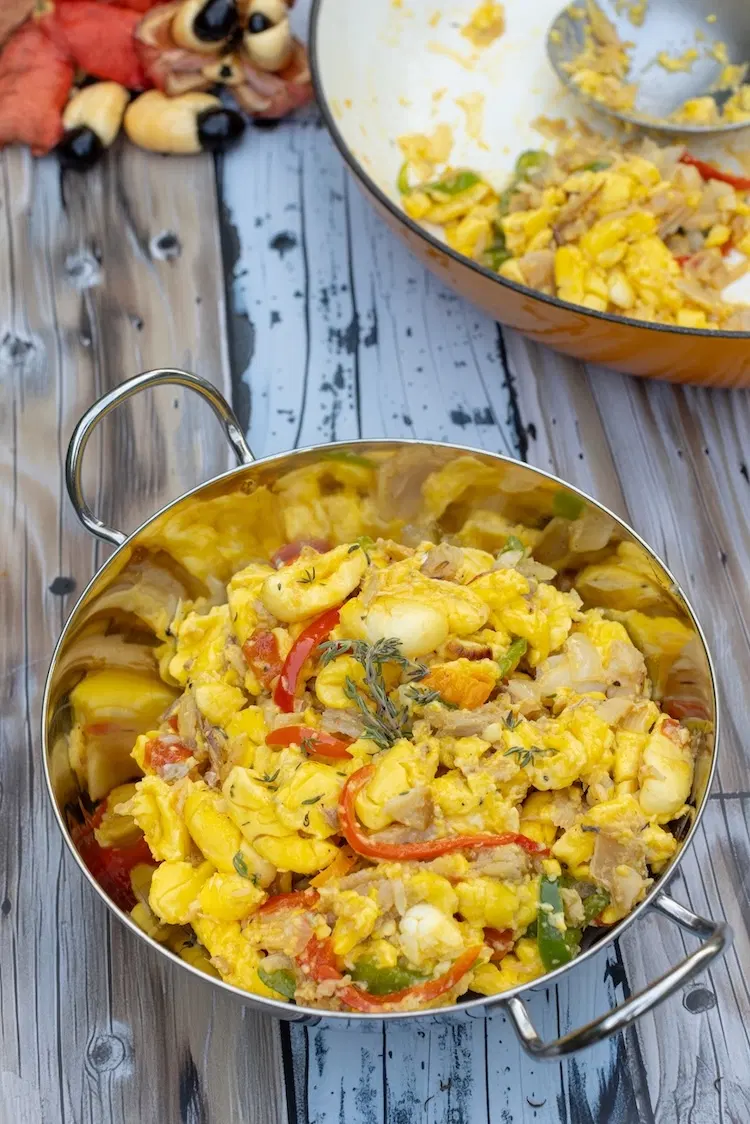
Ackee and Saltfish
Ackee and Saltfish
Breakfast Medium
📜 Story
Medium
📜 Story
Bammy
Cassava Flatbread
Breakfast or alongside fried fish Medium
📜 Story
Medium
📜 Story
Brown Stew Chicken
Caramelized Braised Chicken
Weekday dinner or Sunday lunch Easy
📜 Story
Easy
📜 Story
Callaloo
Sauteed Amaranth Greens
Breakfast, alongside saltfish
Comments (0)
Log in to leave a comment.
No comments yet. Be the first to share your thoughts!