
Dense, slightly sweet cassava flatbread soaked in coconut milk and fried until golden, a traditional Taino-origin staple of Jamaican cuisine.
Nutrition & Info
Allergen Warnings
Equipment Needed
Presentation Guide
Instructions
-
1
Grate peeled cassava finely using a box grater or food processor. Wrap grated cassava in a clean cloth and squeeze out all moisture.
-
2
Mix the dried cassava with salt and optional sugar. The texture should be like damp sand that holds together when pressed.
-
3
Pack cassava firmly into a dry skillet to form a flat disc about one centimeter thick. Cook on medium-low for five minutes per side.
-
4
Remove the firm bammy disc from the skillet and let it cool slightly. At this point it can be stored for later use.
-
5
Soak the bammy in coconut milk for ten minutes, turning once, until it absorbs the creamy liquid throughout its center.
-
6
Fry the soaked bammy in coconut oil over medium heat for three minutes per side until golden brown and heated through.
Did You Know?
Bammy is one of the few Jamaican foods that predates European colonization, having been made by the Taino people for centuries before Columbus arrived.
Chef's Notes
Equipment Tips
- grater or food processor
- heavy skillet
- clean cloth
Garnishing
coconut flakes
Accompaniments
escovitch fish, fried fish
The Story Behind Bammy
Bammy is Jamaica's most direct culinary link to its pre-Columbian past. The Taino people, Jamaica's original inhabitants, developed the technique of processing bitter cassava into edible flatbread long before European contact. When the Spanish and later British arrived, they adopted this indigenous food, and it persisted through centuries of colonial change. Today bammy remains a cherished part of Jamaican cuisine, especially alongside fried fish on the coast.
More Jamaican Dishes
 Medium
📜 Story
Medium
📜 Story
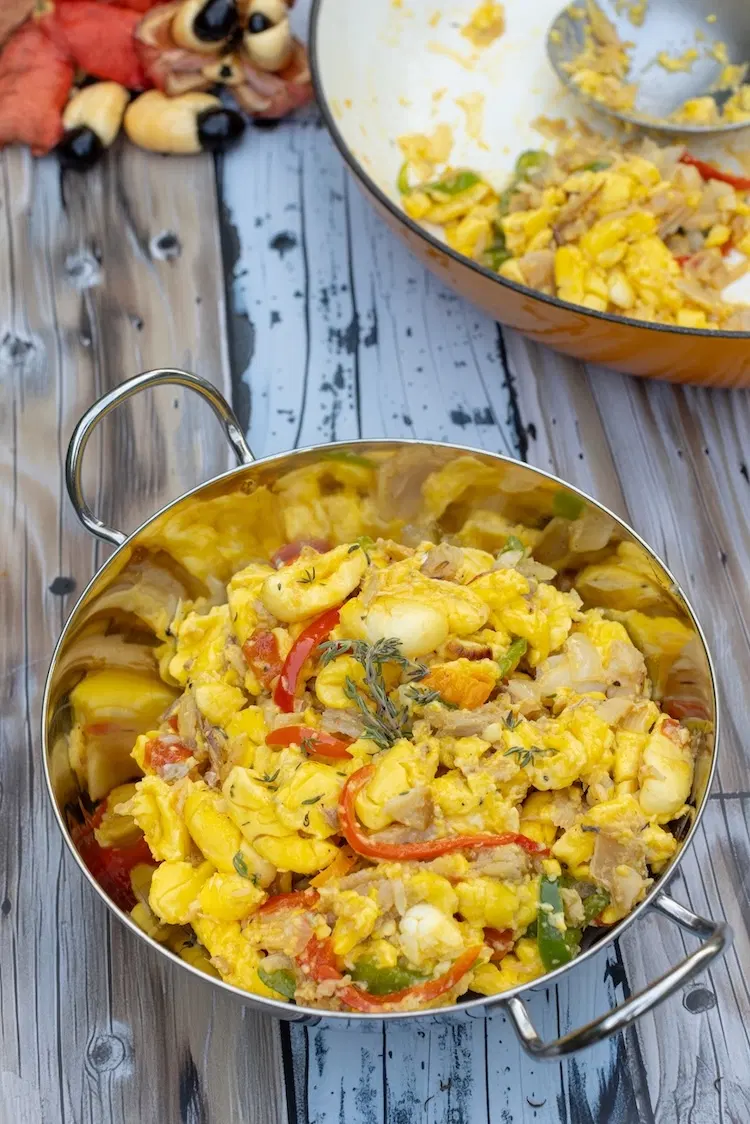
Ackee and Saltfish
Ackee and Saltfish
Breakfast Medium
📜 Story
Medium
📜 Story
Brown Stew Chicken
Caramelized Braised Chicken
Weekday dinner or Sunday lunch Easy
📜 Story
Easy
📜 Story
Callaloo
Sauteed Amaranth Greens
Breakfast, alongside saltfish Easy
📜 Story
Easy
📜 Story
Coco Bread
Folded Coconut Milk Bread
Lunch, snack, alongside patties
Comments (0)
Log in to leave a comment.
No comments yet. Be the first to share your thoughts!