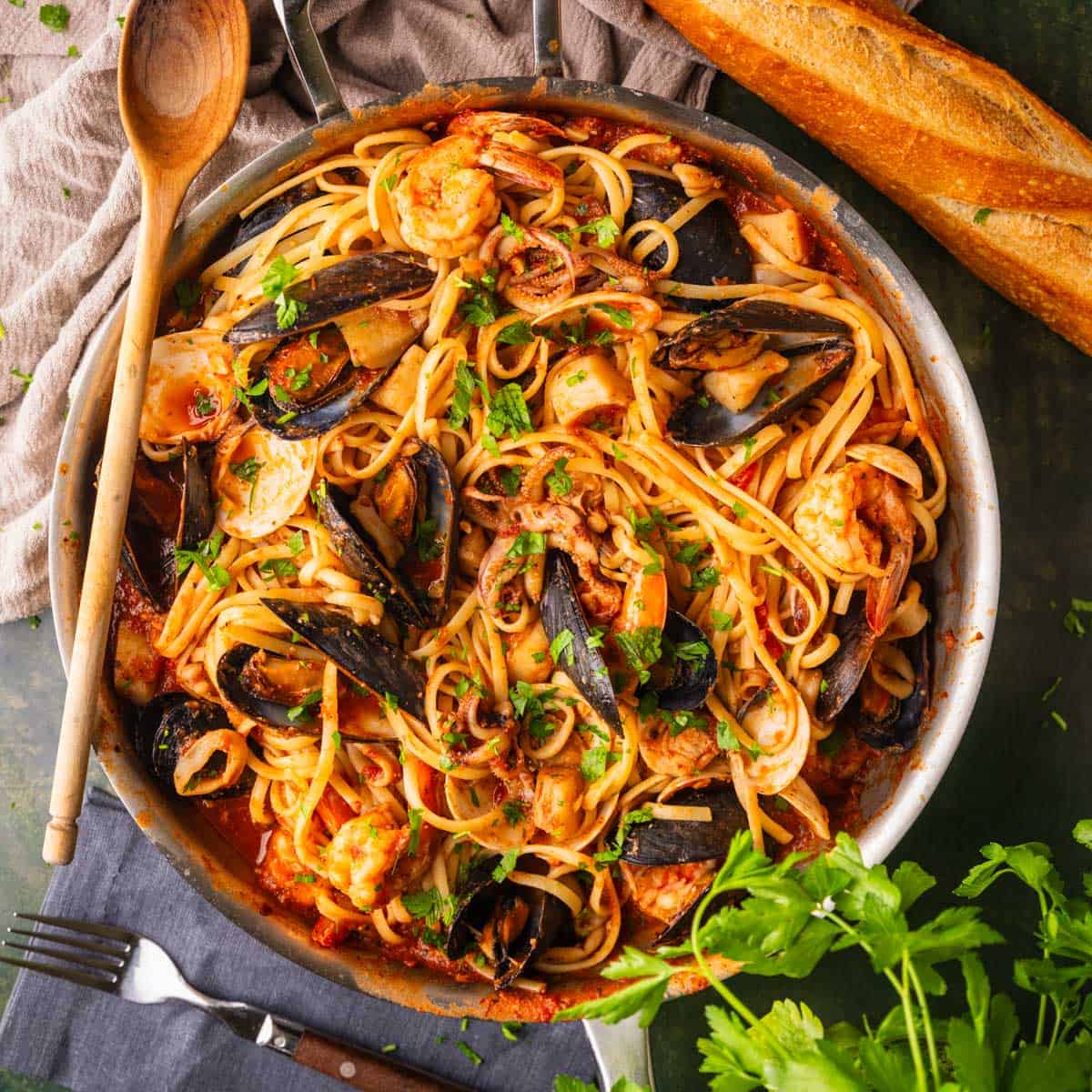
Linguine ai Frutti di Mare
Linguine ai frutti di mare (lin-GWEE-neh ai FROOT-tee dee MAH-reh)
Seafood Linguine
Silky ribbons of al dente linguine entwined with plump prawns, tender calamari, and briny clams in a vibrant white wine and cherry tomato sauce. Each forkful delivers the intoxicating essence of the Mediterranean coast.
Nutrition & Info
Allergen Warnings
Equipment Needed
Presentation Guide
Vessel: shallow pasta bowl
Garnishes: fresh parsley, lemon zest
Accompaniments: crusty bread, white wine
Instructions
-
1
Bring a large pot of generously salted water to a rolling boil and cook the linguine until 1 minute shy of al dente, reserving 1 cup of pasta water before draining.
-
2
While the pasta cooks, heat olive oil in a wide, deep skillet over medium-high heat. Add the garlic and chili, sauteing for 30 seconds until fragrant but not browned.
-
3
Add the clams and mussels to the skillet, pour in the white wine, and cover. Cook for 3-4 minutes until the shells open, discarding any that remain closed.
-
4
Toss in the prawns and calamari, cooking for 2 minutes until the prawns turn pink and the calamari is just tender.
-
5
Add the cherry tomatoes and cook for another 2 minutes until they begin to soften and release their juices.
-
6
Add the drained linguine to the skillet along with a splash of pasta water. Toss vigorously over high heat for 1-2 minutes, allowing the pasta to finish cooking and absorb the sauce.
-
7
Remove from heat, fold in the fresh parsley and lemon zest, adjust seasoning, and serve immediately on warmed plates with a drizzle of your finest olive oil.
Did You Know?
In Italy, combining seafood and cheese is considered a culinary sin. The delicate flavor of the sea should never be masked by Parmesan.
Chef's Notes
Equipment Tips
- large pot
- skillet
- tongs
Garnishing
fresh parsley, lemon zest
Accompaniments
crusty bread, white wine
The Story Behind Linguine ai Frutti di Mare
### The Story
Seafood linguine, or linguine ai frutti di mare, is rooted in the coastal cooking traditions of southern Italy, particularly Campania and Calabria. Linguine itself originated in Liguria, its name meaning "little tongues" in Italian. The pairing with seafood arose naturally in fishing communities along the Amalfi Coast and the Bay of Naples, where the daily catch was tossed with pasta as a practical, nourishing meal. The tradition of eating seafood with pasta was reinforced by the Roman Catholic practice of abstaining from meat on holy days, pushing coastal families toward the ocean for sustenance.
### On the Calendar
Traditionally served on Christmas Eve as part of the Feast of the Seven Fishes, and on Fridays during Lent. It is also a year-round dinner staple along the southern Italian coast.
### Then & Now
By the 1980s, virtually every restaurant along southern Italy's coast offered some version of this dish. Modern interpretations range from minimalist white-wine preparations to rich tomato-based sauces, and the seafood mix varies by region and season.
### Legacy
Seafood linguine represents the marriage of Italy's two great traditions -- artisan pasta-making and Mediterranean fishing -- and remains one of the country's most beloved coastal dishes.

Comments (0)
Log in to leave a comment.
No comments yet. Be the first to share your thoughts!