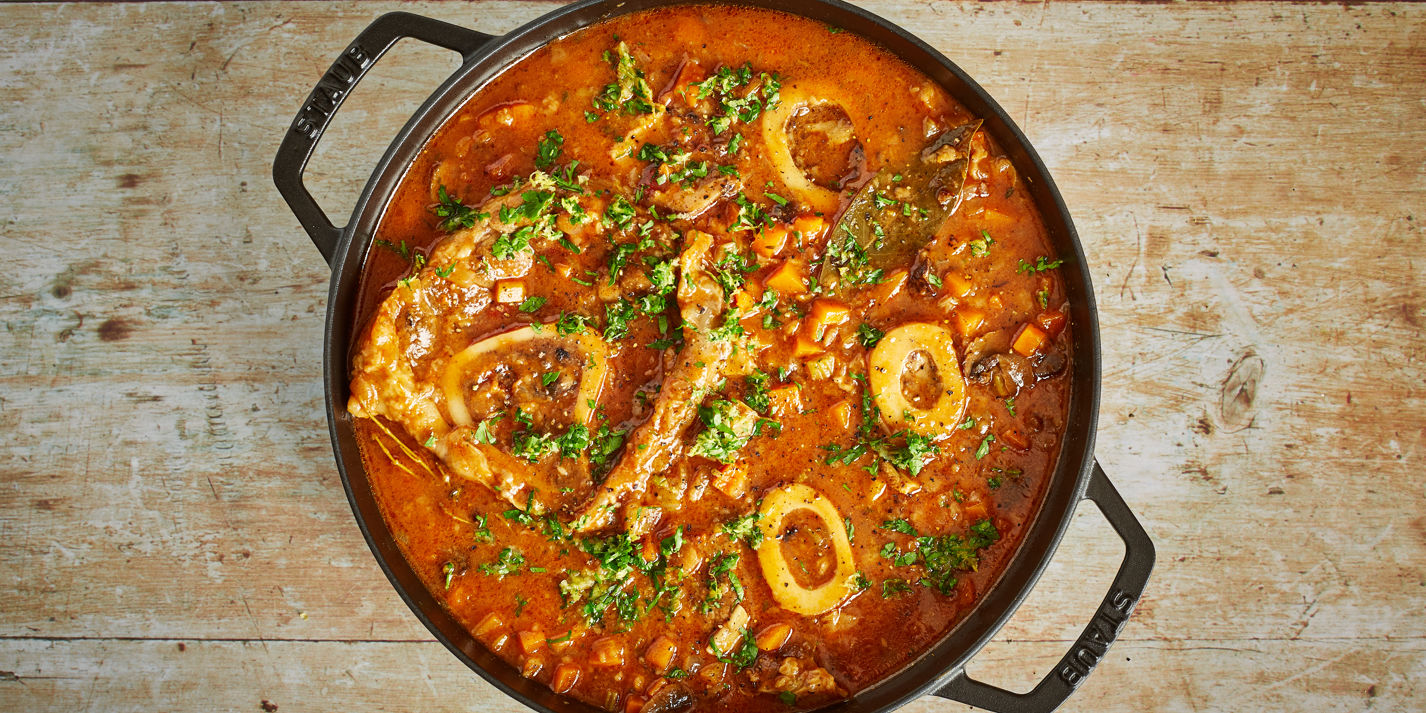
Cross-cut veal shanks braised low and slow with white wine, broth, and vegetables until the meat is meltingly tender and the marrow has enriched the sauce. Finished with gremolata, a bright condiment of lemon zest, parsley, and garlic.
Nutrition & Info
Allergen Warnings
Equipment Needed
Presentation Guide
Vessel: deep rimmed plate
Garnishes: gremolata (lemon zest, parsley, garlic)
Accompaniments: risotto alla milanese, crusty bread
Instructions
-
1
Pat the veal shanks dry and season generously with salt and pepper. Dredge lightly in flour, shaking off excess.
-
2
Heat olive oil in a large Dutch oven over medium-high heat. Sear the shanks for 4 minutes per side until deeply golden brown. Remove and set aside.
-
3
In the same pot, saute the onion, carrots, and celery (soffritto) for 8 minutes until softened and lightly caramelized.
-
4
Add garlic and cook for 1 minute. Pour in the white wine and scrape up all browned bits from the bottom. Simmer until wine reduces by half.
-
5
Add crushed tomatoes, broth, bay leaves, and rosemary. Return the veal shanks to the pot. The liquid should come halfway up the shanks.
-
6
Cover and braise in a 325F (160C) oven for 2 to 2.5 hours until the meat is fork-tender and pulling away from the bone.
-
7
While braising, prepare the gremolata by mixing finely chopped parsley, minced garlic, and lemon zest.
-
8
Serve each shank with the braising sauce, topped with gremolata, alongside risotto alla milanese or creamy polenta.
Did You Know?
Osso Buco means "bone with a hole" in Italian, referring to the marrow hole in the center of the cross-cut veal shank. The marrow is considered the most prized part of the dish.
Chef's Notes
Equipment Tips
- dutch oven
- tongs
- sharp knife
Garnishing
gremolata (lemon zest, parsley, garlic)
Accompaniments
risotto alla milanese, crusty bread
The Story Behind Ossobuco alla Milanese
Osso buco is a specialty of Lombard cuisine originating in Milan, with its name meaning 'bone with a hole,' referring to the marrow hole in the center of the cross-cut veal shank. While some historians trace braised shank dishes back to the Middle Ages, the modern recipe was first codified by Milanese cook Giuseppe Sorbiatti (1827-1888). Pellegrino Artusi, author of the first unified Italian cookbook in 1891, also included the classic Milanese preparation. The dish exists in two versions: the older, original version (in bianco) is made without tomatoes, while the more common modern version includes them.
Osso buco represents the soul of Milanese cooking: sophisticated yet deeply practical, transforming an affordable cut of meat into an elegant dish through patient braising. The gremolata is essential and distinctly Milanese, its bright acidity cutting through the richness of the braise. The marrow, scooped from the bone with a special narrow spoon, is considered the ultimate prize. The dish's pairing with saffron risotto reflects Milan's position at the crossroads of northern Italian and Alpine culinary traditions.


Comments (0)
Log in to leave a comment.
No comments yet. Be the first to share your thoughts!