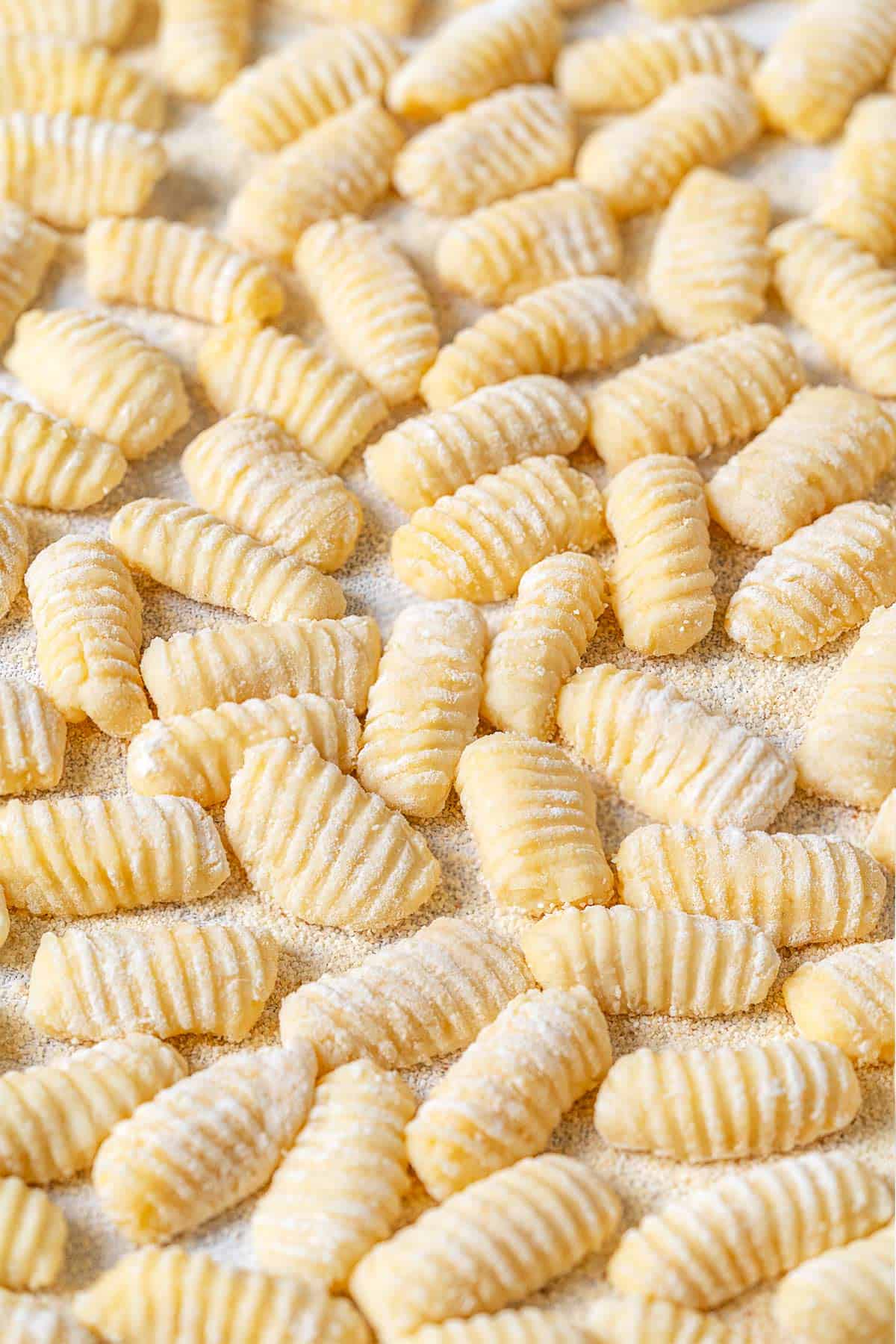
Pillowy potato dumplings, light as clouds, dressed in sage brown butter that coats each ridged morsel in nutty, aromatic richness.
Nutrition & Info
Allergen Warnings
Equipment Needed
Presentation Guide
Vessel: warm shallow bowl
Garnishes: fried sage leaves, Parmigiano shavings
Accompaniments: green salad
Instructions
-
1
Boil whole unpeeled potatoes until completely tender, about 40 min. Peel while hot and pass through a potato ricer onto a clean surface.
-
2
Spread riced potato, sprinkle with flour and salt. Make a well, add egg. Gently bring together into a soft dough — do not overwork.
-
3
Divide dough into portions, roll each into a 2cm-thick rope. Cut into 2cm pieces.
-
4
Roll each piece over a fork or gnocchi board to create ridges. Place on a floured tray.
-
5
Boil gnocchi in salted water — they are done when they float (about 2 min). Lift out with a slotted spoon.
-
6
Melt butter in a skillet until foamy and golden brown. Add sage leaves, fry 30 sec. Toss in gnocchi, serve with Parmigiano.
Did You Know?
In Rome, "giovedì gnocchi" (Thursday gnocchi) is a deeply rooted tradition — many families and trattorias still serve gnocchi every Thursday.
Chef's Notes
Equipment Tips
- potato ricer
- large pot
- gnocchi board or fork
- skillet
Garnishing
fried sage leaves, Parmigiano shavings
Accompaniments
green salad
The Story Behind Gnocchi di Patate
Gnocchi existed before potatoes arrived from the Americas, made from breadcrumbs or semolina. The potato version took hold in the 16th-17th centuries and became the most beloved form, a pillar of Italian comfort cuisine.


Comments (0)
Log in to leave a comment.
No comments yet. Be the first to share your thoughts!