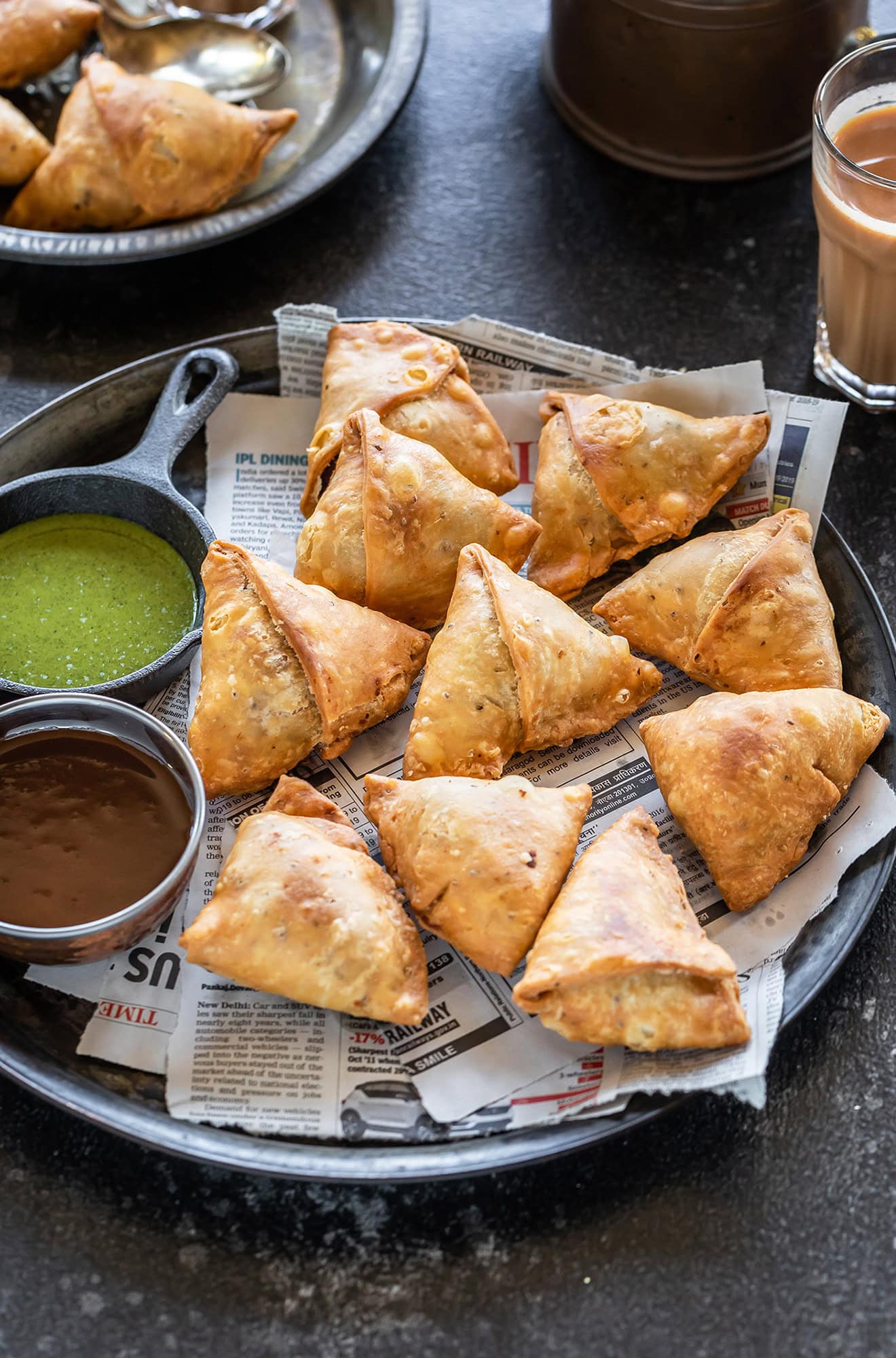
Shatteringly crispy, golden pyramids of flaky pastry concealing a warmly spiced filling of potatoes, peas, and aromatic cumin. Each bite crackles with satisfying crunch before giving way to the soft, fragrant filling within. The ultimate Indian street food that has conquered the entire world.
Nutrition & Info
Allergen Warnings
Equipment Needed
Presentation Guide
Vessel: plate or paper cone
Garnishes: mint chutney, tamarind chutney
Accompaniments: chai tea
Instructions
-
1
Make the dough: rub ghee into flour with salt and ajwain seeds until it resembles coarse breadcrumbs. Add cold water gradually, kneading into a firm, stiff dough (not soft). Rest for 20 minutes.
-
2
Prepare the filling: heat oil in a pan, add cumin seeds until they splutter. Add green chilies and ginger, then the mashed potatoes and peas. Season with garam masala, amchur, salt, and cilantro. Let cool completely.
-
3
Divide the dough into 6 balls. Roll each into an oval and cut in half to create 12 semi-circles.
-
4
Form each semi-circle into a cone by folding one edge over the other and sealing the seam with a paste of flour and water. Fill the cone with the potato mixture, then seal the top edge, pressing with a fork for a decorative crimp.
-
5
Heat oil to 150C (300F) for the first fry. This lower temperature is the secret to flaky, layered pastry. Fry the samosas in batches for 8-10 minutes, turning frequently, until light golden.
-
6
Increase oil temperature to 180C (350F) and fry again for 2-3 minutes until deeply golden and shatteringly crispy. This double-fry technique ensures maximum crunch.
-
7
Drain on paper towels and serve hot with tamarind chutney and mint-cilantro chutney. The samosas should audibly crackle when bitten.
Did You Know?
Samosas originated in the Middle East as 'sambusak' and were brought to India by Central Asian traders in the 13th century. The great poet Amir Khusrau described samosas being served at the royal court of the Delhi Sultanate in 1300.
Chef's Notes
Equipment Tips
- deep fryer or heavy pot
- rolling pin
- mixing bowl
Garnishing
mint chutney, tamarind chutney
Accompaniments
chai tea
The Story Behind Samosa
### The Story
The samosa's journey to India began in Central Asia and the medieval Middle East. Its name derives from the Middle Persian sanbosag, meaning "triangular pastry." Arab cookbooks from the 10th to 13th centuries reference sanbusak, and the poet Amir Khusro wrote around 1300 CE that Delhi Sultanate princes enjoyed samosas "prepared from meat, ghee, onion, and so on." The 14th-century traveler Ibn Battuta described sambusak stuffed with minced meat, almonds, and pistachios at the court of Muhammad bin Tughluq. Skilled cooks from Central Asia brought the pastry to the Sultan's kitchens, and it took root permanently in Indian culinary culture.
### On the Calendar
Samosas are an everyday street food and snack, eaten at any time of day. They also appear at festival gatherings, tea-time, and as appetizers at formal meals.
### Then & Now
Once a courtly delicacy stuffed with meat and nuts, the samosa democratized over centuries into India's most popular street snack. The vegetarian potato-and-pea filling is now the most common version. Regional variations span the subcontinent, from Bengali shingaras to Hyderabadi lukhmi.
### Legacy
The samosa is one of history's great migrant foods -- traveling from Persia through Central Asia to become an inseparable part of Indian identity.
Comments (0)
Log in to leave a comment.
No comments yet. Be the first to share your thoughts!