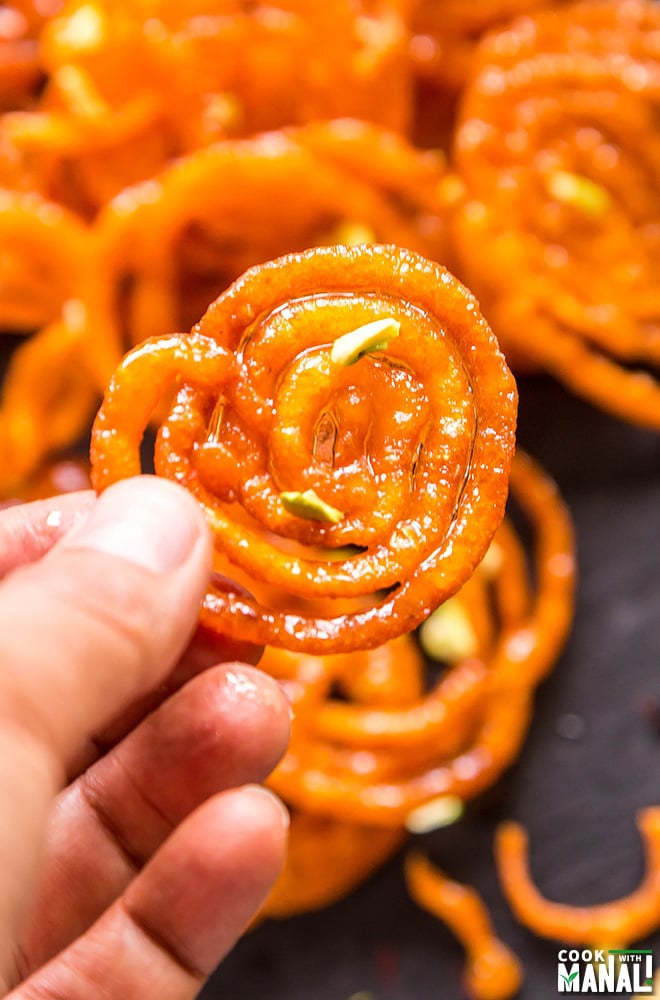
Bright orange spirals of fermented batter deep-fried until impossibly crispy, then soaked in warm saffron-cardamom sugar syrup. These dazzling sweets shatter with the first bite, releasing a flood of aromatic sweetness.
Nutrition & Info
Allergen Warnings
Equipment Needed
Instructions
-
1
Mix all-purpose flour, rice flour, yogurt, and baking powder with enough warm water to create a smooth, flowing batter. Let it ferment in a warm spot for twelve hours or overnight until bubbly.
-
2
Prepare the sugar syrup by boiling sugar and water together until it reaches a one-string consistency. Add saffron strands, cardamom powder, and rose water, keeping the syrup warm throughout.
-
3
Heat oil in a wide, heavy pan to 170 degrees Celsius. Pour the fermented batter into a squeeze bottle, ensuring the nozzle opening allows a steady, thin stream of batter to flow.
-
4
Squeeze the batter into the hot oil in concentric circular motions to form tight spiral shapes. Fry for two to three minutes per side until deep golden orange and extremely crispy.
-
5
Remove the fried jalebis from the oil using a slotted spoon and immediately plunge them into the warm sugar syrup. Let them soak for thirty seconds, turning once to ensure even coating.
-
6
Remove from the syrup and serve immediately while still warm and crackling crispy. The contrast between the shattering exterior and the syrup-saturated interior is the hallmark of perfect jalebi.
Did You Know?
The art of making perfect jalebi spirals takes years to master. Street vendors in Old Delhi can produce over five hundred perfectly uniform jalebis per hour, squeezing batter in continuous spirals without ever breaking the stream. Fresh hot jalebi with cold rabri is considered one of India's greatest dessert combinations.
Chef's Notes
Equipment Tips
- deep fryer or heavy pot
- squeeze bottle or piping bag
- wide pan for syrup
The Story Behind Jalebi
Jalebi descended from the Persian sweet zulbia, which arrived in the Indian subcontinent through Mughal and earlier Islamic trade connections around the tenth century. Indian confectioners transformed the recipe by introducing batter fermentation, which gives jalebi its distinctive tangy undertone beneath the sweetness. The use of saffron and cardamom in the syrup reflects the Indian love of aromatic spicing even in desserts. Jalebi became deeply embedded in Indian festival culture, particularly during Diwali, Holi, and wedding celebrations. The Old Delhi jalebi stalls near Chandni Chowk have been producing these crispy spirals for over a century.

Comments (0)
Log in to leave a comment.
No comments yet. Be the first to share your thoughts!