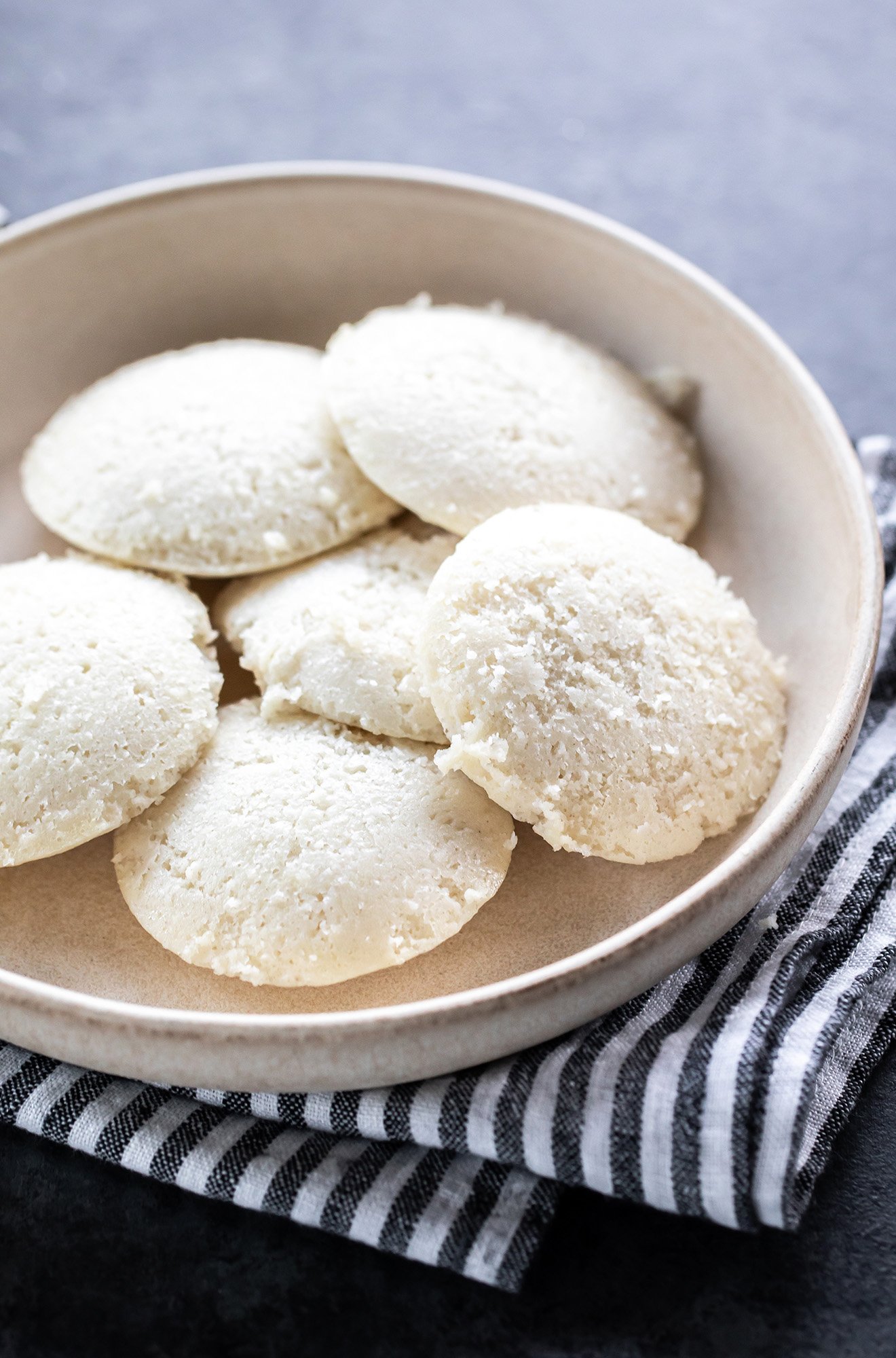
Idli Sambar
இட்லி சாம்பார் (ID-lee SAHM-bar)
Steamed Rice Cakes with Lentil Soup
Pillowy soft steamed rice and lentil cakes served alongside a tangy, aromatic lentil and vegetable soup. This quintessential South Indian breakfast is a marvel of fermentation science, delivering complete nutrition in every bite.
Nutrition & Info
Equipment Needed
Instructions
-
1
Grind soaked rice and urad dal into a smooth, thick batter. Combine them with salt and let the mixture ferment in a warm place for eight to twelve hours until it doubles in volume and smells pleasantly sour.
-
2
Grease the idli molds lightly with oil and pour batter into each cavity, filling them three-quarters full. Steam in an idli steamer for twelve to fifteen minutes until a toothpick inserted comes out clean.
-
3
For the sambar, pressure cook toor dal with turmeric until completely soft and mushy, about three whistles. Mash the dal smooth and set aside for adding to the vegetable mixture later.
-
4
In a separate pot, cook the drumstick, carrot, and tomato with sambar powder and tamarind paste in two cups of water until the vegetables are tender, roughly fifteen minutes of simmering.
-
5
Add the mashed toor dal to the vegetable mixture and simmer for ten minutes until everything comes together into a unified, aromatic soup with a consistency that coats a spoon lightly.
-
6
Prepare a tempering of mustard seeds, curry leaves, and dried red chilies in hot oil. Pour this sizzling tempering over the sambar and serve alongside the freshly steamed idli cakes.
Did You Know?
The world record for the largest idli ever made was set in Chennai, weighing over 250 kilograms. Traditional idli plates in Tamil Nadu are made from soapstone, which helps retain heat and gives the idli a distinctive slightly earthy flavor that metal plates cannot replicate.
Chef's Notes
Equipment Tips
- idli steamer or idli mold
- blender
- large pot
The Story Behind Idli Sambar
Idli appears in Indian culinary literature as early as the eighth century CE, though some food historians trace its origins to Indonesian fermented rice cakes brought by maritime traders. The dish became firmly established in South Indian cuisine by the twelfth century, when the use of urad dal in the batter was standardized. Sambar, the accompanying lentil soup, has its own legendary origin story involving the Maratha ruler Sambhaji, who is said to have improvised the recipe while cooking. Together, idli sambar became the definitive South Indian breakfast, served in every home, temple, and restaurant across the region.
Comments (0)
Log in to leave a comment.
No comments yet. Be the first to share your thoughts!