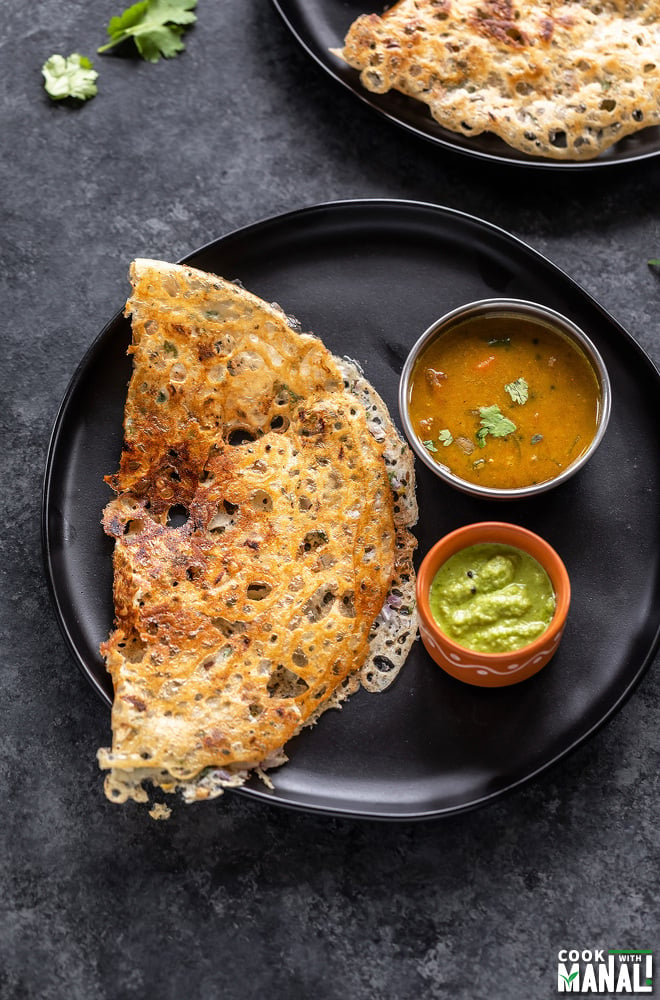
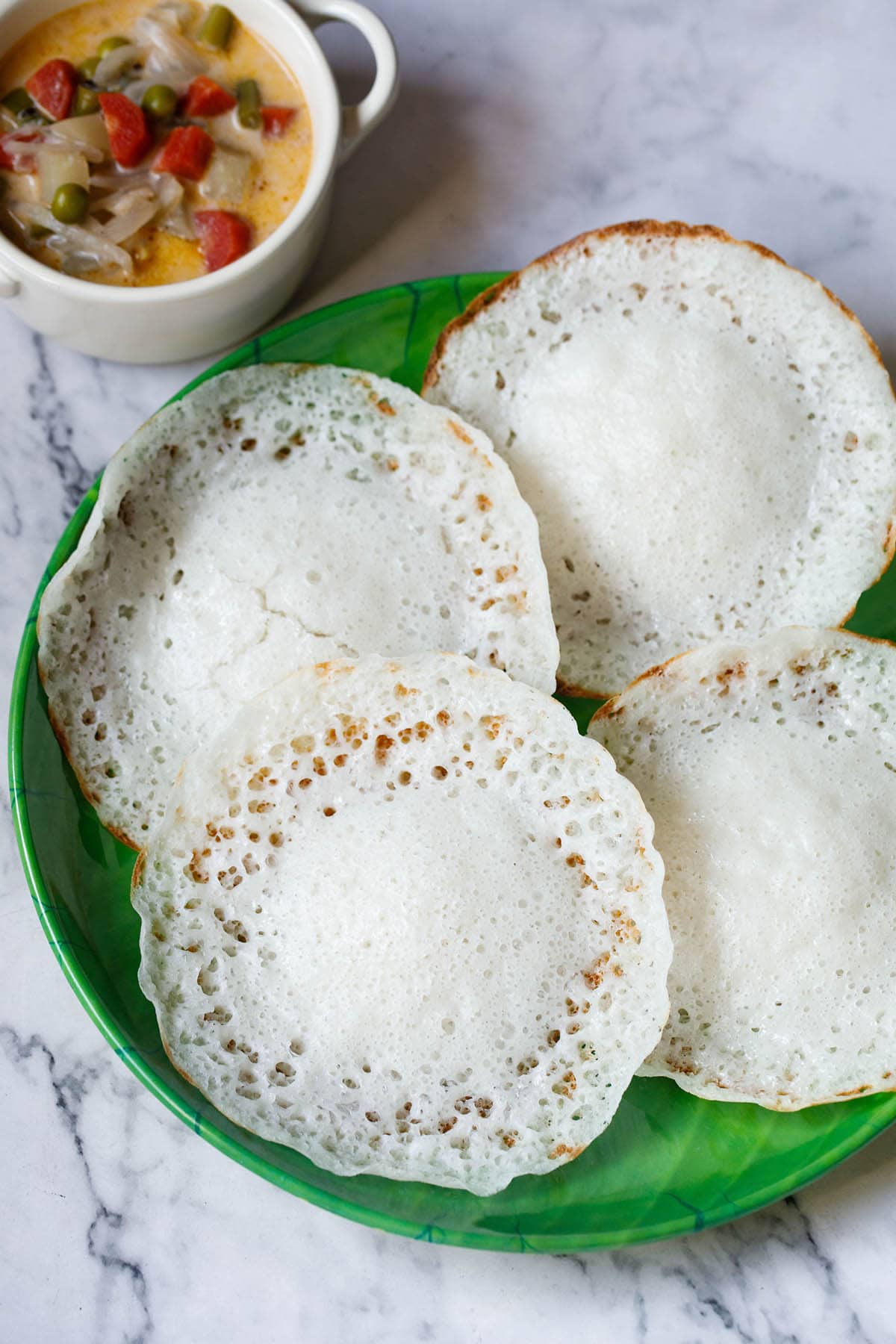
A thin, crispy crepe made from a naturally fermented batter of ground rice and black gram (urad dal), cooked on a hot griddle until golden and lacy. Served with coconut chutney and sambar (a tangy lentil-vegetable stew).
Nutrition & Info
Allergen Warnings
Equipment Needed
Presentation Guide
Vessel: large plate or banana leaf
Garnishes: none
Accompaniments: sambar, coconut chutney, tomato chutney
Instructions
-
1
Wash and soak the rice separately, and the urad dal with fenugreek seeds separately, for at least 6 hours or overnight.
-
2
Grind the urad dal first to a smooth, fluffy paste, adding water sparingly. Transfer to a large bowl. Then grind the rice to a slightly grainy paste.
-
3
Combine both batters, add salt, and mix well. The batter should be thick but pourable. Cover and ferment in a warm place for 8-12 hours until doubled and bubbly.
-
4
Heat a flat cast-iron tawa or non-stick pan over medium-high heat. Sprinkle water to test — it should sizzle and evaporate immediately.
-
5
Pour a ladleful of batter in the center and quickly spread it in concentric circles from the inside out, making a thin crepe.
-
6
Drizzle oil or ghee around the edges and on top. Cook until the bottom turns golden and crispy, about 2 minutes.
-
7
For masala dosa, place spiced potato filling in the center and fold. Serve immediately with sambar and coconut chutney.
Did You Know?
Dosa batter fermentation is one of the oldest biotechnological processes in Indian cuisine, dating back over 2,000 years. The natural fermentation makes the batter rich in B vitamins and easier to digest.
Chef's Notes
Equipment Tips
- flat griddle (tawa)
- ladle
- oil brush
Garnishing
none
Accompaniments
sambar, coconut chutney, tomato chutney
The Story Behind தோசை (Thosai) / दोसा (Dosa)
Dosa originated in South India, with food historian K.T. Achaya tracing references to it in Sangam literature from the 1st century CE in ancient Tamil country. The earliest known written mention appears in Tamil literature of the 8th century, with a Kannada reference following a century later. A recipe appears in the Manasollasa, a 12th-century Sanskrit encyclopedia compiled by King Someshvara III of the Western Chalukya dynasty in present-day Karnataka. The Tamil and Karnataka versions differ: Karnataka's original dosa is softer and thicker, while the thin, crispy version that became famous worldwide originated in Tamil Nadu. Dosa arrived in Mumbai through Udupi restaurants that opened in the 1930s.
Dosa represents South India's mastery of fermentation, a technique that predates any Western sourdough tradition by centuries. The overnight fermentation of the batter is not just practical (it creates lightness and a pleasant tang) but reflects a deep understanding of microbiology embedded in traditional food knowledge. The dosa also embodies the friendly rivalry between Tamil Nadu and Karnataka over culinary origins. Its spread from South Indian coffee houses to global restaurant menus mirrors the diaspora of South Indians themselves, making it one of the most successful vegetarian foods in world cuisine.
Comments (0)
Log in to leave a comment.
No comments yet. Be the first to share your thoughts!