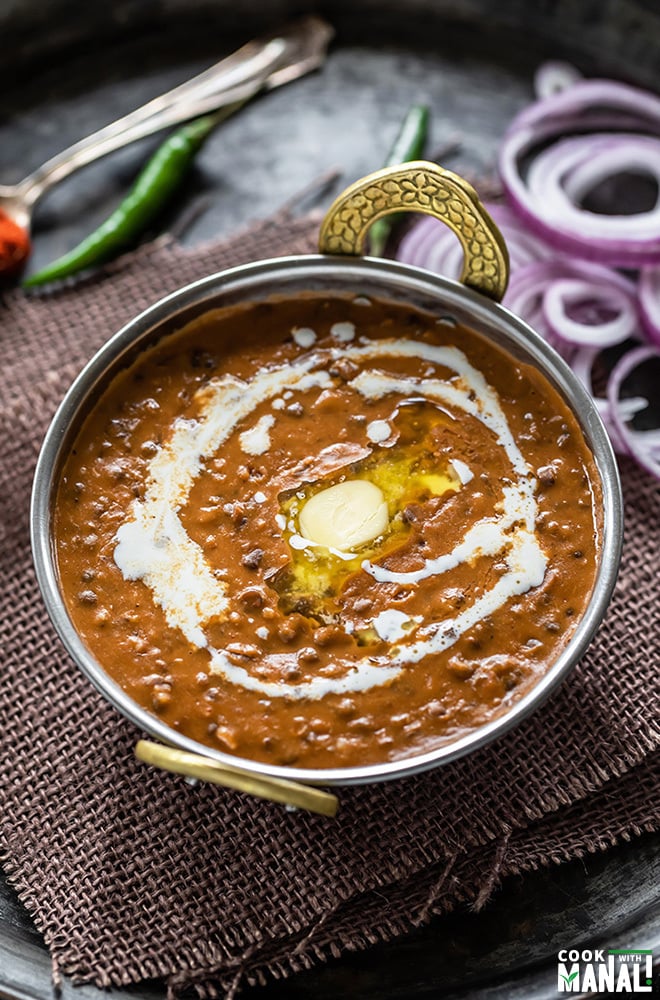
Black lentils and kidney beans simmered for hours in a luxurious bath of butter, cream, and tomatoes until they melt into a thick, intensely flavored stew that is impossibly rich and deeply comforting. This Punjabi classic proves that vegetarian food can be the most indulgent thing on the table.
Nutrition & Info
Allergen Warnings
Equipment Needed
Presentation Guide
Vessel: copper or brass serving bowl (handi)
Garnishes: cream swirl, butter pat, fresh cilantro
Accompaniments: naan, steamed rice
Instructions
-
1
Drain the soaked lentils and kidney beans. Place in a large pot (or pressure cooker) with plenty of water, bring to a boil, skim any foam, and simmer for 1.5-2 hours (or 30 minutes under pressure) until completely tender and creamy.
-
2
In a separate pan, heat half the butter. Add cumin seeds, bay leaf, and cardamom pods, frying for 30 seconds until sputtering. Add ginger-garlic paste and cook for 1 minute.
-
3
Add the crushed tomatoes, chili powder, and salt. Cook for 10-12 minutes until the tomatoes darken and the oil separates, creating a rich base.
-
4
Pour the tomato mixture into the cooked lentils and stir well. Simmer on the lowest possible heat for 1-2 hours, stirring occasionally. The long, slow cooking is what transforms dal makhani from ordinary dal into extraordinary velvet.
-
5
As it simmers, the lentils will break down and thicken. Mash some against the side of the pot to create a creamy consistency while keeping some whole for texture.
-
6
Stir in the remaining butter, cream, garam masala, and crushed dried fenugreek leaves in the last 10 minutes of cooking. The dal should be thick enough to coat the back of a spoon.
-
7
Serve in a deep bowl with a generous swirl of cream, a knob of butter melting on top, and fresh cilantro. Pair with naan, roti, or steamed rice.
Did You Know?
Authentic dal makhani at the legendary Bukhara restaurant in Delhi's ITC Maurya hotel is simmered for 18 continuous hours. This impossibly long cooking time is what creates its signature silky, almost meaty depth of flavor.
Chef's Notes
Equipment Tips
- pressure cooker or heavy pot
- skillet
- wooden spoon
Garnishing
cream swirl, butter pat, fresh cilantro
Accompaniments
naan, steamed rice
The Story Behind Dal Makhani
### The Story
Dal makhani was born at Moti Mahal restaurant in the Daryaganj neighborhood of Old Delhi, shortly after the Partition of India in 1947. Kundan Lal Gujral, a Punjabi Hindu refugee from Peshawar, was already famous for tandoori chicken and butter chicken. According to the Moti Mahal account, a Sikh gentleman named Sucha Singh suggested Gujral try something special with ordinary dal. Gujral slow-cooked whole black lentils (urad dal) with tomatoes, white butter, herbs, and spices in a tandoor overnight. By morning, the lentils had transformed into a luscious, velvety dish. Because it was made with makhan (butter), it was named dal makhani.
### On the Calendar
Dal makhani is served year-round but holds special significance at celebratory meals, weddings, and festival gatherings across North India.
### Then & Now
Once a single restaurant's innovation, dal makhani became the signature lentil dish of Punjabi cuisine and spread to Indian restaurants worldwide. Modern versions sometimes use cream in addition to butter, and restaurant kitchens slow-cook the dal for up to 24 hours to achieve maximum richness.
### Legacy
Dal makhani elevated humble black lentils into one of India's most beloved dishes, proving that the simplest ingredients can yield extraordinary depth of flavor.


Comments (0)
Log in to leave a comment.
No comments yet. Be the first to share your thoughts!