
A velvety, jade-green soup of finely chopped jute leaves simmered in rich chicken broth and crowned with a sizzling garlic-coriander taqleya. This pharaonic delicacy has a uniquely silky texture that is utterly unlike anything else in world cuisine.
Nutrition & Info
Allergen Warnings
Equipment Needed
Presentation Guide
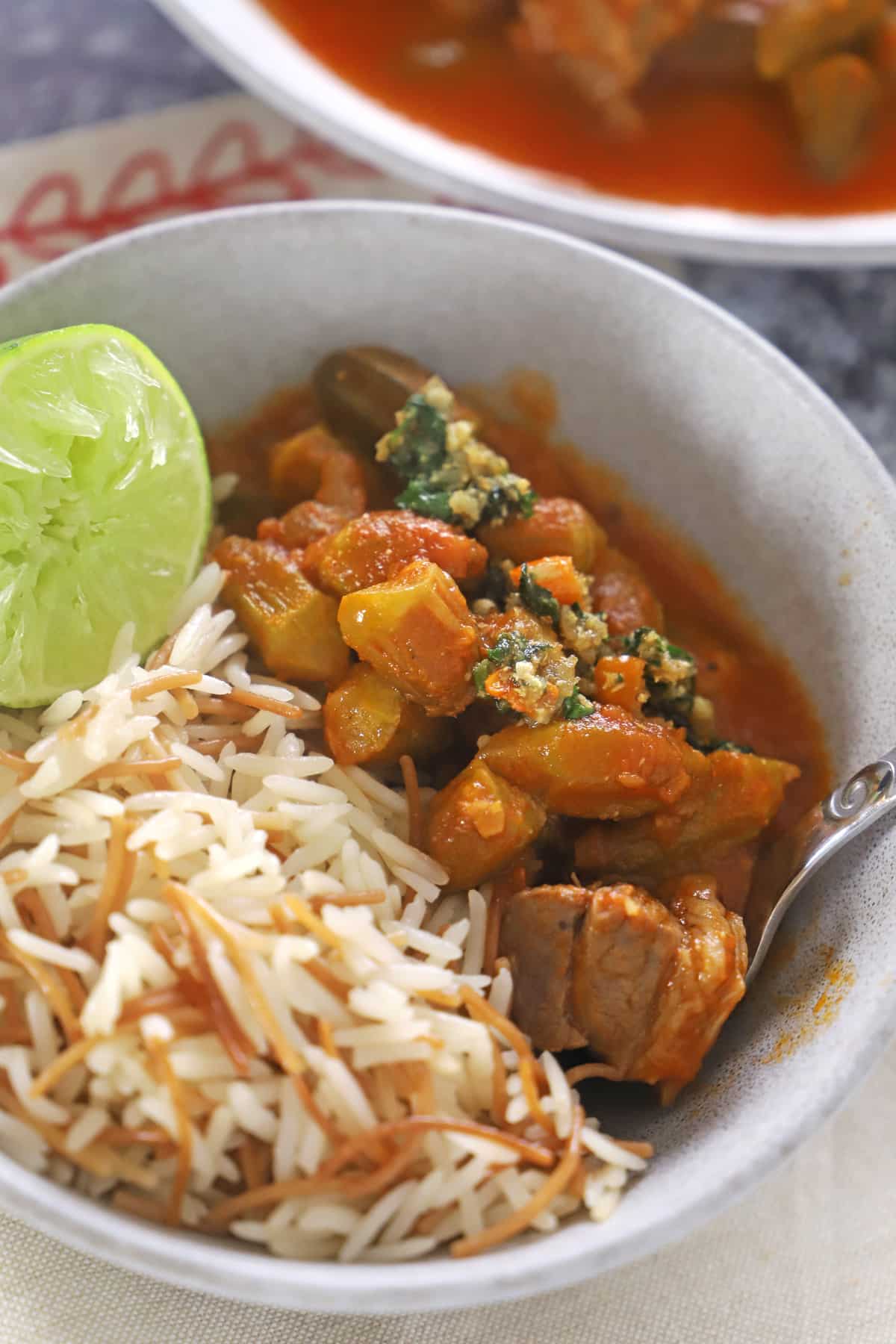
Vessel: deep bowl over rice
Garnishes: tashreeba (fried garlic and coriander)
Accompaniments: white rice, pita bread, lemon wedges
Instructions
-
1
If using fresh molokhia, strip the leaves from the stems, wash thoroughly, and chop very finely with a makhrata (two-handled knife) or food processor until the leaves become almost paste-like.
-
2
Bring the rich chicken stock to a rolling boil in a large pot. The quality of the stock is the foundation of exceptional molokhia.
-
3
Add the finely chopped molokhia leaves to the boiling stock, stirring constantly. Reduce heat and simmer for 10-15 minutes, stirring occasionally. The soup should have a distinctive silky, slightly viscous texture.
-
4
Prepare the taqleya (garlic sauce): heat ghee in a small pan until very hot, add the minced garlic and ground coriander, and fry for 30-60 seconds until deeply golden and intensely fragrant. Be careful not to burn it.
-
5
Pour the sizzling taqleya into the molokhia pot. The dramatic sizzle is part of the ritual. Stir well and add lemon juice, salt, and pepper.
-
6
Serve the molokhia over white rice with shredded chicken on the side and warm Egyptian flatbread for dipping. The soup should pour like liquid silk.
Did You Know?
Molokhia was reportedly the favorite food of the Fatimid Caliph Al-Hakim, who once banned it to spite the common people. The ban was so unpopular it was quickly reversed, proving that no ruler can stand between Egyptians and their molokhia.
Chef's Notes
Equipment Tips
- large pot
- mezzaluna or sharp knife
- ladle
Garnishing
tashreeba (fried garlic and coriander)
Accompaniments
white rice, pita bread, lemon wedges
The Story Behind Molokhia
## The Story
Molokhia has been consumed in Egypt since pharaonic times, making it one of the country's most ancient dishes. Its name is thought to derive from a word meaning 'royal' in ancient Egyptian, as the nutrient-rich jute leaf soup was reportedly reserved for pharaohs. When the Hyksos invaded Egypt around 1600 BCE, they forced Egyptians to eat molokhia believing it was poisonous, only to discover it was a prized delicacy.
## On the Calendar
Molokhia is a year-round staple, but it holds special significance during family reunions and Friday gatherings. The Fatimid Caliph al-Hakim famously banned it around 1000 CE, believing it was a stimulant, but the prohibition was widely ignored.
## Then & Now
The basic technique has endured for millennia: jute leaves are finely chopped or dried and reconstituted, then cooked in broth and finished with a sizzling garlic-coriander sauce called ta'leya. Regional variations exist across the Arab world, but Egyptian molokhia, served with rice and chicken or rabbit, remains the benchmark.
## Legacy
Considered by many Egyptians to be the true national dish alongside ful and koshari, molokhia represents an unbroken culinary line from the pharaohs to the present day.

Comments (0)
Log in to leave a comment.
No comments yet. Be the first to share your thoughts!