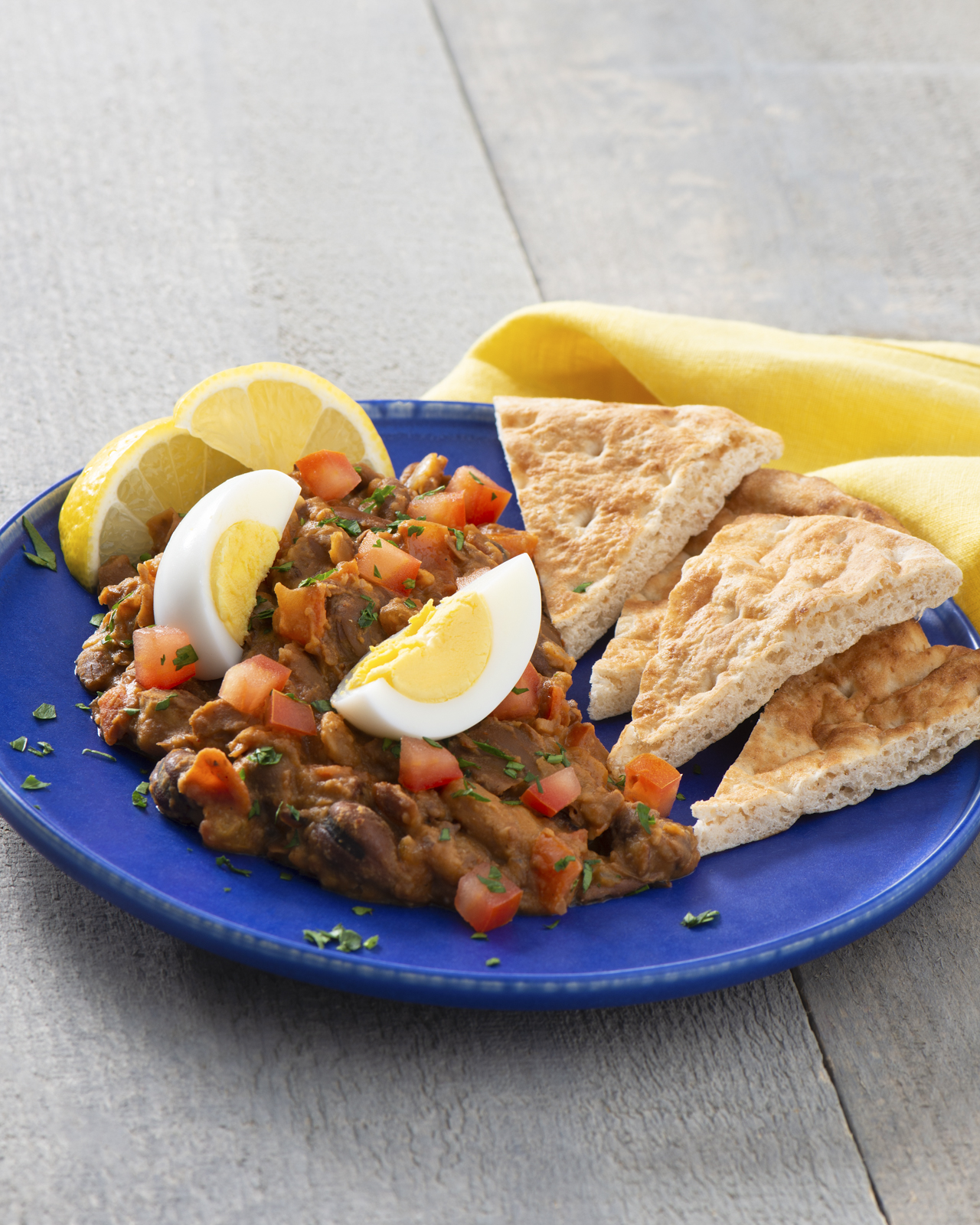
Slow-simmered fava beans topped with fried or scrambled eggs, drizzled with olive oil and dusted with cumin. This hearty Egyptian breakfast is the ultimate morning fuel enjoyed by millions every single day.
Nutrition & Info
Allergen Warnings
Equipment Needed
Instructions
-
1
Heat fava beans in a heavy saucepan over medium heat with a splash of water. Mash some beans against the side of the pot to create a creamy base.
-
2
Add half the garlic, one teaspoon of cumin, salt, pepper, and a tablespoon of olive oil to the beans. Simmer for ten minutes until thick and creamy.
-
3
Fry the eggs in remaining olive oil in a separate skillet until the whites are set but the yolks are still beautifully runny and golden in color.
-
4
Spoon the warm, creamy fava beans into individual serving bowls. Create a well in the center of each bowl to nestle the fried eggs inside.
-
5
Place one fried egg on top of each bowl. Scatter diced tomato and chopped parsley around the eggs. Dust generously with remaining cumin and cayenne pepper.
-
6
Drizzle with extra olive oil and serve immediately with a generous squeeze of lemon juice and plenty of warm baladi bread for scooping and dipping.
Did You Know?
Egypt consumes more fava beans per capita than any other country on earth, with foul being eaten for breakfast by an estimated seventy percent of the population.
Chef's Notes
Equipment Tips
- heavy saucepan
- skillet
- serving bowls
- wooden spoon
The Story Behind Foul bil Beid
Foul bil beid represents the most popular breakfast combination in Egypt, marrying the ancient tradition of slow-cooked fava beans with protein-rich eggs. This dish fuels the nation every morning, from Cairo's busiest streets to the smallest Nile Delta villages. Street vendors called foul carts begin preparation before dawn, slow-cooking enormous pots overnight.

Comments (0)
Log in to leave a comment.
No comments yet. Be the first to share your thoughts!