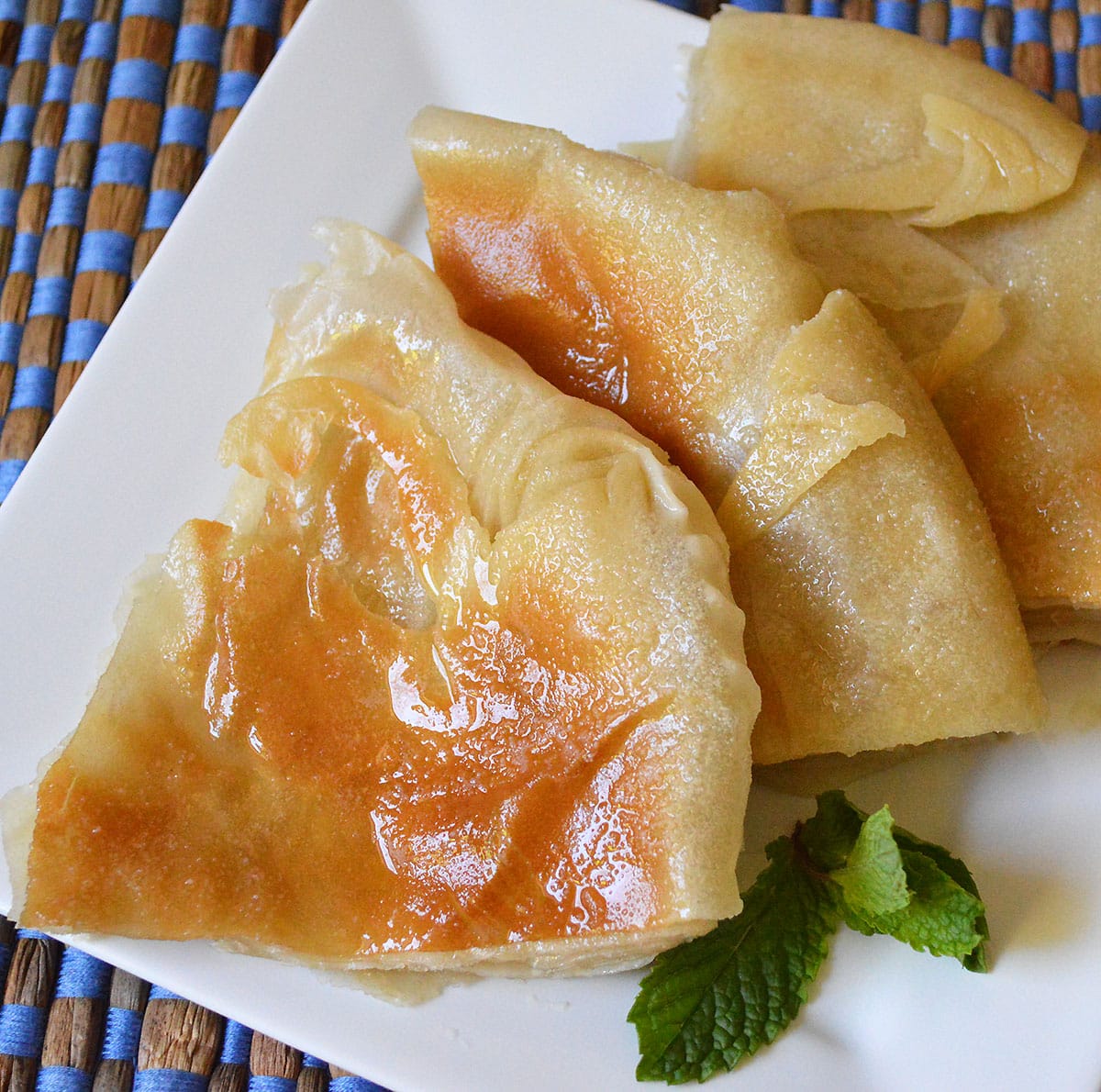
A thousand layers of impossibly thin, butter-laminated dough baked to shattering, flaky perfection. This ancient Egyptian layered pastry can be served sweet with honey and cream or savory with cheese, and each gossamer layer melts on the tongue like edible gold leaf.
Nutrition & Info
Instructions
-
1
Combine flour, salt, sugar, and warm water in a bowl. Knead for 10 minutes until you achieve a very smooth, elastic, and pliable dough. Cover and rest for 30 minutes.
-
2
Divide the dough into 4 equal balls. Oil your work surface generously and begin stretching one ball by hand, pulling from the center outward until paper-thin and nearly transparent. You should be able to read through it.
-
3
Brush the stretched dough generously with melted ghee. Fold the edges inward to create a layered square, brushing with more ghee between each fold. Repeat folding 3-4 times to create dozens of buttery layers.
-
4
Repeat the stretching and folding process with each dough ball. Stack two folded pieces together for extra layers if desired.
-
5
Preheat oven to 220C (425F). Place the layered dough in a round baking pan, brush the top generously with ghee, and bake for 25-30 minutes until puffed and deeply golden.
-
6
Remove from oven and immediately drizzle with honey or top with clotted cream and powdered sugar for a sweet version. For savory feteer, add cheese between the layers before baking. Serve hot and pull apart at the table.
Did You Know?
Feteer meshaltet dates back to ancient Egypt and was originally offered to the gods in pharaonic temples. Today, dedicated feteer shops across Egypt stretch the dough into dramatic, translucent sheets in theatrical displays of skill.
The Story Behind Feteer Meshaltet
## The Story
Feteer meshaltet traces its origins to ancient Egypt, where it was known as feteer maltoot and served as a ritual offering to the gods, left in temples as a symbol of abundance and devotion. The pastry demands remarkable skill: dough is hand-stretched into gossamer-thin sheets, layered repeatedly with samna (ghee), and baked until golden and flaky. During the Mamluk era, feteer is said to have traveled to Europe and inspired the creation of the croissant.
## On the Calendar
Feteer meshaltet is traditionally prepared for religious holidays, weddings, and special social occasions. It remains a centerpiece of Egyptian hospitality, offered to honored guests and served during Eid celebrations.
## Then & Now
Once a temple offering for pharaonic gods, feteer evolved into a beloved Egyptian street food and bakery staple. It can be served sweet with honey, molasses, or powdered sugar, or savory with cheese, eggs, or ground meat. Feteer shops across Cairo pull crowds at all hours.
## Legacy
Feteer meshaltet connects modern Egyptian cuisine directly to pharaonic ritual, a 3,000-year-old pastry tradition that remains a symbol of generosity and celebration.


Comments (1)
Log in to leave a comment.
First comment