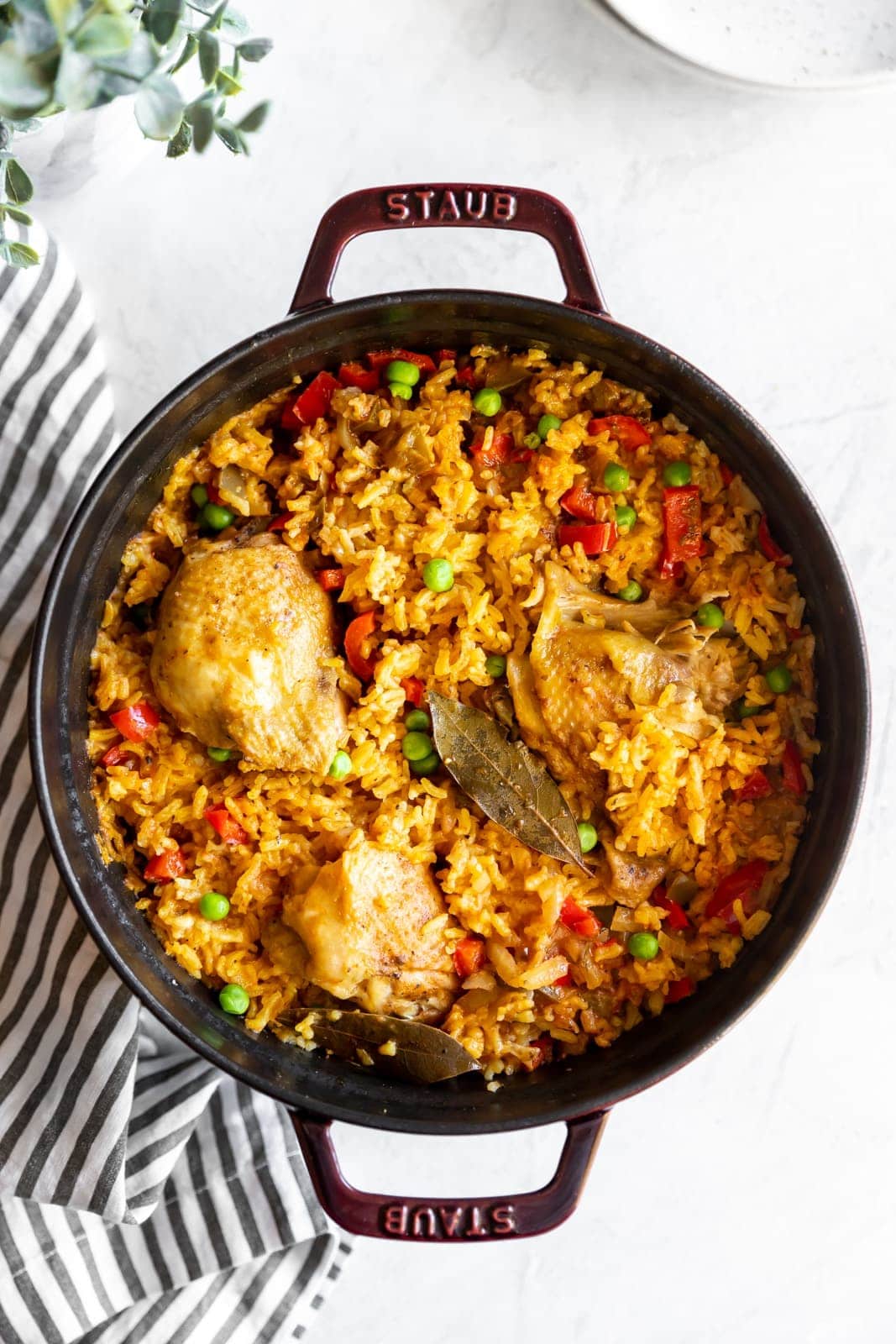
Tender chicken cooked with saffron-yellow rice, peas, peppers, and beer in one glorious pot. Cuba's ultimate weeknight comfort meal.
Nutrition & Info
Equipment Needed
Presentation Guide
Vessel: large serving platter
Garnishes: roasted red peppers, green peas, fresh cilantro
Accompaniments: fried plantains, avocado salad
Instructions
-
1
Season the chicken pieces generously with salt, pepper, cumin, and oregano. Let them sit at room temperature for twenty minutes. Heat the olive oil in a large deep skillet or caldero over medium-high heat. Brown the chicken on all sides for eight minutes until golden and crispy-skinned. Remove and set aside.
-
2
In the same pot with the rendered chicken fat, add the diced onion and both bell peppers. Cook for six minutes until softened and starting to caramelize. Add the minced garlic and cook for one minute more. Stir in the saffron threads, letting them bloom in the hot oil for thirty seconds.
-
3
Pour in the white wine and scrape up all the browned bits from the bottom of the pot. Let the wine reduce by half over two minutes. Add the diced tomatoes with their juices and cook for three minutes to concentrate the tomato flavour into the aromatic base.
-
4
Add the rinsed rice to the pot and stir to coat every grain in the fragrant sofrito. Pour in the chicken broth and stir well. Nestle the browned chicken pieces into the rice, pushing them down so they are partially submerged. Add the bay leaves and olives.
-
5
Bring everything to a boil, then immediately reduce heat to the lowest setting and cover tightly. Cook for twenty-five minutes without lifting the lid. The steam trapped inside cooks both the rice and chicken simultaneously, and the bottom develops a prized crispy rice layer.
-
6
Remove the lid, scatter the frozen peas over the top, replace the lid, and cook for five more minutes until the peas are bright green and heated through. Remove from heat and let rest covered for ten minutes. Remove the bay leaves.
-
7
Fluff the saffron-yellow rice gently around the chicken pieces with a fork. Serve directly from the pot, garnished with roasted red pepper strips. Each portion should include a piece of chicken atop a mound of golden rice studded with olives and sweet peas.
Did You Know?
Every Cuban grandmother insists her arroz con pollo is the best, and family recipes are guarded like state secrets.
Chef's Notes
Equipment Tips
- large heavy pot or caldero
- sharp knife
- wooden spoon
Garnishing
roasted red peppers, green peas, fresh cilantro
Accompaniments
fried plantains, avocado salad
The Story Behind Arroz con Pollo
The Story: Arroz con pollo (rice with chicken) traces its roots to the Moorish occupation of Spain, where the technique of cooking rice with meat and saffron was perfected. Spanish colonists brought the dish to Cuba, where it was adapted with local ingredients: beer replaced some cooking liquid, bijol (annatto-based seasoning) substituted for expensive saffron, and Cuban sofrito of onions, garlic, and peppers provided the flavor base. The result is a one-pot meal distinct from its Spanish ancestor.
On the Calendar: Arroz con pollo is a weeknight staple and a dish served at casual family gatherings. It is practical, affordable, and beloved across all social classes.
Then & Now: The dish remains a cornerstone of Cuban home cooking, valued for its simplicity and ability to feed a crowd from a single pot. Modern Cuban-American versions sometimes add capers, olives, and roasted peppers, but the core remains chicken, rice, and sofrito.
Legacy: Arroz con pollo represents the journey of a Moorish-Spanish dish across the Atlantic, transformed by Cuban hands into comfort food that has nourished generations.
Comments (0)
Log in to leave a comment.
No comments yet. Be the first to share your thoughts!