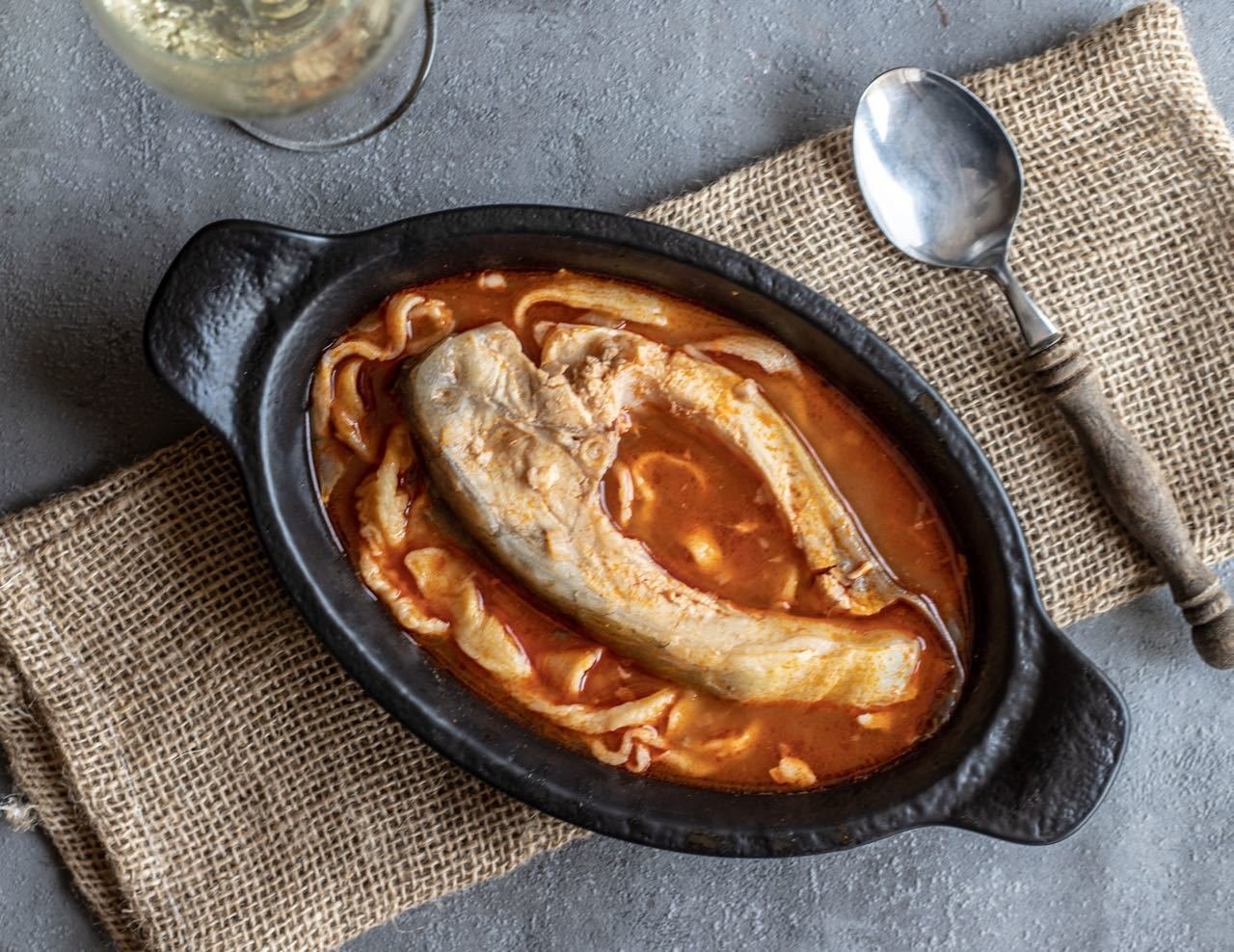
Fiš Paprikaš
Fiš paprikaš (FEESH PAH-pree-kahsh)
Slavonian Fish Paprikash
A fiery river fish stew from Slavonia, thick with sweet and hot paprika, onions, and chunks of carp or catfish, served over broad egg noodles.
Nutrition & Info
Allergen Warnings
Equipment Needed
Presentation Guide
Instructions
-
1
Heat oil in a large pot. Add diced onions and cook slowly for 15-20 minutes until very soft and golden.
-
2
Remove from heat and stir in sweet and hot paprika. Add water and bring to a boil.
-
3
Add the fish steaks (firmer fish first, delicate fish later). Season with salt.
-
4
Simmer gently for 20-30 minutes without stirring — shake the pot gently to prevent sticking.
-
5
The stew should be thick and deeply red. Adjust salt and paprika heat to taste.
-
6
Serve over broad egg noodles in deep bowls, spooning plenty of the paprika broth over.
Did You Know?
Slavonian fishermen traditionally cook fiš paprikaš outdoors in a cauldron over an open fire along the Danube or Drava rivers — it is as much a social event as a meal.
Chef's Notes
Equipment Tips
- large pot or cauldron
- wooden spoon
- sharp knife
Garnishing
hot paprika, parsley
Accompaniments
egg noodles, bread
The Story Behind Fiš Paprikaš
Fiš paprikaš is the soul food of Slavonia, Croatia's eastern continental region. It reflects the Hungarian-influenced culinary tradition of the Pannonian plain, where river fish and paprika are king. The dish is cooked outdoors along riverbanks during autumn fish harvests, and competitions for the best fiš paprikaš are held annually across the region.



Comments (0)
Log in to leave a comment.
No comments yet. Be the first to share your thoughts!