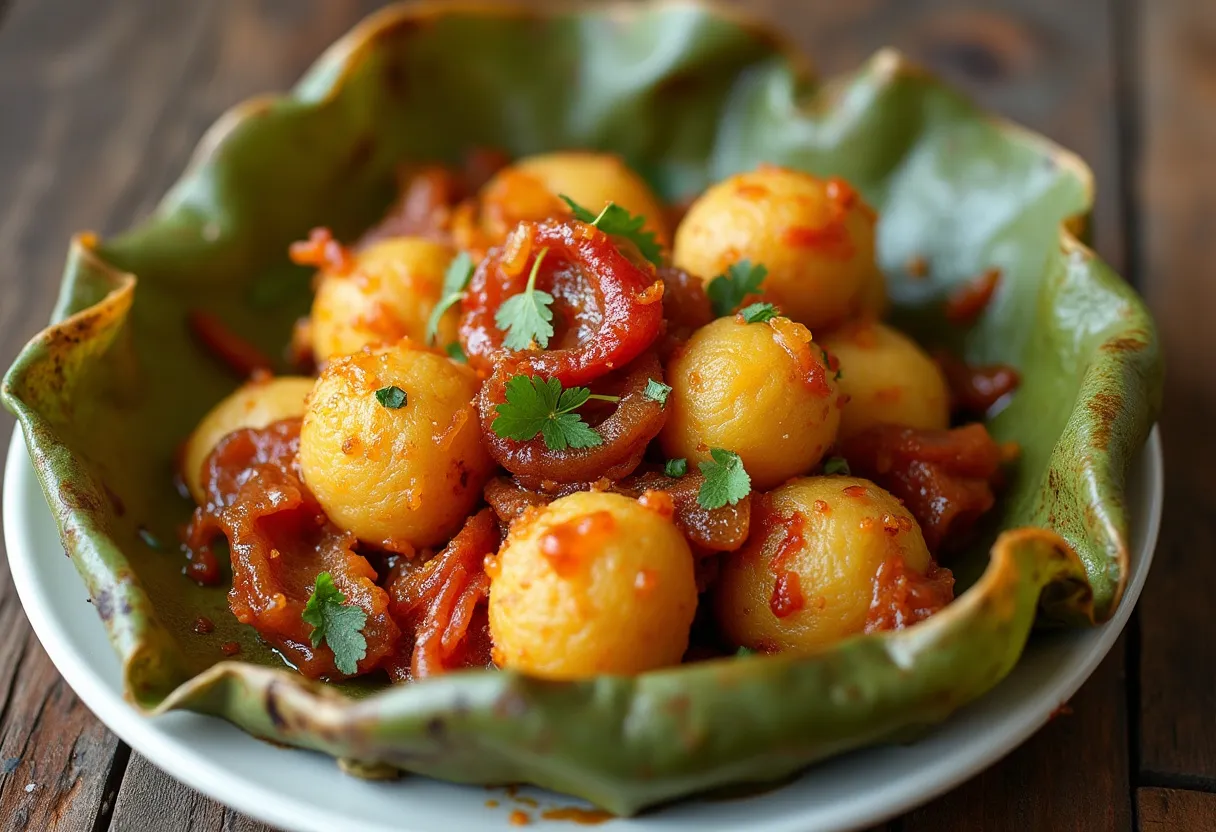
Fermented cassava paste wrapped in banana leaves and steamed into dense, chewy bread loaves. A Central African staple.
Nutrition & Info
Equipment Needed
Presentation Guide
Instructions
-
1
Peel the cassava and cut it into large chunks, removing the woody central core from each piece. Soak the chunks in a large container of water for three to four days, changing the water daily, until the cassava becomes very soft and fermented.
-
2
Drain the fermented cassava thoroughly, then break it apart with your hands, removing any remaining fibrous strands. The texture should be very soft and slightly sour-smelling, indicating proper fermentation has occurred.
-
3
Transfer the softened cassava to a large mortar and pound vigorously with a heavy pestle for fifteen to twenty minutes, adding small splashes of water as needed, until you achieve a completely smooth, elastic, and stretchy dough.
-
4
Cut the softened banana leaves into rectangles approximately thirty centimetres long. Place a portion of the pounded cassava dough in the centre of each leaf and shape it into a compact log about fifteen centimetres long and five centimetres wide.
-
5
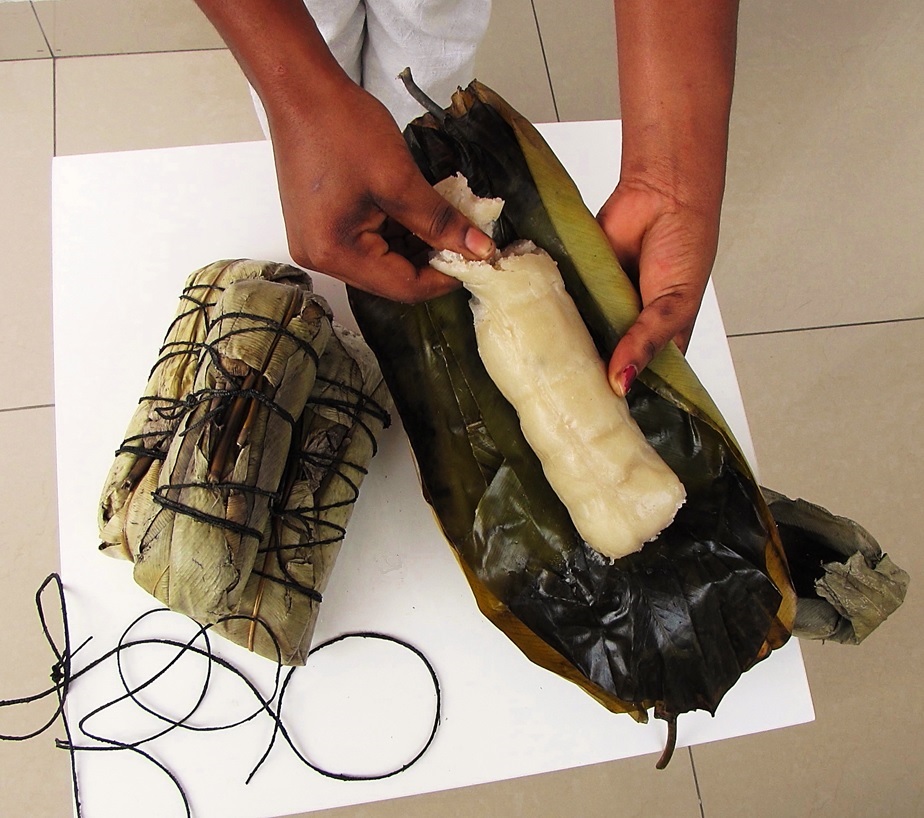
Wrap each cassava log tightly in the banana leaf, folding the sides over first and then rolling snugly to enclose completely. Tie each package securely at both ends and in the middle with kitchen twine to prevent unwrapping during cooking.
-
6
Place the wrapped packages in a large pot of boiling water, ensuring they are fully submerged. Boil for two to three hours, adding more hot water as needed to keep them covered throughout the entire cooking process.
-
7
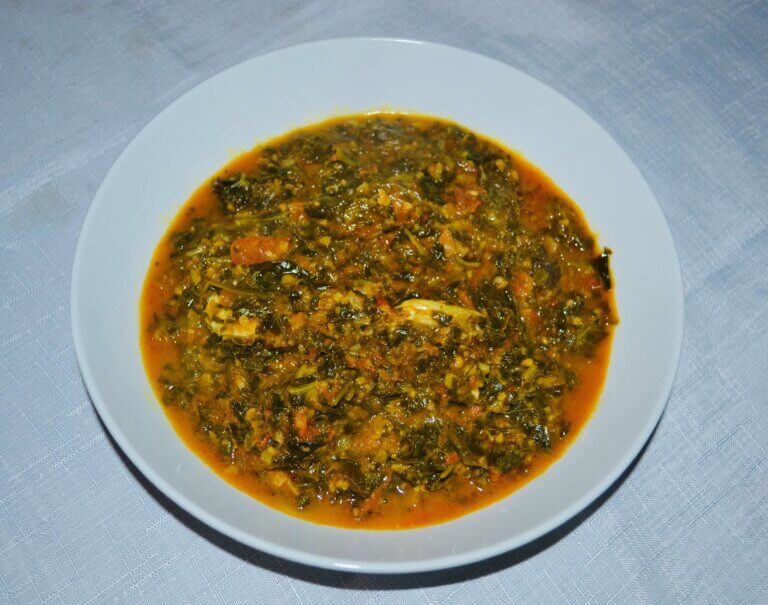
Remove the chikwanga from the water and allow them to cool for fifteen minutes. Unwrap the banana leaves to reveal the dense, smooth, slightly translucent bread inside. Serve alongside grilled fish, stews, or saka-saka as a starchy accompaniment.
Did You Know?
Chikwanga can last for days without refrigeration, making it perfect for Congo's tropical climate.
Chef's Notes
Equipment Tips
- large pot
- banana leaves
- string for tying
Garnishing
none
Accompaniments
moambe sauce, grilled fish
The Story Behind Chikwanga
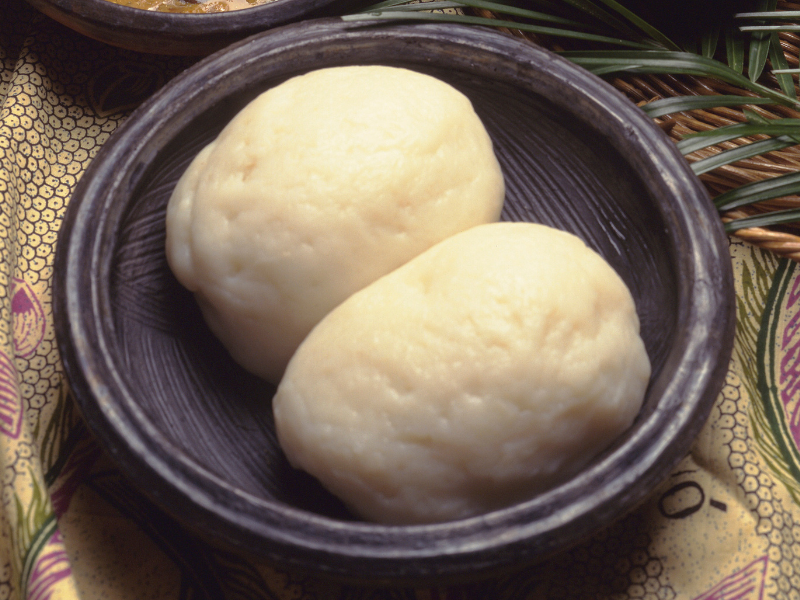
The Story: Chikwanga (also kwanga) is a traditional Congolese bread made from fermented cassava paste wrapped in banana leaves and steamed into dense, chewy loaves. The preparation process is elaborate: cassava roots are soaked in water for several days to ferment and remove toxins, then pounded into a smooth paste, wrapped tightly in banana leaves, and steamed or boiled until solid. The result is a slightly sour, dense bread with a springy texture that serves as both starch and utensil, torn into pieces and used to scoop sauce.
On the Calendar: Chikwanga is everyday food in many parts of the DRC, particularly in the western regions and along the Congo River. It is sold in markets throughout the country.
Then & Now: The traditional multi-day fermentation process remains unchanged, though commercial production has scaled up to supply urban markets. Chikwanga remains more popular than bread in many rural areas.
Legacy: Chikwanga is a masterwork of African food technology, a bread that uses fermentation to detoxify cassava while creating a distinctive sour flavor and chewy texture found nowhere else.

Comments (0)
Log in to leave a comment.
No comments yet. Be the first to share your thoughts!