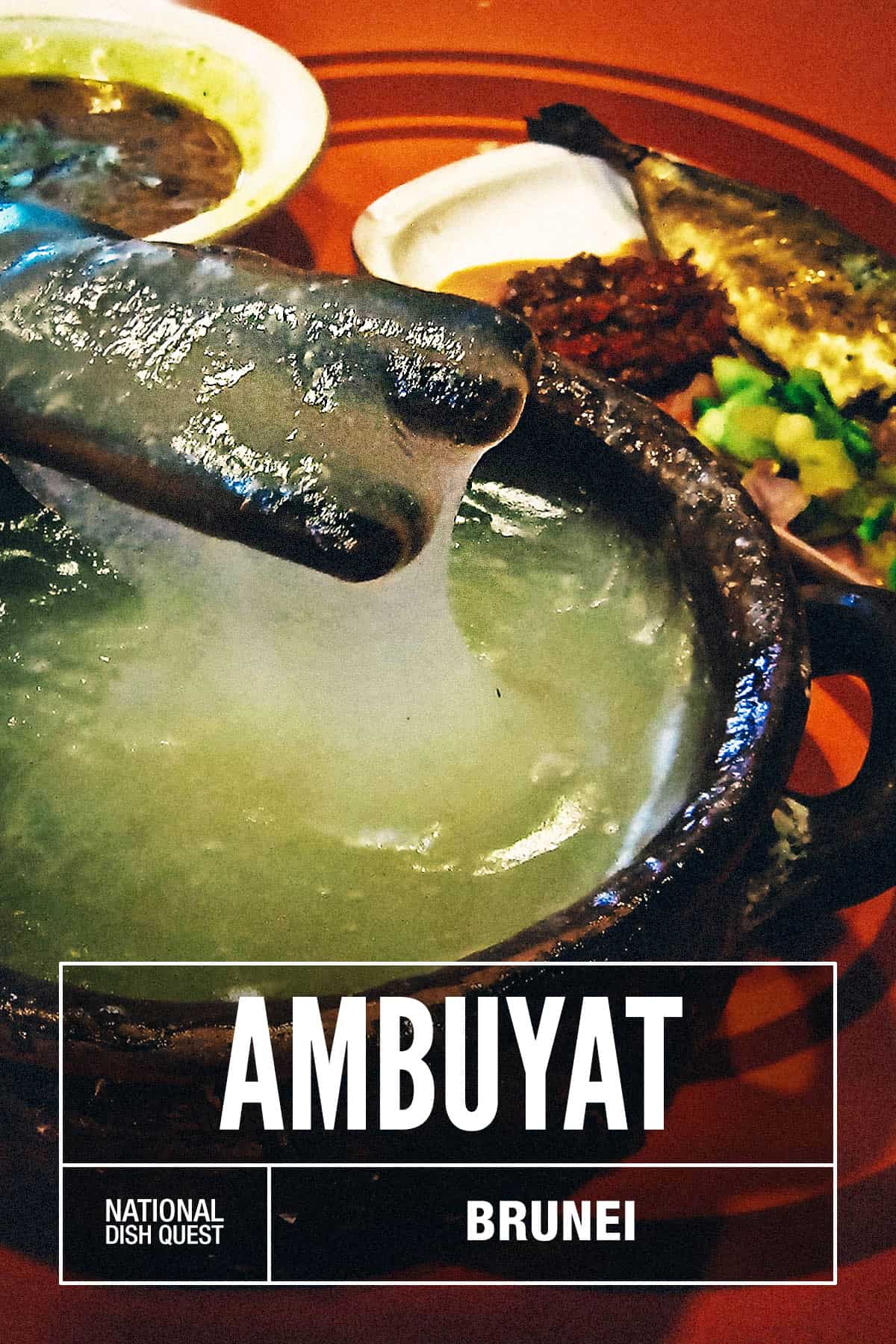
Translucent, sticky sago starch served with an array of flavorful dipping sauces. Brunei's unique national dish and cultural icon.
Nutrition & Info
Allergen Warnings
Equipment Needed
Presentation Guide
Vessel: communal bowl on raised stand
Garnishes: none
Accompaniments: cacah (sour fruit dip), various side dishes
Instructions
-
1
Place the sago starch in a large, deep bowl and add about sixty millilitres of room-temperature water, stirring briefly to moisten the starch and create a loose slurry that will hydrate evenly.
-
2
Bring five hundred millilitres of water to a vigorous boil in a kettle. Pour the boiling water slowly into the bowl with the moistened starch, adding it in a steady stream rather than all at once.
-
3
Immediately begin stirring the mixture with a pair of long chopsticks or a wooden fork, working it in a circular motion. The starch will transform from opaque white to a translucent, glossy, extremely sticky mass.
-
4
Continue stirring vigorously for two to three minutes until the ambuyat reaches a smooth, glue-like consistency with no dry pockets of starch remaining. It should stretch and cling to the utensil when lifted.
-
5
Prepare the accompaniments while the ambuyat is still hot: arrange grilled fish, steamed vegetables, and the dipping sauces in small bowls around the main ambuyat dish for communal eating.
-
6
To eat, twirl a pair of bamboo prongs called chandas around a small portion of the ambuyat, dip it into the cacah sauce or tempoyak, and swallow without chewing, as is the Bruneian tradition.
Did You Know?
Ambuyat has virtually no flavor — it's a vehicle for the incredible array of dipping sauces served alongside.
Chef's Notes
Equipment Tips
- saucepan
- wooden chopstick-like utensil (chandas)
- mixing spoon
Garnishing
none
Accompaniments
cacah (sour fruit dip), various side dishes
The Story Behind Ambuyat
The Story: Ambuyat is Brunei's unique national dish: a translucent, sticky, flavorless starch made from the interior pith of the sago palm, served with an array of flavorful dipping sauces. Diners use a special two-pronged bamboo fork called a chandas to twirl the glutinous mass and dip it into cacah (a sour and spicy fruit dip), tempoyak (fermented durian), or various sambal sauces. The dish connects to the pre-agricultural indigenous food traditions of Borneo, where sago palm was a primary starch source before rice cultivation became dominant.
On the Calendar: Ambuyat is eaten regularly in Bruneian homes and at restaurants dedicated to the dish. It is a source of national pride and a must-try experience for visitors.
Then & Now: While younger Bruneians eat ambuyat less frequently than their grandparents, the dish has been embraced as a national cultural symbol. Ambuyat restaurants have become popular gathering places.
Legacy: Ambuyat is Brunei's most distinctive culinary contribution, a dish whose blandness is its genius, serving as a neutral vehicle for the explosive flavors of its accompanying sauces.

Comments (0)
Log in to leave a comment.
No comments yet. Be the first to share your thoughts!