Sadza ne Nyama
Sadza neNyama (SAHD-zah neh-NYAH-mah)
Maize Porridge with Meat
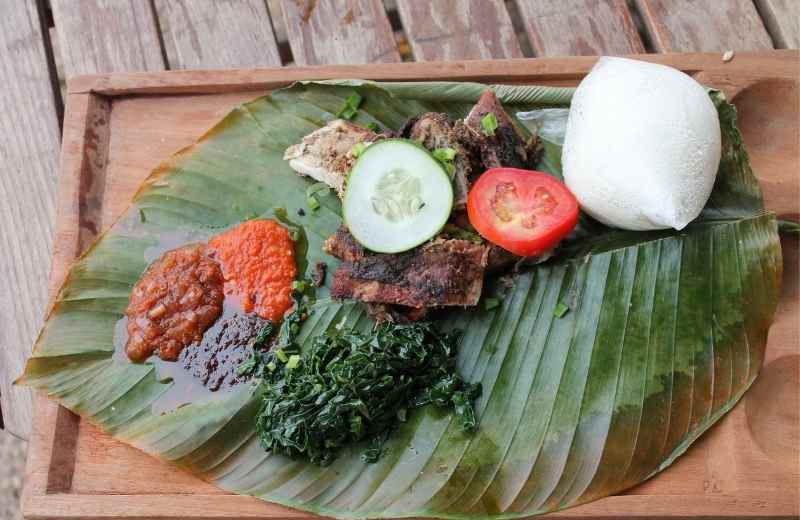
Thick white maize porridge served with grilled beef and a rich tomato-onion relish. Zimbabwe's quintessential daily meal.
Nutrition & Info
Equipment Needed
Presentation Guide
Vessel: shared plate with sadza mound and meat stew
Garnishes: fresh greens
Accompaniments: muriwo (collard greens), tomato relish
Instructions
-
1
Bring four cups of water to a boil in a large heavy pot. Add a small handful of maize meal while stirring constantly to make a thin, smooth porridge base. Reduce the heat to medium and cook for three minutes, stirring to prevent any lumps from forming.
-
2
Gradually add the remaining maize meal in small amounts while stirring vigorously and continuously with a strong wooden spoon. The sadza will become progressively thicker and stiffer, requiring increasing effort to stir as more maize meal is incorporated.
-
3
Continue cooking and stirring for eight to ten minutes until the sadza is very firm, smooth, and pulls away from the sides of the pot cleanly. Cover and let it rest on the lowest heat for five minutes, then turn out onto a serving plate.
-
4
Season the beef steaks generously on both sides with salt, pepper, and curry powder. Heat one tablespoon of oil in a cast-iron skillet over high heat until the pan is smoking, then sear the steaks for three to four minutes per side for medium doneness.
-
5
Remove the steaks from the skillet and let them rest on a cutting board for five minutes while you prepare the relish. Slice the rested steaks against the grain into strips about one centimetre thick for easy eating alongside the sadza.
-
6
In the same hot skillet, add the remaining oil and sauté the sliced onions for three minutes until they begin to soften and char. Add the garlic and chopped tomatoes, cooking for five to six minutes until the tomatoes collapse into a thick, saucy relish.
-
7
Season the tomato and onion relish with salt and pepper, stirring well. Arrange the sadza on one side of each plate, place the sliced beef alongside, and spoon the hot tomato relish over and around the meat. Garnish with fresh herbs and serve immediately.
Did You Know?
No Zimbabwean feels they have truly eaten unless they have had sadza that day.
Chef's Notes
Equipment Tips
- heavy pot
- wooden spoon
- skillet
Garnishing
fresh greens
Accompaniments
muriwo (collard greens), tomato relish
The Story Behind Sadza ne Nyama
The Story: Sadza ne nyama, meaning sadza with meat, is the celebratory version of Zimbabwe's everyday meal: a generous mound of sadza (thick maize porridge) served with grilled or stewed beef seasoned with onions, tomatoes, and simple spices. While sadza is eaten daily with vegetable relishes, the addition of meat elevates the meal to celebration status. In traditional Shona and Ndebele culture, cattle are wealth and social currency, and the slaughter of an animal for a meal signals an important occasion. The meat may be grilled directly over coals, stewed with tomatoes and onions, or dried as biltong for preservation.
On the Calendar: Sadza ne nyama is celebration food, served at weddings, funerals, family gatherings, holidays, and any occasion deemed worthy of meat. It is also available at restaurants and braai (barbecue) gatherings on weekends.
Then and Now: The fundamental dish remains unchanged, though modern preparations may include more elaborate seasoning. The braai culture shared with South Africa has influenced urban Zimbabwean cooking, and weekend braais featuring beef alongside sadza have become a social institution in cities like Harare and Bulawayo.
Legacy: Sadza ne nyama is Zimbabwe's way of saying this moment matters: a dish that elevates the daily staple to the ceremonial through the generous addition of meat, fire, and the spirit of communal gathering.


Comments (0)
Log in to leave a comment.
No comments yet. Be the first to share your thoughts!